


SAVANNAH ― Some things get better with age. Red wine. Muscle cars. Your favorite jeans.
Grayson Stadium, now 100 years old as the Savannah Bananas’ 2026 season gets underway, didn’t mature nearly as gracefully. The ballpark was in a late-life crisis before the Bananas came to town a decade ago and injected youthful energy — and eventually millions in improvements — into what many considered an outdated relic.
Grayson was long on cramped concourses and clubhouses and short on the charm found in other ballparks of its generation, cathedrals like Wrigley and Fenway and smaller throwbacks like Rickwood Field in Birmingham, Alabama, and McCormick in Asheville, North Carolina.
“Being a baseball fan, I found the stadium to be quaint and historical. It didn’t need any flashy touches in my opinion,” said Bob Goodyear, a frequent Grayson visitor from Loganville. “My wife found the stadium to be a bit of a dump.”
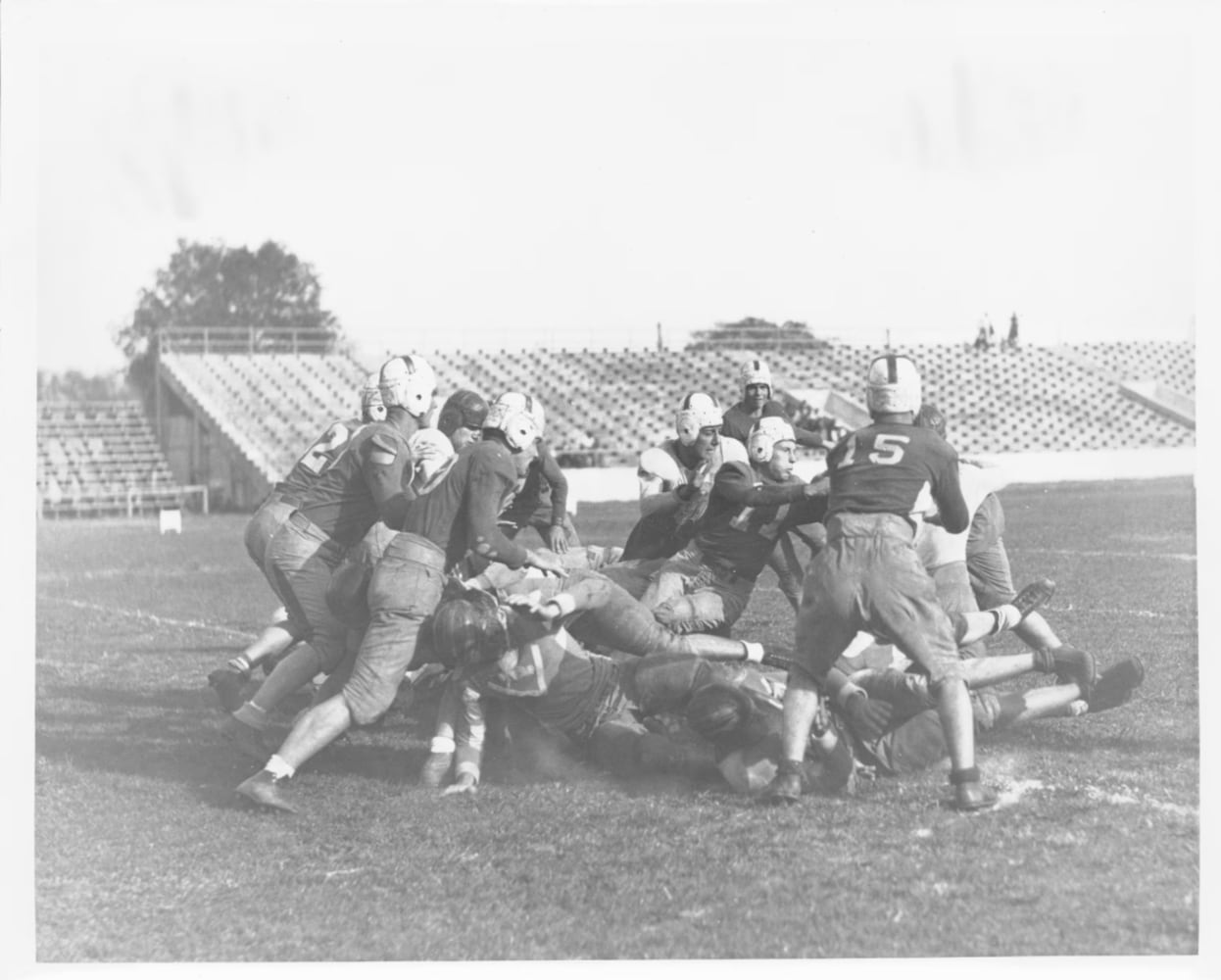
Savannah’s stadium has a storied history, though. Baseball greats played here. Famous crooners sang here. An American president spoke here. Generations of local high schoolers banged football helmets in Thanksgiving Day rivalry games here. The Civil Rights Movement fought here.

Credit: Courtesy of City of Savannah Municipal Archives
Credit: Courtesy of City of Savannah Municipal Archives
Where Savannahians once argued for a new ballpark — a well-coordinated community push nearly succeeded a little over a decade ago — the new barroom debate is over whether the Bananas’ rise marks Grayson’s defining decade. Watching Banana Ball at the stadium has become a pilgrimage for those smitten with the league’s high-energy baseball hijinks.
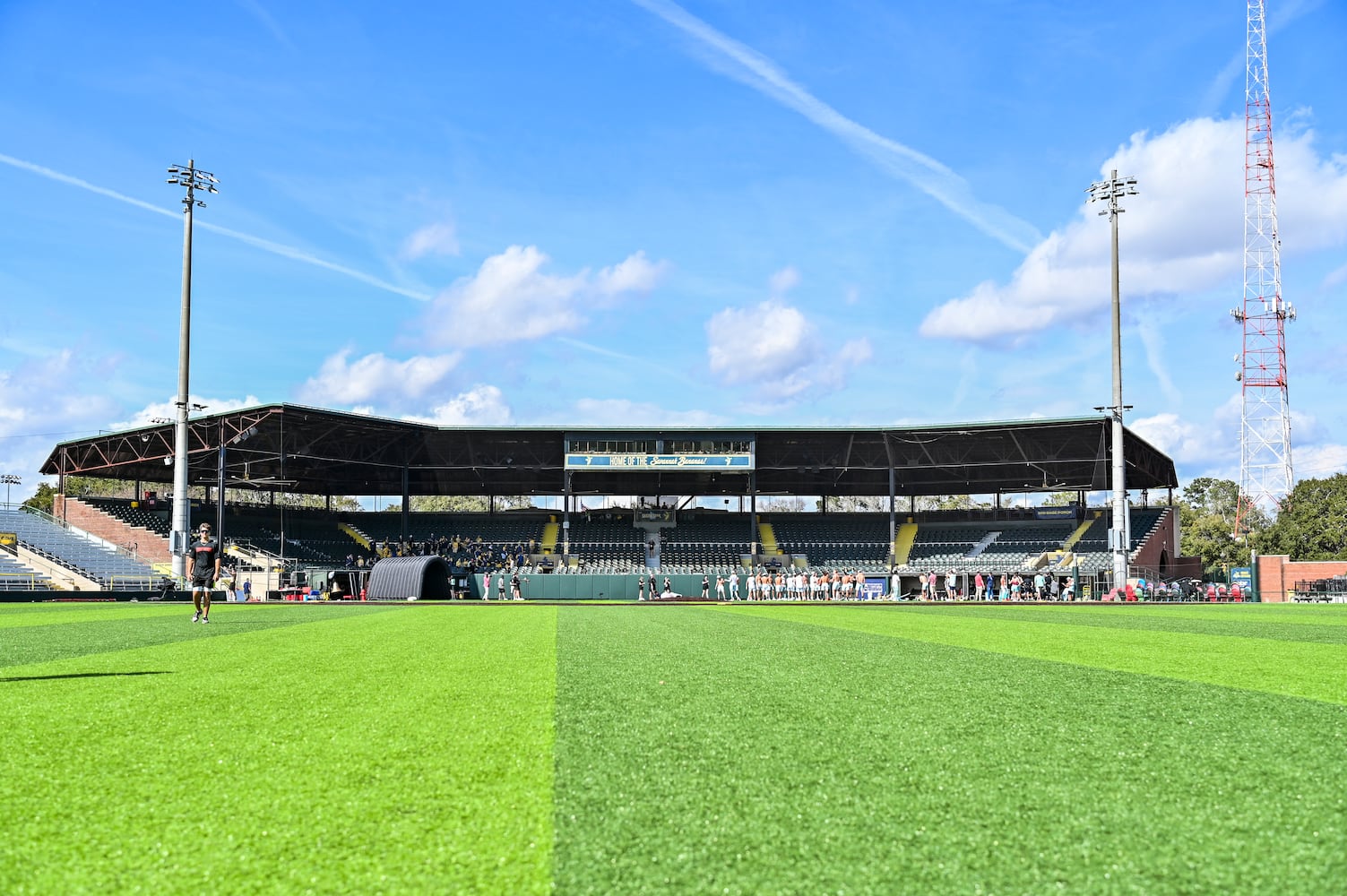
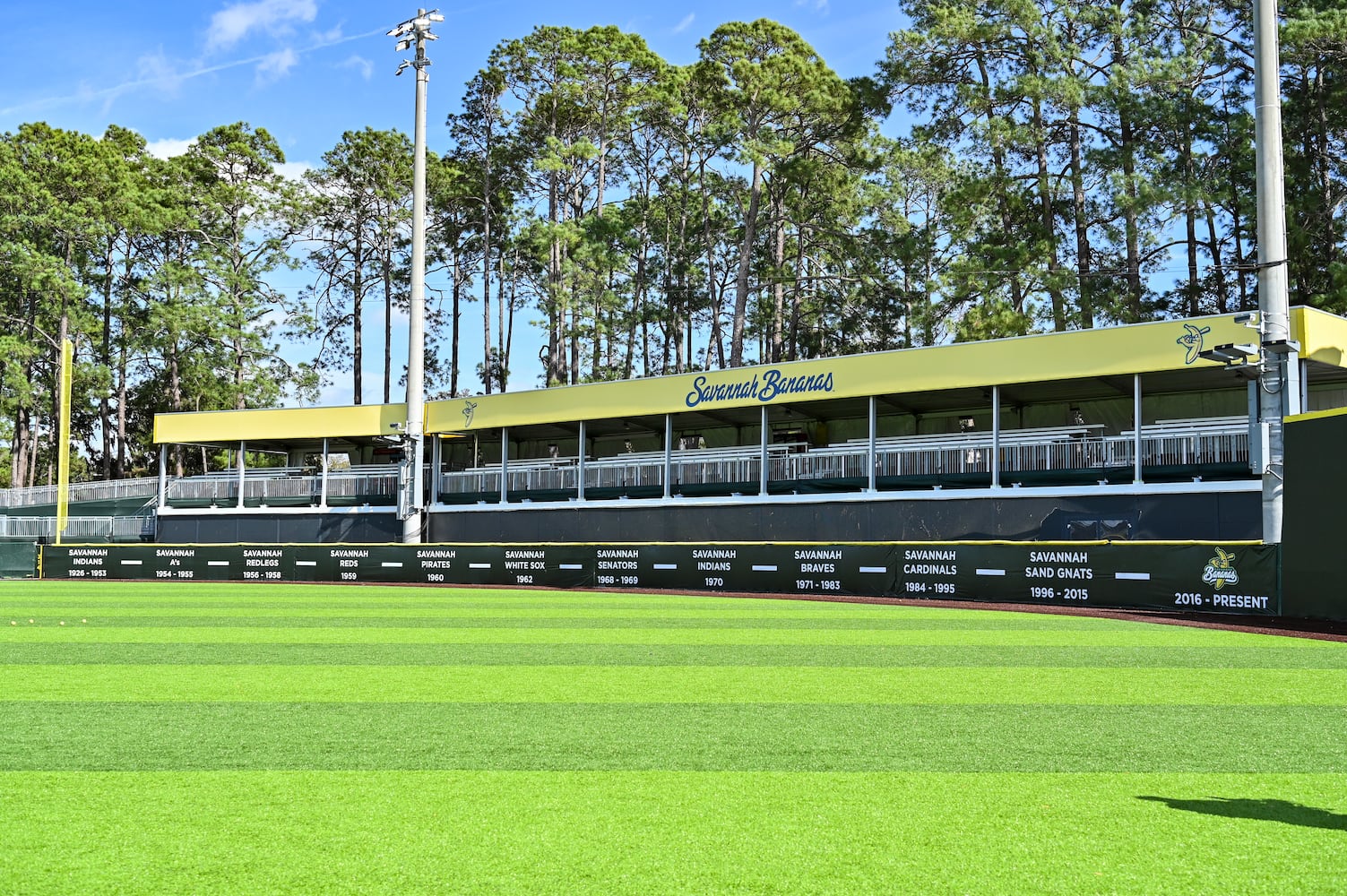
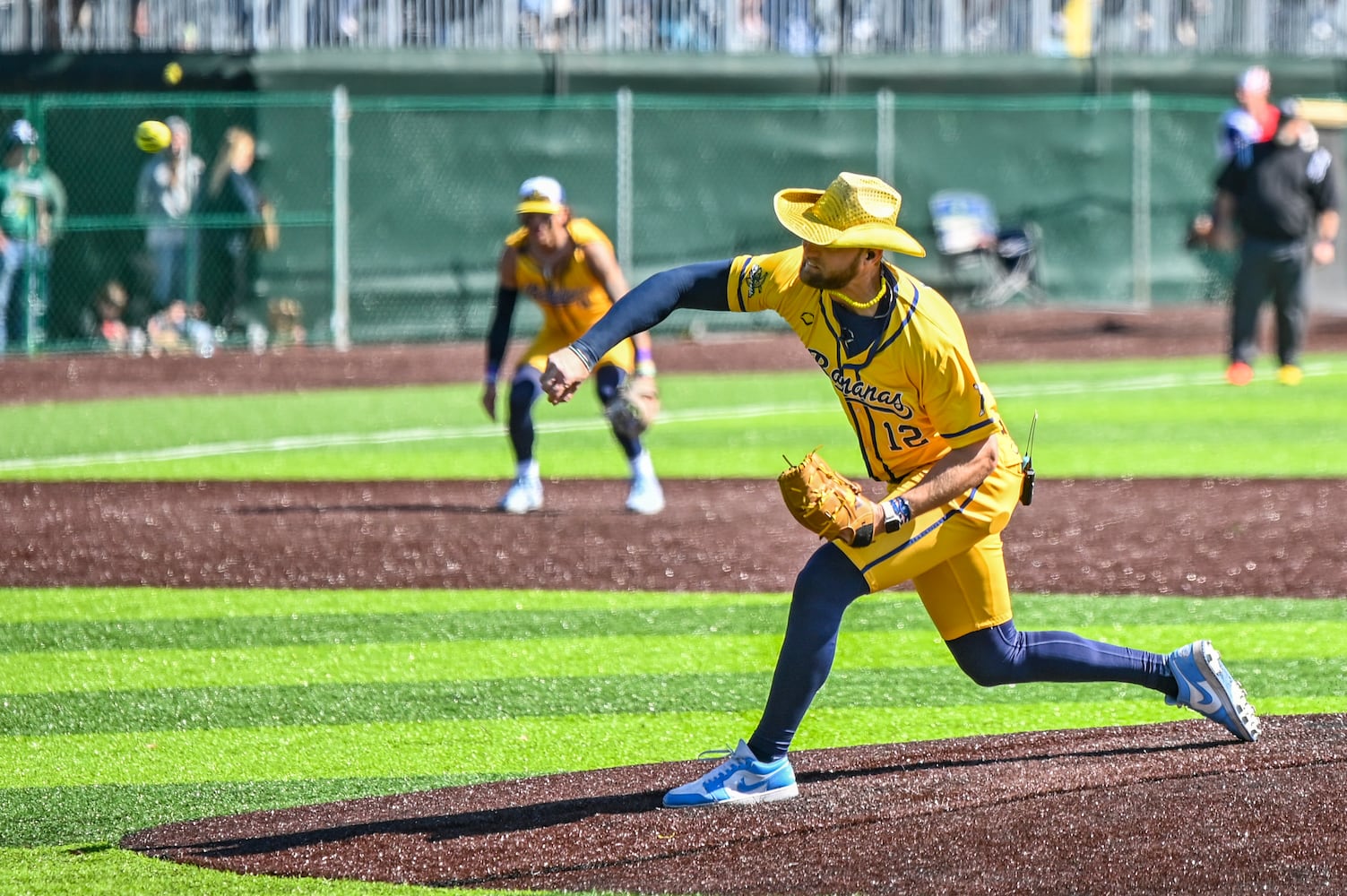
Grayson sold out its 500th consecutive game during the season-opening homestand earlier this month. The fan interest has led the stadium operators, Banana Ball owners Jesse and Emily Cole, to invest millions the past three seasons to expand seating and install modern amenities, such as a jumbotron videoboard and a programmable LED “dancing lights” system.
Jesse Cole considers Grayson Stadium a perfect parallel for what he and his wife have built. They inherited an abandoned, crumbling ballpark — the Sand Gnats, a minor league team, relocated to Columbia, South Carolina, after the 2015 season — and freshened it with a fun, youthful product that gradually grew into a worldwide phenomenon.
“Remember, when the former team was here and they were drawing 300 and 400 fans a night, it was the same old ballpark,” Cole said. “I feel proud that we could keep it going. I feel fortunate that we had the perspective to have a love for this place and feel the history and see what it could be.”

Credit: Sarah Peacock
Credit: Sarah Peacock
Graced by greats
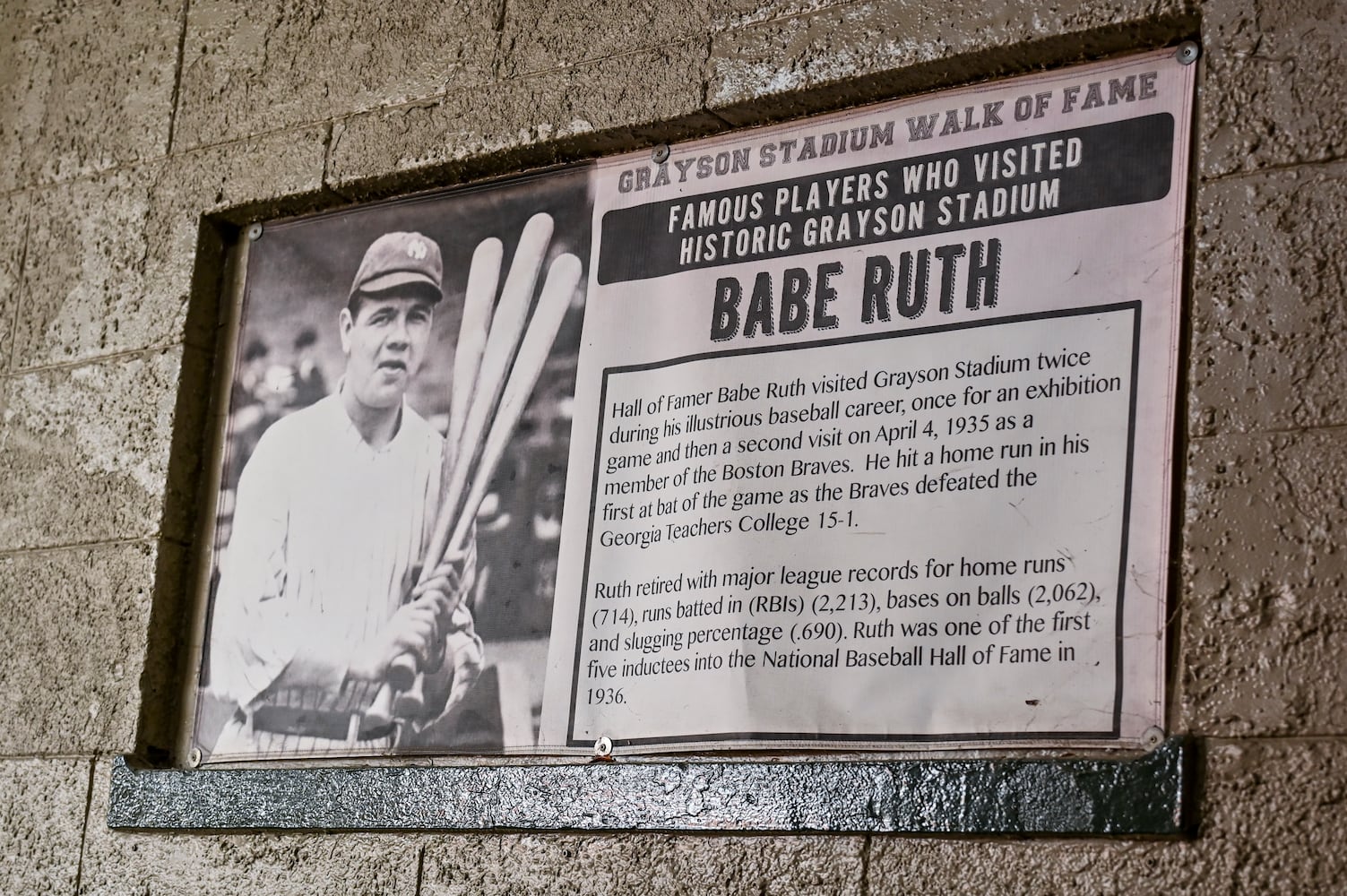
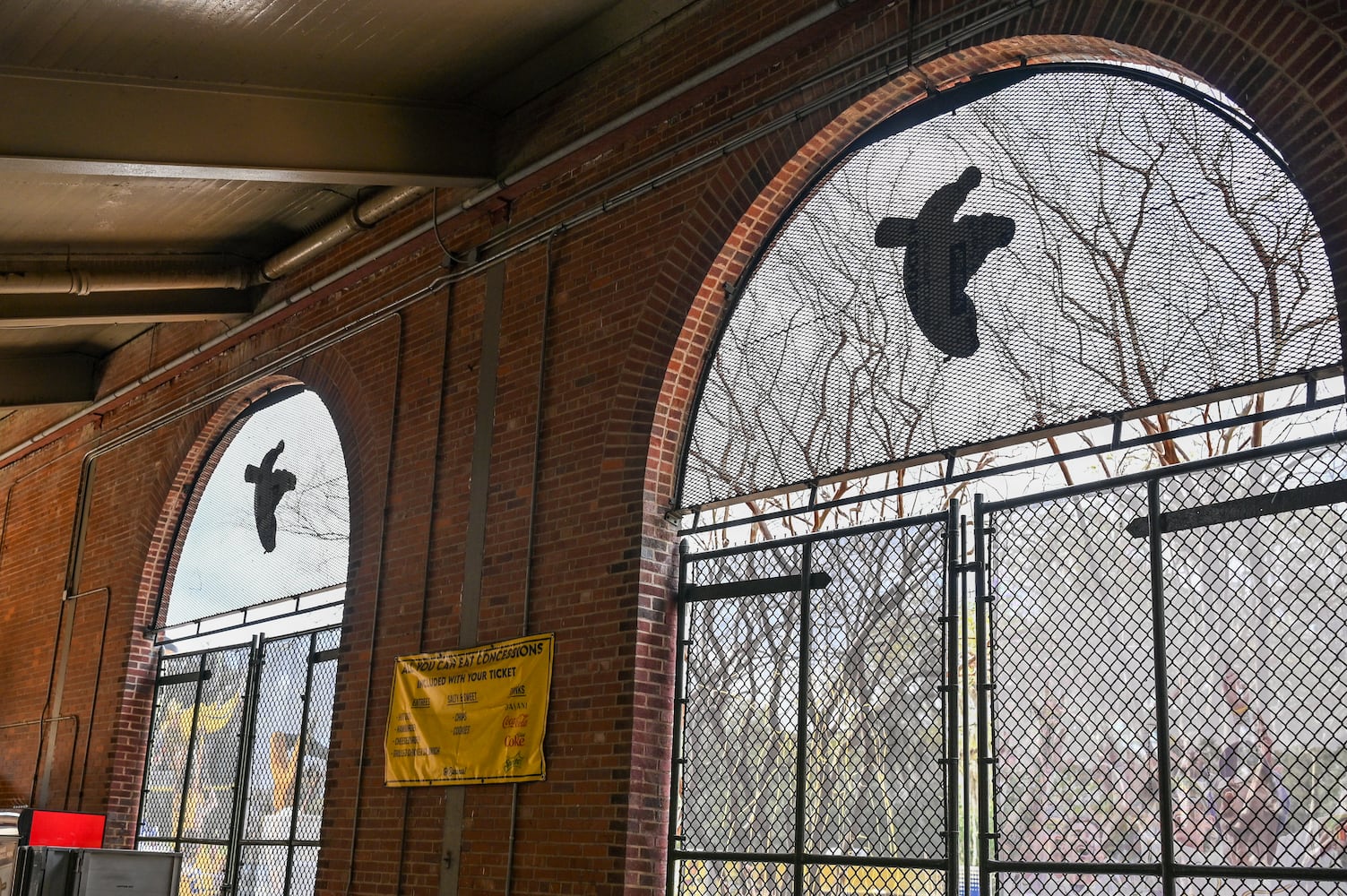
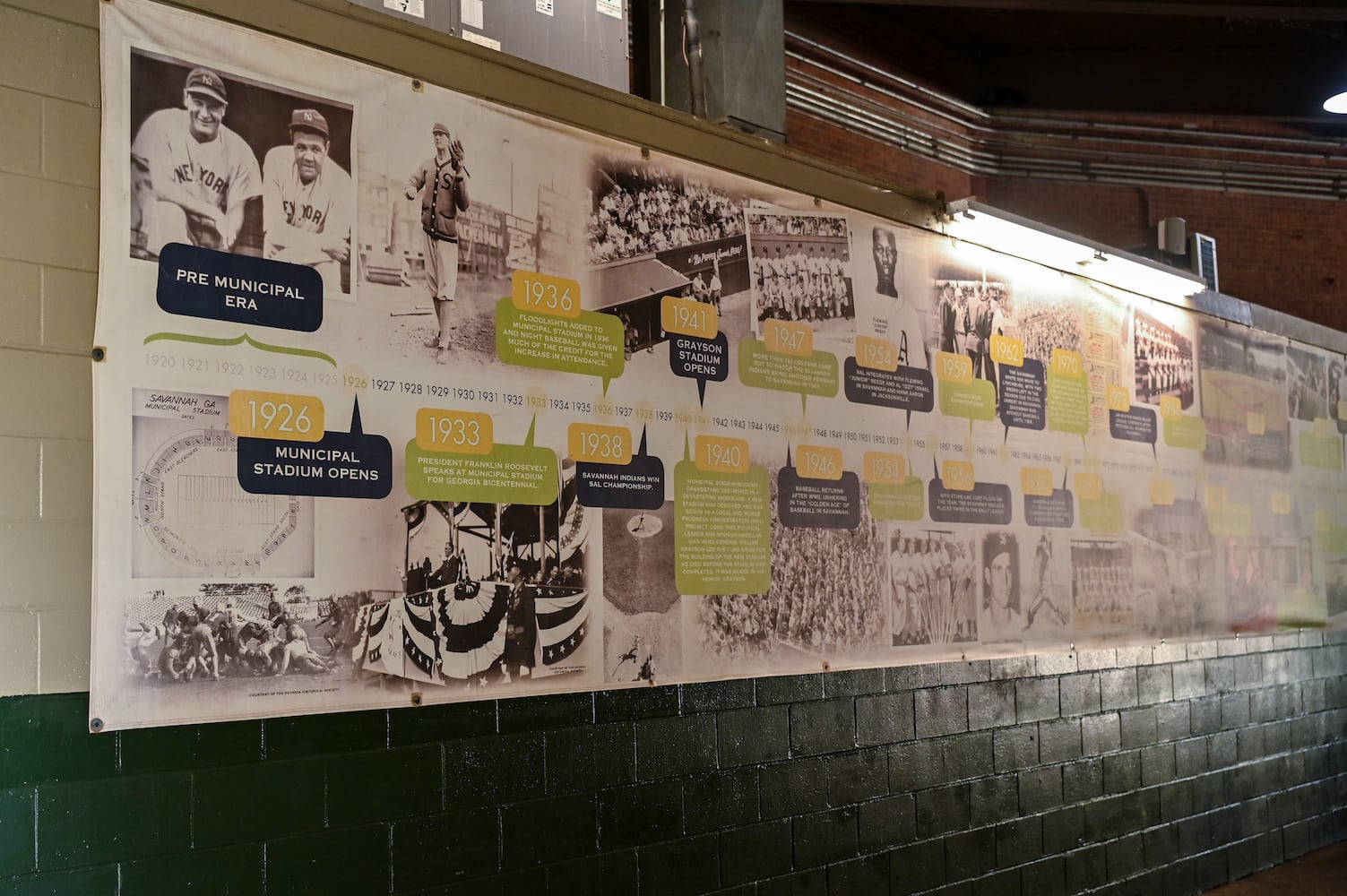
Grayson doesn’t have a Monument Park a la Yankee Stadium to honor the greats to play there. Instead, banners bearing the names and likenesses of baseball icons dot the concourse, a collection that stretches to the ballpark’s earliest years.
Babe Ruth played exhibition games there twice in Grayson’s first decade, hitting a home run in his first at bat. Jackie Robinson, who broke Major League Baseball’s color barrier, took the field as a minor leaguer in 1951, five years after his first scheduled appearance in Savannah was canceled because city leaders objected to Black players competing alongside whites.
Hank Aaron, the one-time home run king and arguably the greatest player in Atlanta Braves history, visited as a 19-year-old slugger with then-Braves farm team the Jacksonville Braves.

More Yankee greats, such as Yogi Berra and Mickey Mantle, played exhibition games at Grayson. During the 1950s and 1960s, the ballpark was an annual stop for the Bronx Bombers each April as they rode the train from their spring training facility in Florida back to New York.
Lifelong Savannah resident Joe Shearouse remembers his dad taking him out of primary school for the exhibitions, with first pitch always at 1 p.m. on a weekday. He recalls Berra hitting a home run completely out of the stadium and into the stand of pine trees beyond the left field fence.
Grayson was a training ground for many Braves players. Atlanta put its Class AA team in Savannah for 13 years in the 1970s and 1980s, and slugger Dale Murphy spent a season there. Aaron, who became a Braves’ scout and instructor following his 1976 retirement, was a fixture in the stands — although he spent as much time signing autographs and chatting with fans as he did evaluating talent.

Credit: Courtesy of Georgia Historical Society
Credit: Courtesy of Georgia Historical Society
Many other future Major League stars passed through Savannah in Grayson’s 82 years as home to minor league teams. A current Banana Ball player, Ga’von Wray of the Firefighters team, recalls visiting the ballpark as a boy on family road trips from his Douglasville home.
“It’s a nostalgic place,” Wray said. “I was a baseball nerd, so when I came to games I knew about all the greats who have played here. Babe Ruth, Hank Aaron. Wow.”
Baseball icons aren’t the only celebrities to have graced Grayson. Then-sitting President Franklin D. Roosevelt delivered a speech during Georgia’s bicentennial celebration in 1933, telling the crowd he felt a “kinship” with Georgia’s founder, James Oglethorpe, and the first settlers, according to a report on his remarks in the Savannah Evening Press.

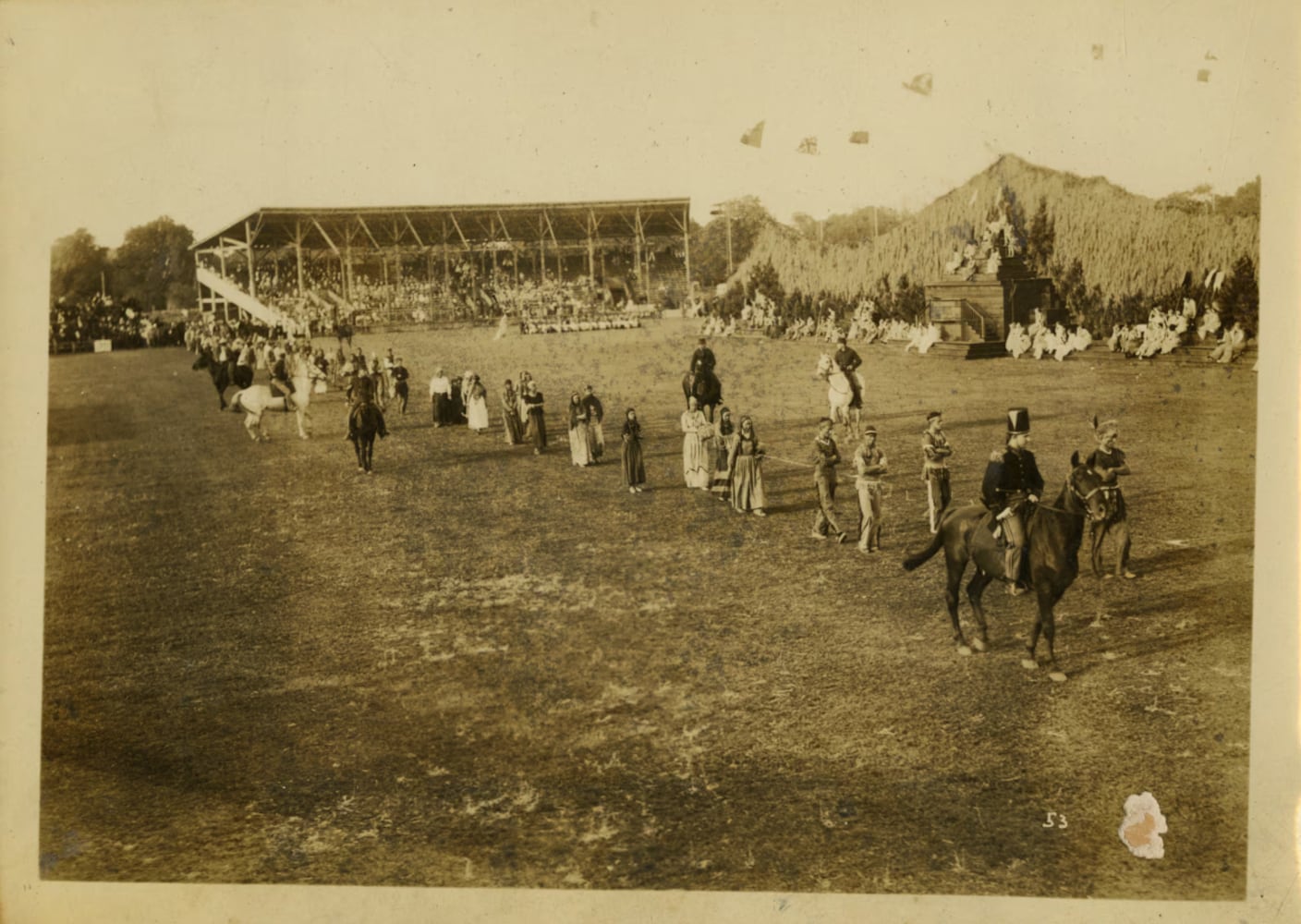
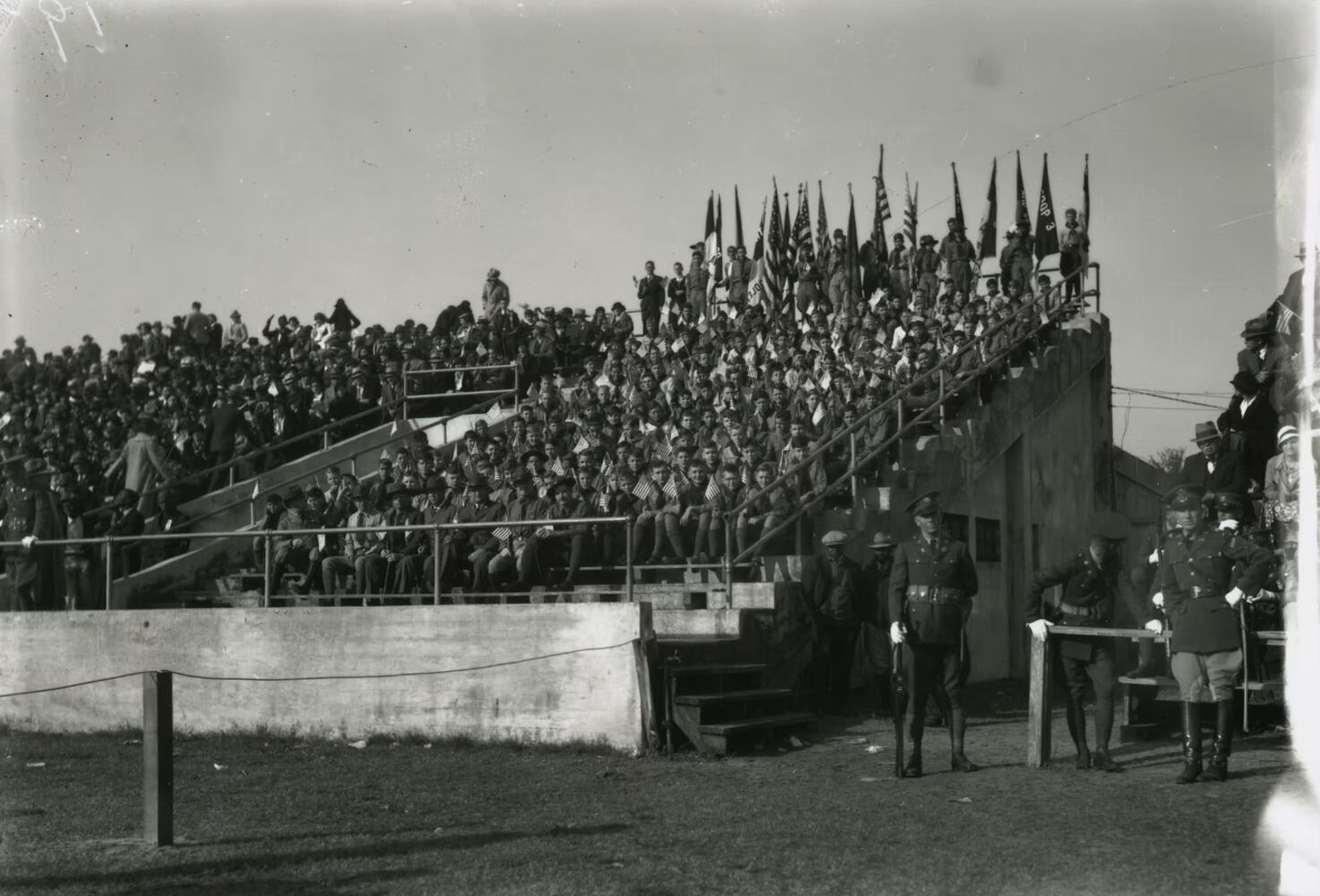


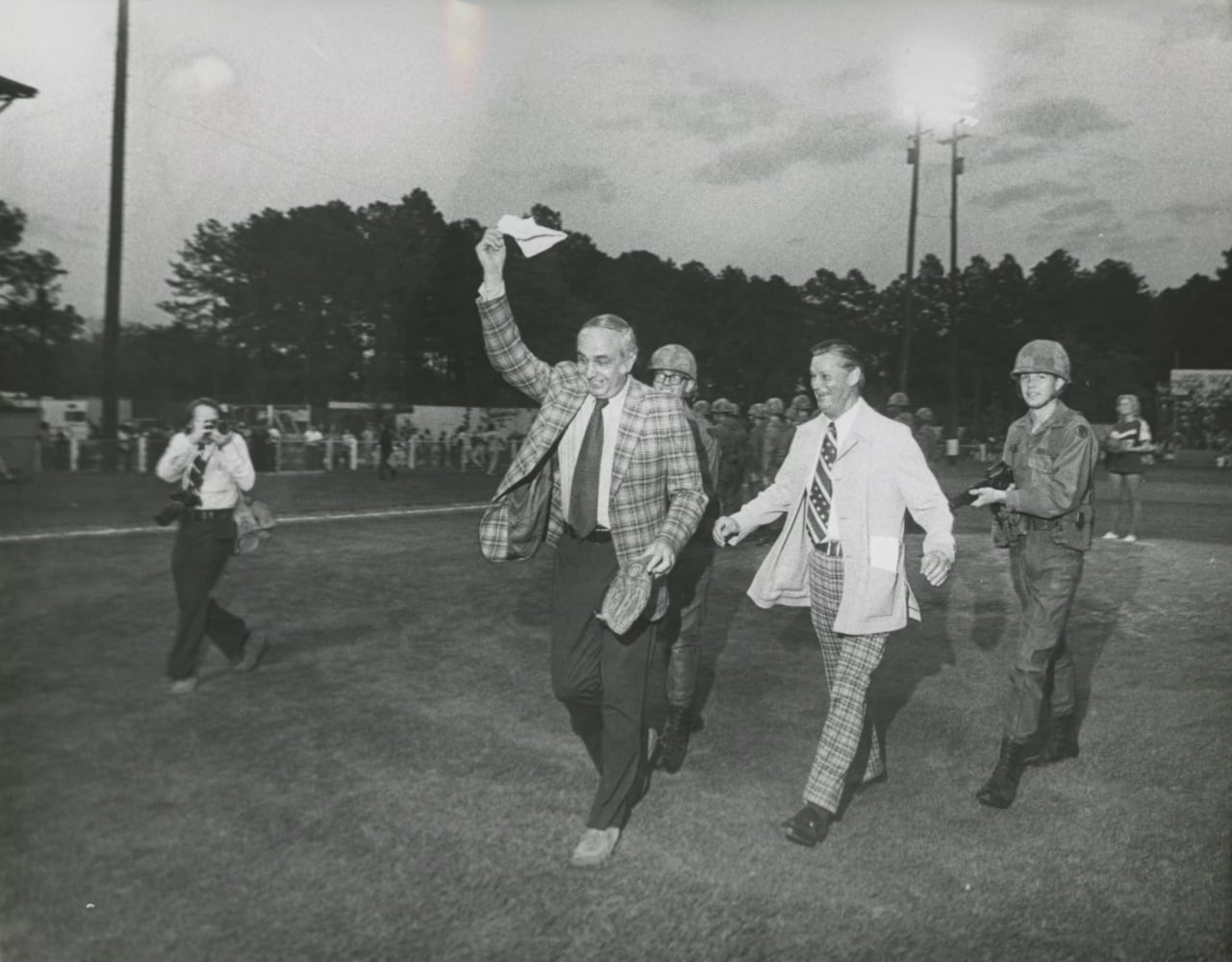


The ballpark has at times doubled as a concert venue, with performances by legendary musicians including Bob Dylan and Willie Nelson.
Grayson also was an epicenter of Savannah’s civil rights movement in the 1960s. The stadium long featured segregated seating, with Black spectators relegated to the outfield bleachers. The Savannah chapter of the NAACP, led by W.W. Law, called for a boycott of Savannah White Sox games late in the 1962 season and picketed against segregation outside Grayson’s grandstands.
The owner moved the team to Virginia in response and baseball didn’t return to Savannah until 1968 — two years after the city integrated the seating areas.

Credit: Courtesy of City of Savannah Municipal Archives
Credit: Courtesy of City of Savannah Municipal Archives
Surviving a hurricane, outlasting critics
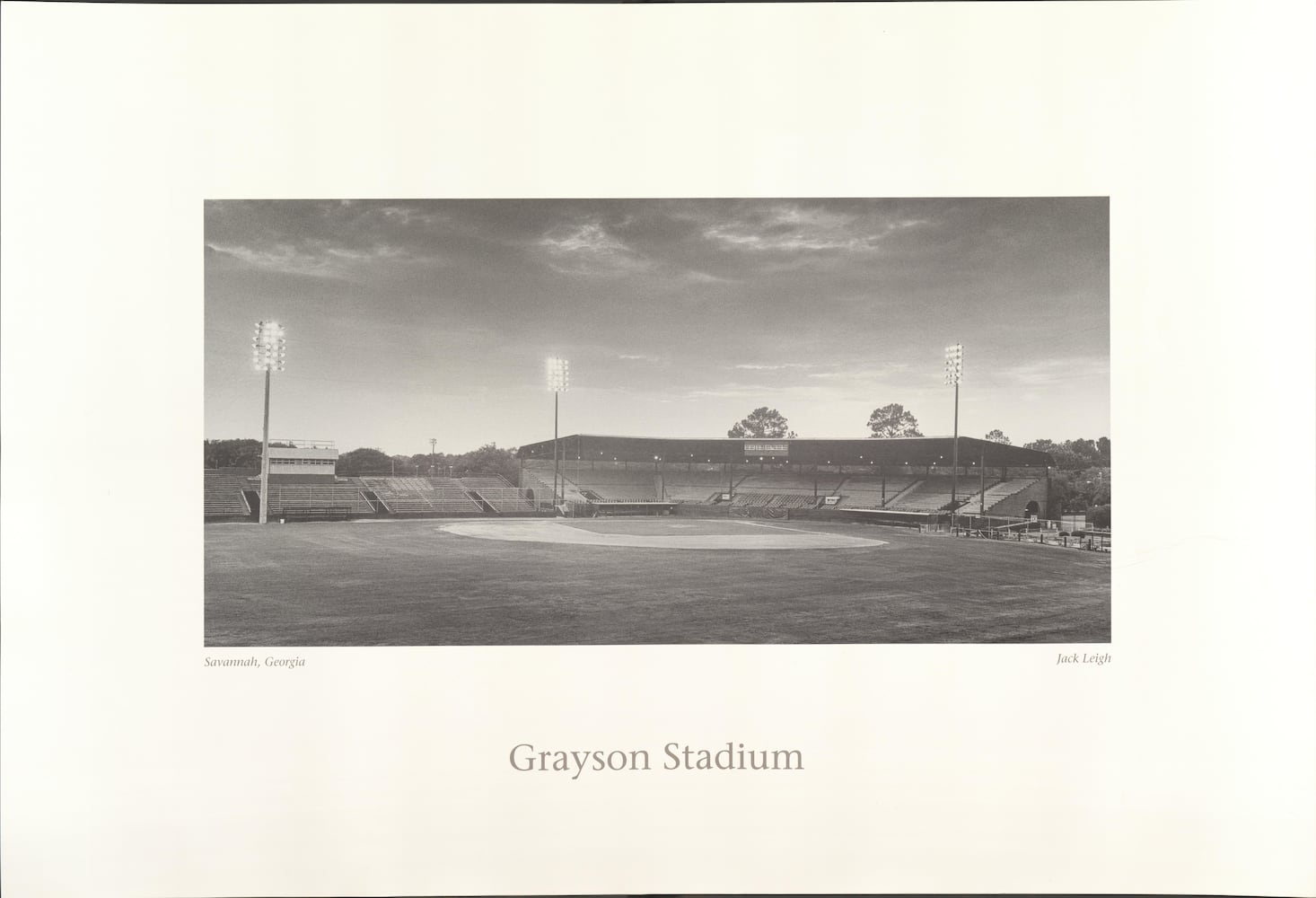
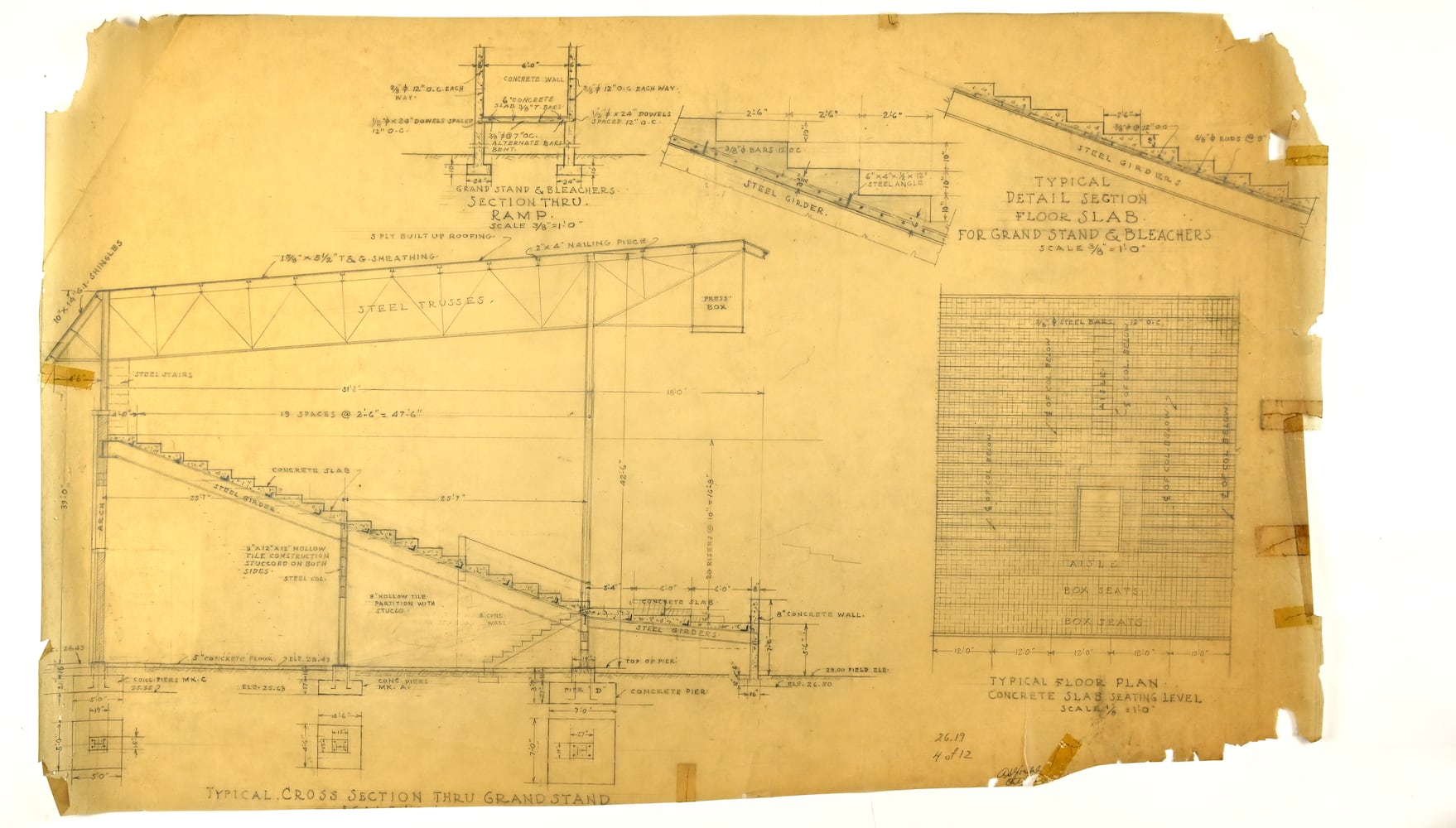
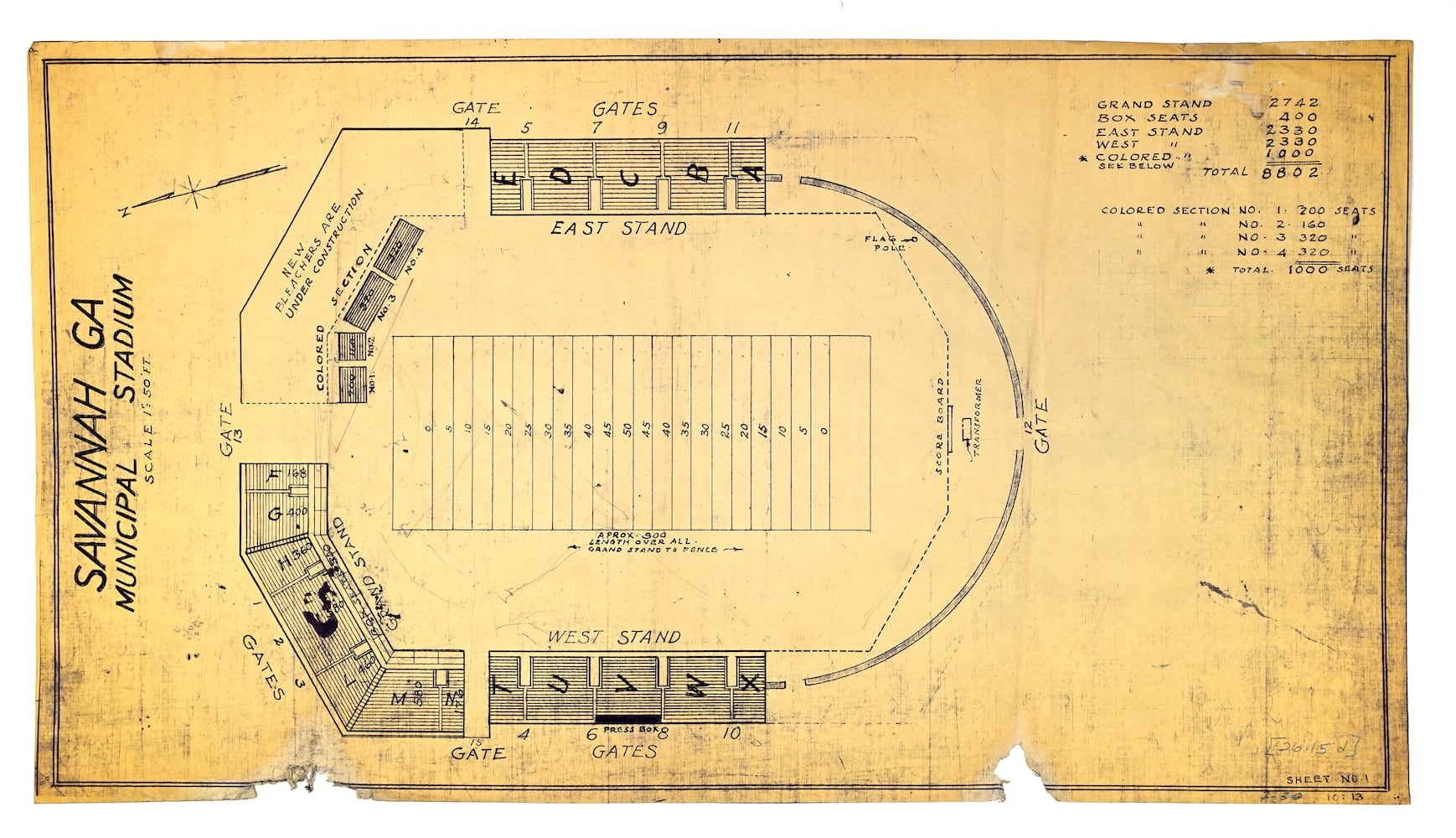
Grayson debuted as Municipal Stadium in 1926, with wooden grandstands flanking a grassy expanse. The facility quickly became a focal point for civic events, such as high school graduations, city functions and athletic events, according to a 2007 report prepared for the centennial celebration of Daffin Park, the 80-acre green space that includes the ballpark.
It became ingrained in local culture as the site of Thanksgiving high school football games. Savannah High vs. Benedictine, one of the state’s oldest rivalries, was played there every year between 1927 and 1959. On Thanksgiving night, Tompkins and Beach — the local football powerhouses among the Black schools before desegregation — would clash there.

Credit: Courtesy of Georgia Historical Society
Credit: Courtesy of Georgia Historical Society
A Tompkins player, Bernie Polite, told the Daffin Park centennial report’s author, Tania Sammons, “the stadium would be rockin’, it would vibrate” during the so-called Turkey Night games.
The ballpark’s first concrete section was constructed and joined to the original structure in the late 1930s, but a Category 2 hurricane — the last to cause widespread destruction in Savannah — leveled the wooden stands in 1940. Plans called for a 12,000-seat replacement, but the outbreak of World War II interrupted the renovation, and the stadium was rebuilt to a 5,000-seat capacity.
The reborn ballpark was renamed in honor of William Grayson, a Spanish-American War hero and prominent local political leader who died as the stadium was under construction.
The ballpark went largely unchanged over the next seven decades, and baseball tenants began to fuss over its antiquated confines in the late 1990s. The Braves relocated in 1983 and a St. Louis Cardinals’ Class AA affiliate called Grayson home from 1984 to 1995.
Once the Cardinals left, a string of Major League franchises moved their lower-level teams in and out of Savannah as the city resisted major upgrades or committing to a new stadium.

Credit: Courtesy of Georgia Historical Society
Credit: Courtesy of Georgia Historical Society
The grousing reached a tipping point in 2014 when the city council voted to build a new arena, eschewing a stadium proposal. Grayson’s then-leasee, Atlanta-based Hardball Capital, announced a move to an under-construction ballpark in Columbia the next year.
Shearouse, who went to those Yankee exhibition games at Grayson as a boy, was the stadium’s caretaker at the time. No new minor league teams had shown interest in Grayson, and city officials were unsure what to do with the then-89-year-old facility.
That’s when Shearouse got a call from Cole, the owner of a college summer league team in Gastonia, North Carolina. He drove up and watched a Gastonia Grizzlies game and reported back to city council that Cole’s brand of baseball “could work” in Savannah.

Credit: Sarah Peacock
Credit: Sarah Peacock
“The city manager and city council weren’t enthused about it but they figured, ‘What else can we do with the ballpark?’ and decided to give it a try,” said Shearouse, now retired. “It’s worked out — 500 straight sellouts.”
This year, the ticket wait list for Banana Ball is 4 million names long. The most desired locale, Cole said, is Grayson, where the league’s six teams will play approximately 25 games and the season-ending championship tournament between March and October.
“We’re so proud of this,” Cole said. “There are only a few ballparks in the country that are still standing after 100 years and this is the best this stadium has ever looked.”

Credit: Sarah Peacock
Credit: Sarah Peacock
About the Author




Keep Reading

The Latest
Featured
