


Days away from the FIFA World Cup kicking off in Atlanta, MARTA’s new trains have not yet passed critical safety tests — a delay that threatens to undermine the agency’s promise to upgrade the transit system in time for the city’s showcase on the international stage.
It’s the latest setback in a $707 million project that’s already led to finger-pointing behind the scenes as the transit agency struggles to bring its first new railcars in more than two decades into service.
MARTA officials were so worried at one point late last summer that they threatened to pursue a damage claim of more than $1 million against its Swiss train manufacturer, according to documents obtained by The Atlanta Journal-Constitution. The private bickering contrasts with the rosy picture MARTA has publicly conveyed about its relationship with Stadler and the project’s progress.
One big deadline had already been missed by the time MARTA wrote to the company in August 2025. Transit agency officials, under pressure to deliver the new railcars in time for the World Cup, said they were “seriously concerned” the new, later deadline was in jeopardy, too.
The correspondence reviewed by the AJC pulls the curtain back on the inner workings of one of MARTA’s most complex projects and explains some of the reasons Atlantans are still waiting on the state-of-the-art railcars.
It’s a long-overdue upgrade: Dozens of cars in the existing fleet are nearing 50 years old, and mechanical failures disrupt rider commutes routinely. MARTA can’t swap out the most unreliable units until the new trains enter service.
Even now, the project is running behind, records show. Under state policy, MARTA is required to notify the Georgia Department of Transportation that the trains are safe and ready for passengers 30 days before they plan to begin service. As of Tuesday, none of the new trains had passed the full battery of tests required before GDOT can sign off on operating them.

Credit: Miguel Martinez/AJC
Credit: Miguel Martinez/AJC
Stadler, by its own account, expected the trains to clear that hurdle by mid-April, a timeline that would have allowed plenty of time for MARTA to give the state proper notice before hundreds of thousands of soccer fans descend on Atlanta for the eight games scheduled for Mercedes-Benz Stadium.
Instead, the final tests are happening at the eleventh hour: State officials tentatively plan to start inspecting the railcars this week, just days before MARTA has said that five of the new trains will begin ferrying passengers. A ceremonial inaugural ride is planned next week that will ferry dignitaries from across the region from Avondale to the Georgia State Station, mimicking MARTA’s first-ever rail trip before the train continues into service for general passengers.
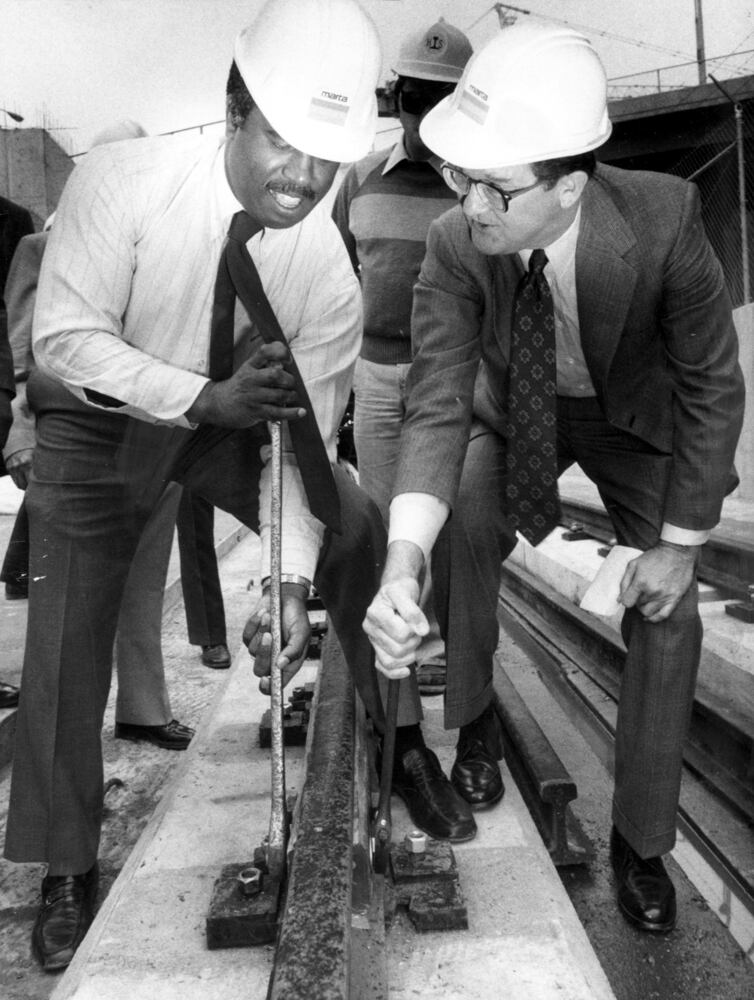

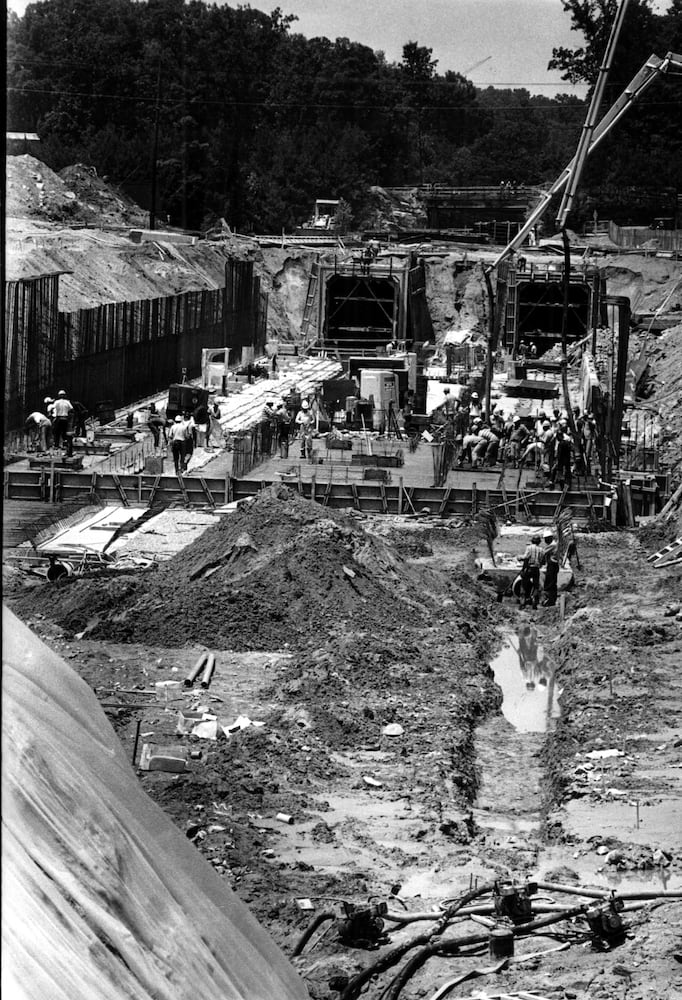
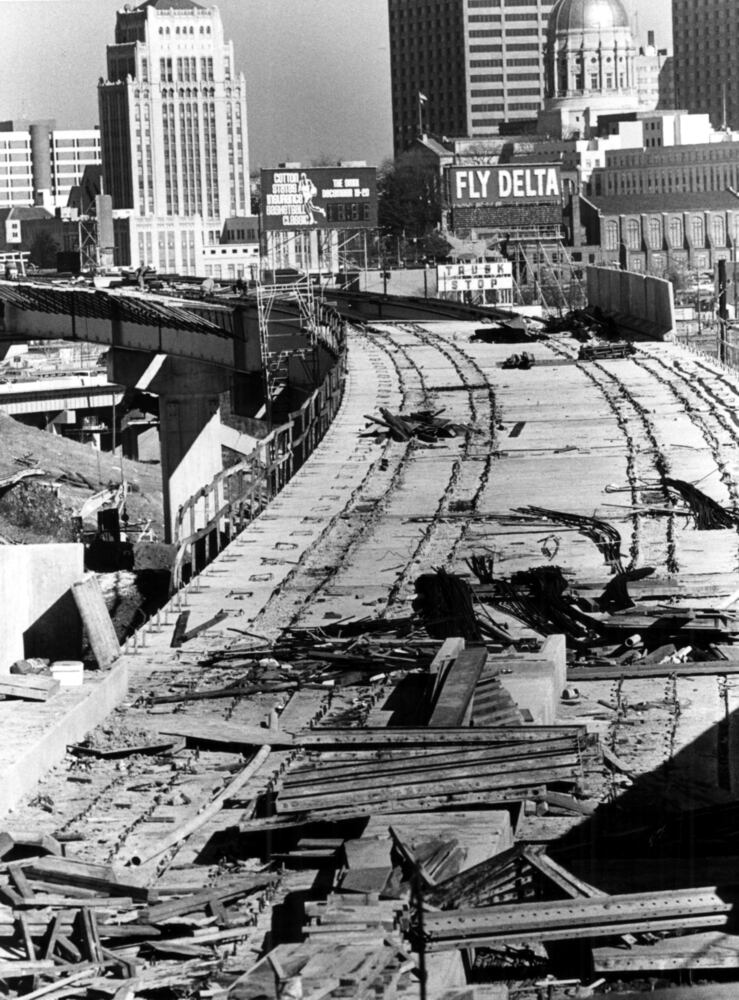
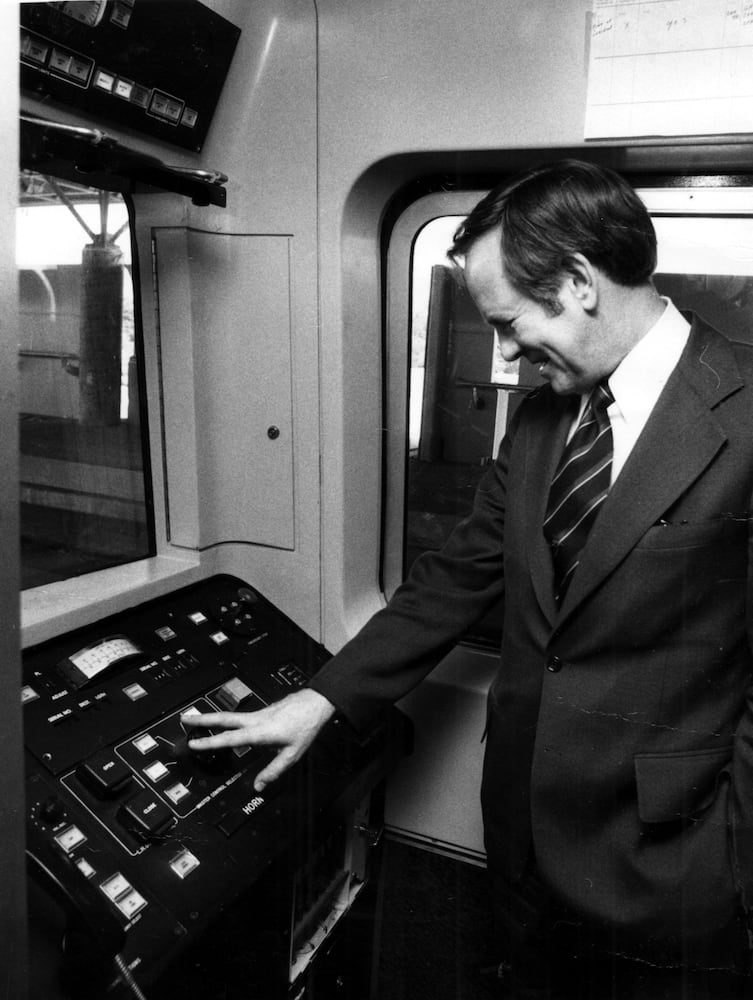


Interim General Manager and CEO Jonathan Hunt has said he would delay the launch as long as is necessary to ensure the trains are safe: “I’m not going to go and put a train on the system that isn’t 100% safe and 100% tested,” Hunt told a group of advisers in January.
In an interview last week, Hunt said that is still his position. Knocking on a wood table, he said MARTA should still be able to meet its current June 4 deadline. But he also said he was willing to face the embarrassment of further delay if issues arise and prevent that.
Officials say the agency will be able to provide expanded service during the World Cup, which could draw as many as half a million riders to MARTA, regardless of whether the new trains are in operation.
“Our focus is safety,” Hunt said. “That is our guiding principle, and if it means that the authority ultimately has egg on our face over something, I’m more than willing to wear that.”
Hunt acknowledged that tough words were exchanged with Stadler last year.
MARTA’s complaints then went beyond worries about the World Cup deadline. The agency said Stadler had not devoted enough staff to the safety and testing process, didn’t have adequate quality controls in place and had not provided the materials needed to properly train employees who will operate and maintain the new vehicles.
“We wanted to get their attention, and we most certainly got their attention,” Hunt said, adding that the airing of grievances ultimately helped the project.
“We made some updates, they made some updates, and we’re right here on the precipice of beginning the phased delivery of some amazing, amazing equipment,” he said.

Credit: Hyosub Shin/AJC
Credit: Hyosub Shin/AJC
A Stadler spokesperson did not directly answer questions about the concerns MARTA raised but said in a statement that they are working together closely now.
We are “confident about meeting the service start goal in line with the testing and training protocols,” spokesperson Charlotte Thalhammer said. “The trains are performing as expected.”
Replacing the entire MARTA train fleet has been a massive undertaking. It was Stadler’s largest-ever vehicle order when the contract was signed in 2019. Five years later, Stadler won a separate $500 million contract to overhaul MARTA’s train control system.
The 224 rail cars Stadler is building for MARTA at the company’s U.S. headquarters in Salt Lake City are a tailor-made version of their METRO train model that runs in Berlin and United Kingdom cities like Glasgow, Liverpool and Newcastle. The customization means the trains operate a little differently in every place, but one consistent refrain has been delayed schedules and early-service hiccups.

Credit: Miguel Martinez-Jimenez
Credit: Miguel Martinez-Jimenez
Stadler officials have bragged that MARTA will have the most technologically advanced system in North America. The trains have sleek silver bodies and are four cars long, all connected by an open gangway that allows riders to walk from one end to the other. Complex software runs the trains, which operate more autonomously compared to the existing cars and have the latest safety features.
But the trains were still being configured when MARTA wrote to Stadler about the timeline in August 2025.
The work was behind, although exactly by how much is unclear. A 2023 version of the contract, which has gone through multiple revisions, called for the first train to be conditionally accepted by fall 2025, meaning it would be cleared for operations with only minor issues left to address.
Last year, MARTA developed a new schedule that called for the trains to be accepted by mid-May of this year. No trains have been accepted yet, MARTA spokesperson Stephany Fisher said Tuesday.
The latest delivery schedule is one of many train-related documents that MARTA has withheld across 12 open records requests made by the AJC since January, as reporters have tried to learn more about the project and the delays. MARTA has also declined to answer several questions about the testing process.

Credit: MARTA
Credit: MARTA
Among the records MARTA has withheld in full is a document in which Stadler updates the agency on its schedule and progress in real time. MARTA has cited exemptions that protect trade secrets and records for which the disclosure could compromise security.
The few records MARTA has provided reveal more complications than agency officials have previously acknowledged.
MARTA, Stadler bicker over delays
MARTA’s letter to Stadler about the delays was sent in August, around the same time Hunt was named interim CEO. He told colleagues he expected pushback to the agency’s threat to enforce a clause in the contract entitling MARTA to at least $1.3 million in damages.
“I expect there will be a terse response,” he wrote in an email at the time.
There was.
Stadler’s reply to MARTA acknowledged “real and severe” setbacks, but the company said it believed both groups shared responsibility.
“We can spend time pointing to all the actions that got us here, and assigning blame for those things, because there is blame enough to go around,” Stadler’s August 2025 letter stated. “However, we believe this exercise is counterproductive and harmful, as we are not utilizing the time we have in front of us effectively to reach our common goal.”
Among Stadler’s complaints: MARTA had provided only a fraction of the track access it promised — access critical to train testing. In five weeks of testing, MARTA had canceled more than a third of the testing time Stadler was owed, records show.
Hunt said this was one of the areas where MARTA made changes, ultimately agreeing to expand Stadler’s test time. The vast majority of testing still took place outside of service hours or late at night when there are fewer riders.
It’s not clear if MARTA has provided all of the track time Stadler is due. Fisher, the MARTA spokeswoman, declined to answer questions about how many nights of testing were completed this year.
MARTA and Stadler have encountered issues in the months since the August exchange, but nothing significant enough to merit another similarly tough letter, Hunt said.
Hunt gave few specifics when asked about the biggest problems the project has encountered. He elaborated on only one, saying they had to fix a sidestep used by operators to board the train. Preliminary testing revealed the ladder steps didn’t fit MARTA’s system, requiring a redesign.
But that’s the point of testing, he said. It’s designed to push the limits of the system so that solutions can be found before passengers are ever on board.
“When you put the full system together, you want that system to be tested in your environment as robustly as possible,” he said.
MARTA withheld records showing the full extent of the company’s testing plans. The limited records provided reveal that the agency and Stadler are still further behind than they expected to be at this point.
Screenshots in the correspondence MARTA provided to the AJC include a Stadler calendar showing that the certification process for the state was set to begin in January. It didn’t start until months later, on May 5, according to Fisher.
The agency also provided a draft copy of a rollout schedule prepared by MARTA staff last August that shows anticipated milestones. It called for the 11th train to arrive in Atlanta by mid-May; as of Friday, it had not arrived, Fisher said. The other 10 are already here.
Testing under real-life conditions, known as “burn-in” testing, began on April 16, Fisher said. MARTA’s schedule called for this type of testing to begin after other train testing was complete, but the two processes are now happening simultaneously.
MARTA began training operators while engineers were still testing and making modifications to the trains. Operators started training in March, Fisher said.
The training consists of three days in the classroom and additional time on the trains. Operators must complete a minimum of two round-trips from the South Yard near the Airport Station to the North Springs Station, she said, as well as pass a 20-question test.
As of last week, 45 operators have completed training and been deemed ready to operate the new railcars, Fisher said. More are in the process of being certified. MARTA’s remaining operators will be trained as more railcars are phased into service, she said.
Hunt, the interim chief, said training and retraining is a constant part of MARTA’s process and that if software updates are made during the testing process that impact how the trains run, operators would be retrained.

Credit: Miguel Martinez-Jimenez
Credit: Miguel Martinez-Jimenez
The testing process is rigorous, and the new trains must pass hundreds of tests, Fisher said. MARTA’s own standard requires the first couple of new trains to operate 4,000 miles without experiencing any issues before they can go into service.
GDOT is ultimately tasked with verifying those fault-free miles.
The state inspection plays a crucial role in ensuring the trains’ safety. GDOT is tasked with enforcing federal safety requirements for rail systems, and inspectors will scour MARTA’s records and examine the trains with a fine-tooth comb to ensure those rules are met. The state must also review and verify MARTA’s operator training.
It’s unclear whether GDOT’s approval can happen within MARTA’s desired time frame.
GDOT spokesperson Natalie Dale said there were “too many moving parts” to answer many of the AJC’s questions about certification, including whether the agency would waive the 30-day requirement.
Without that waiver, the earliest the trains could go into service would be after Atlanta hosts its first World Cup match on June 15.
GDOT might not need the full 30 days to complete its work, however, and state officials may be able to work overtime to clear the trains for passenger service before MARTA’s deadline, said Carol Comer, who retired in 2021 as the head of the GDOT division overseeing transit.
Approving the Atlanta Streetcar, for instance, required an intense final effort, Comer said. As with that project, state officials will have been following along as MARTA and Stadler worked on the trains, so they aren’t starting from scratch.
“You can put your nose to the grindstone and get it done,” Comer said, adding, “Nobody’s gonna overlook anything or take a shortcut. I mean, they’re gonna go by the book.”
About the Authors




Keep Reading

The Latest

Featured
