WASHINGTON (AP) — The world has largely viewed the U.S. more favorably than China for years, but those opinions have flipped in Beijing's favor this year, according to a new poll by the Pew Research Center, a remarkable shift driven in part by tensions between the Trump administration and U.S. allies.
More people have favorable views of China than the U.S. in 25 out of the 36 countries and territories that were surveyed, including Canada and Mexico. The poll was conducted from February to May, a period when the United States and Israel launched a war against Iran.
In only six countries do people still see the U.S. more positively than China, according to the findings released Wednesday.
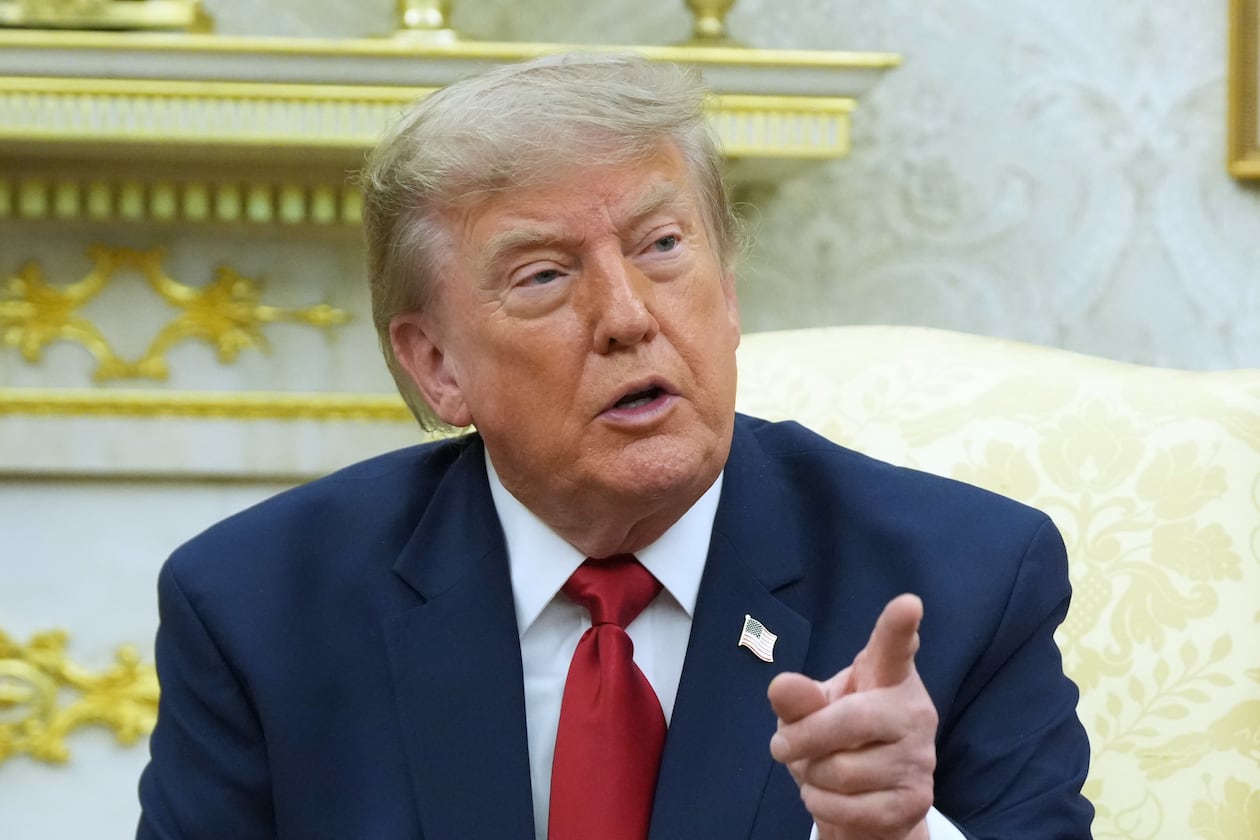
Views in 22 out of the 36 countries and territories also are more favorable of Chinese leader Xi Jinping than U.S. President Donald Trump, including in Canada, Mexico and major European powers including France, Germany and the U.K. However, people in many of the countries have low confidence in both men.
It marks the first time in the roughly 20 years Pew has been tracking global opinions that China has been viewed more positively than the U.S., said Laura Silver, associate director of Pew's Global Attitudes Research and one of the researchers on the study. Views of Beijing and Washington have been very similar at some points in the past but have not been significantly more favorable for China until now, she said.
The shift follows the COVID-19 pandemic becoming a distant issue and as global views of the U.S. have soured, Silver said.
“There was just an actual relationship between the outbreak of the war and the sense that the U.S. is just not contributing to peace and stability and that people have less confidence in Donald Trump," she said.
Trump's demands to control Greenland, the American military raid that captured Venezuela's then-leader Nicolás Maduro, and the U.S. handling of the Israeli-Hamas war in Gaza also have led to low approval in many countries, Silver said.
“The U.S. has done a lot in terms of global engagement in recent months to years that is not being perceived positively internationally,” she said.
Aside from benefiting from the fading memory of the pandemic, China appears to have gained from comparison with the U.S., Silver said.
“By comparison, we know that China is seen to be a more reliable partner in many places. It’s more likely to be seen to contribute to global peace and stability,” the researcher said.
Notably, those in some U.S. allied countries have drastically shifted their views in recent years, such as Canada. In the new survey, only 33% of Canadians have positive views of the U.S., down from 57% in 2023. Over the same period, their favorable opinions of China rose from 14% to 44%.
Trump slapped a barrage of tariffs on Canadian goods last year, and even claimed that Canada could be the “the 51st state.”
Major European countries — including France, Germany, Spain, Italy, Sweden, the Netherlands and Italy — all have switched their opinions toward the world's two largest economies.
People in the U.K., where about 6 in 10 held positive views of the U.S. in 2023, now view China and the U.S. similarly. Three years ago, the spread was 32 percentage points in Washington's favor.
Of the six countries where people have more favorable views of the U.S., Israel leads the way. About 8 in 10 Israelis view the U.S. positively, compared with 19% for China.
The other five countries are Japan, India, South Korea, the Philippines and Poland. Still, even their views of the U.S. have dimmed over recent years.
The U.S. is still ahead of China when it comes to government respect for personal freedoms, though the gap is shrinking, the Pew report says.
While China's standing has improved somewhat, the narrowed divide is “driven largely by the fact that people in nearly every country surveyed have become less likely to say the U.S. government respects its people’s personal freedoms” since 2021, when Pew last asked the question.
For the new study, Pew surveyed more than 42,000 people across 35 countries plus the West Bank and east Jerusalem, with margins of error ranging from 2.3 to 5.5 percentage points depending on the country.
___
Associated Press journalists Linley Sanders, Emily Swanson and Kevin S. Vineys contributed to this report.
Keep Reading

The Latest

Featured