


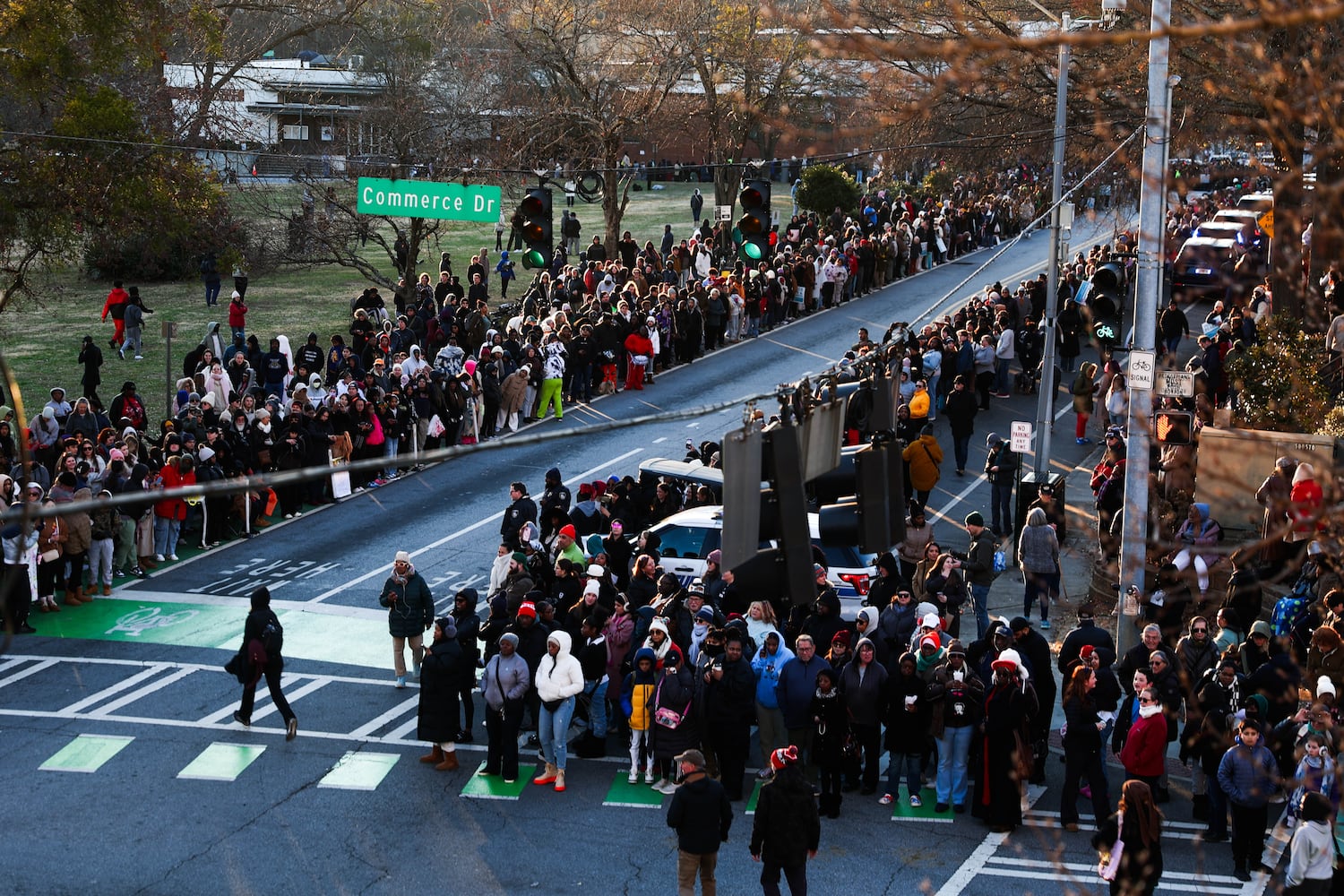
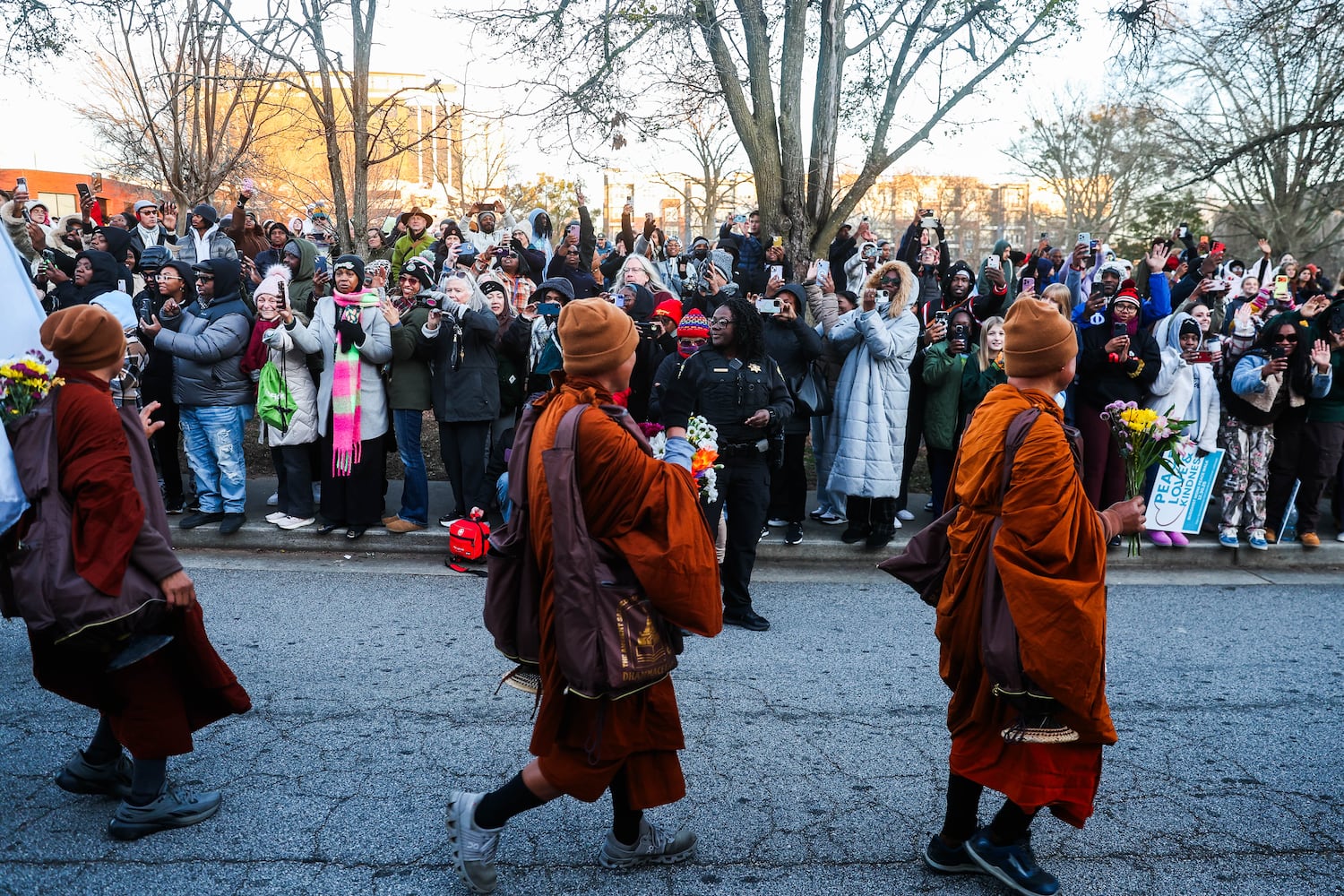
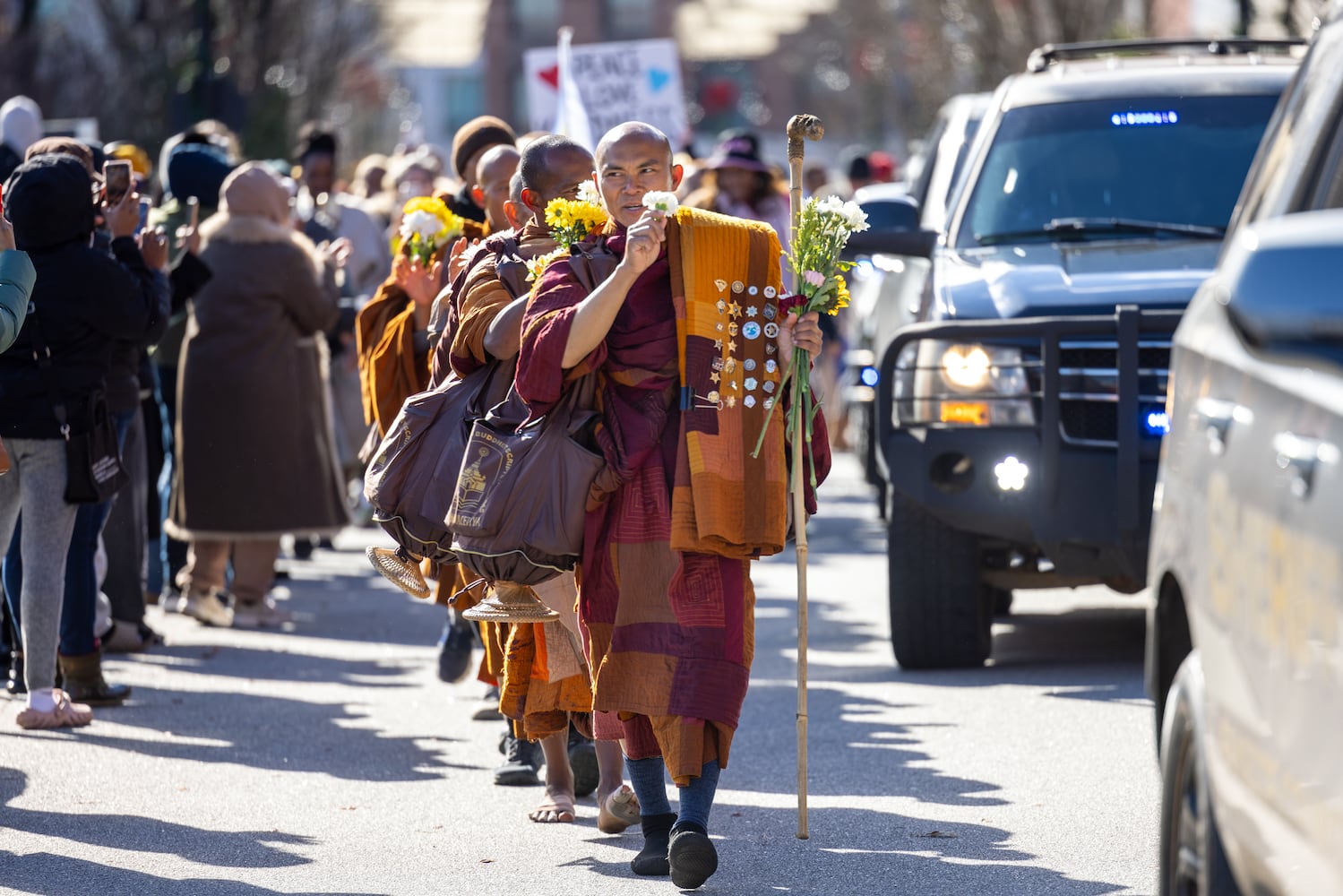
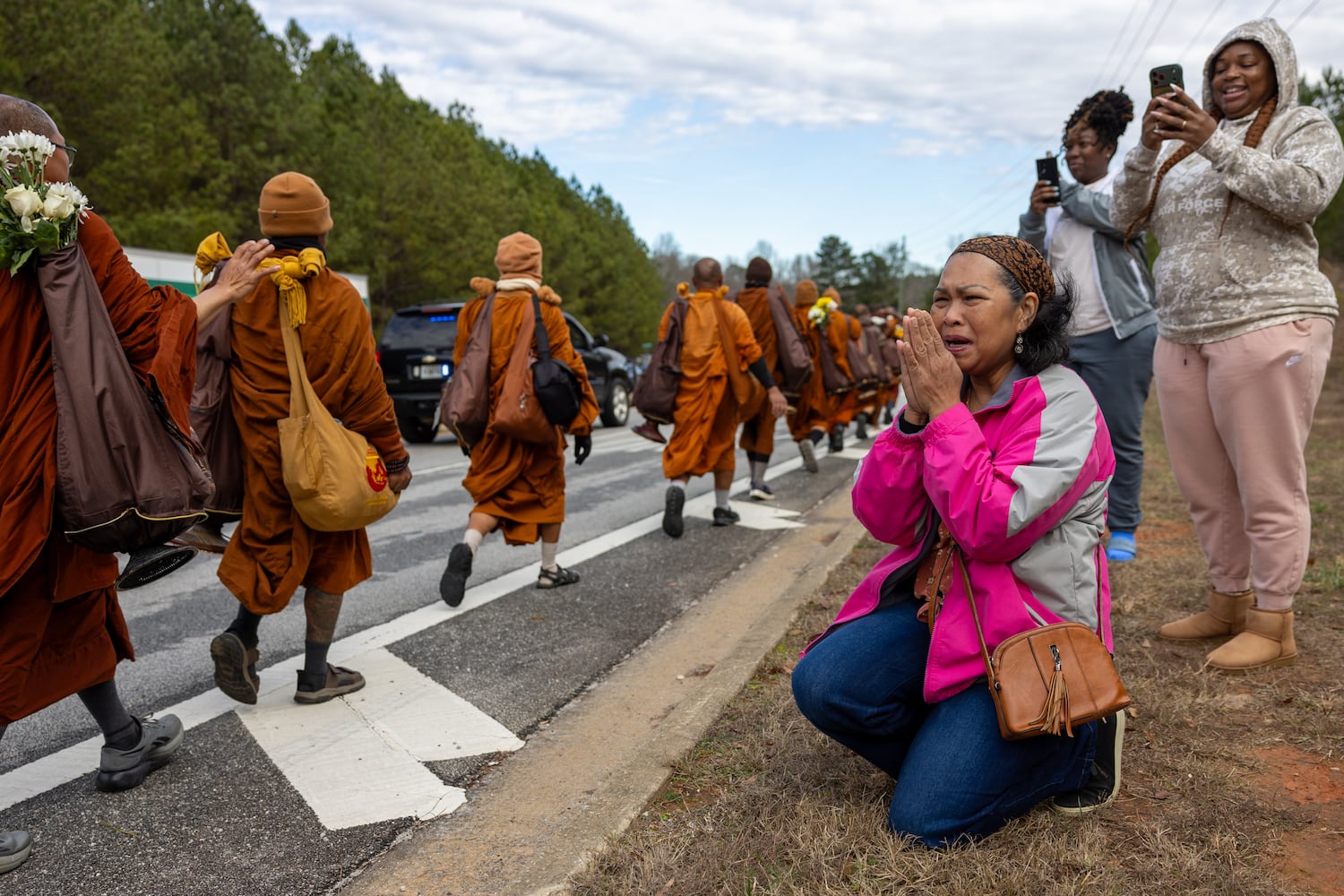
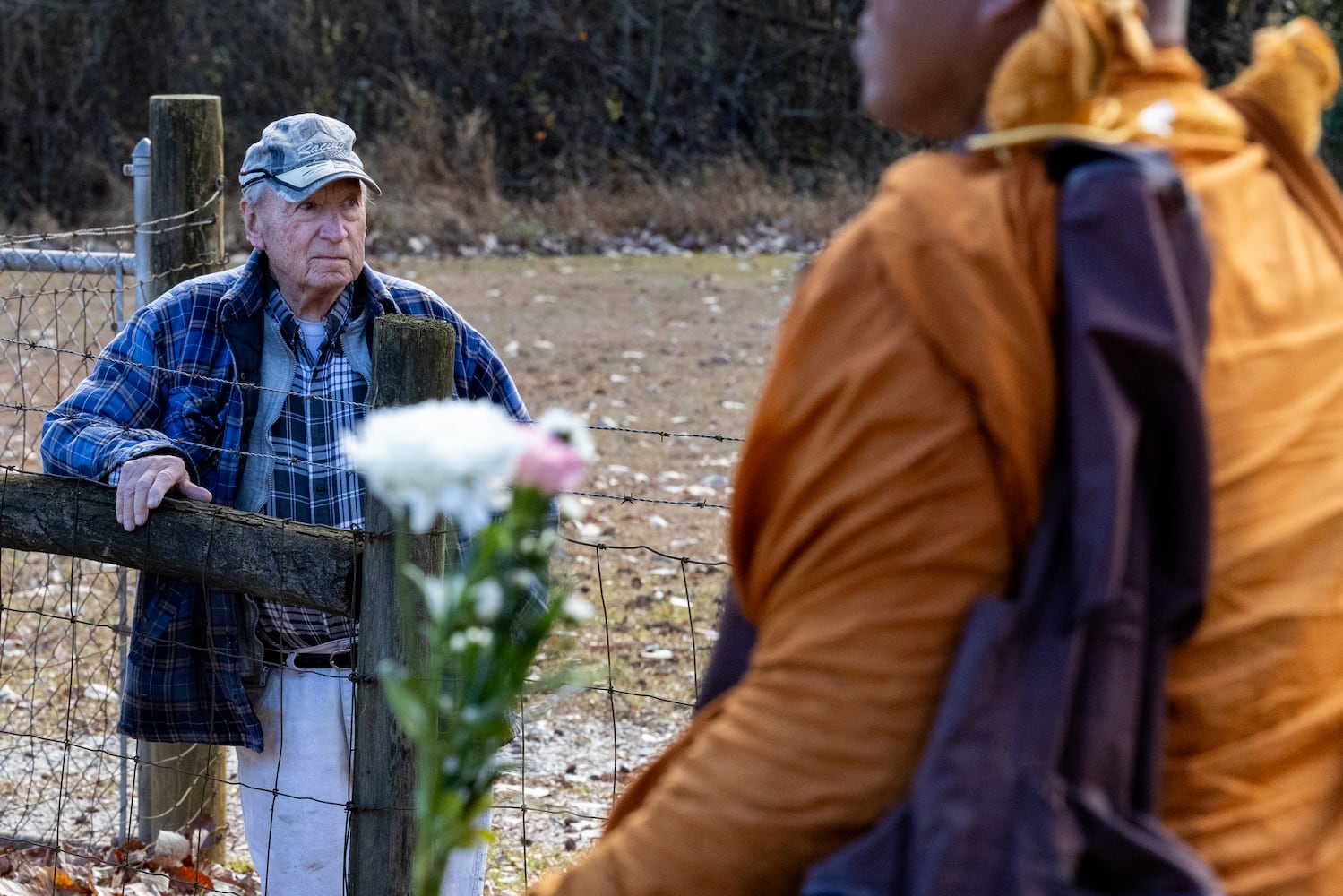
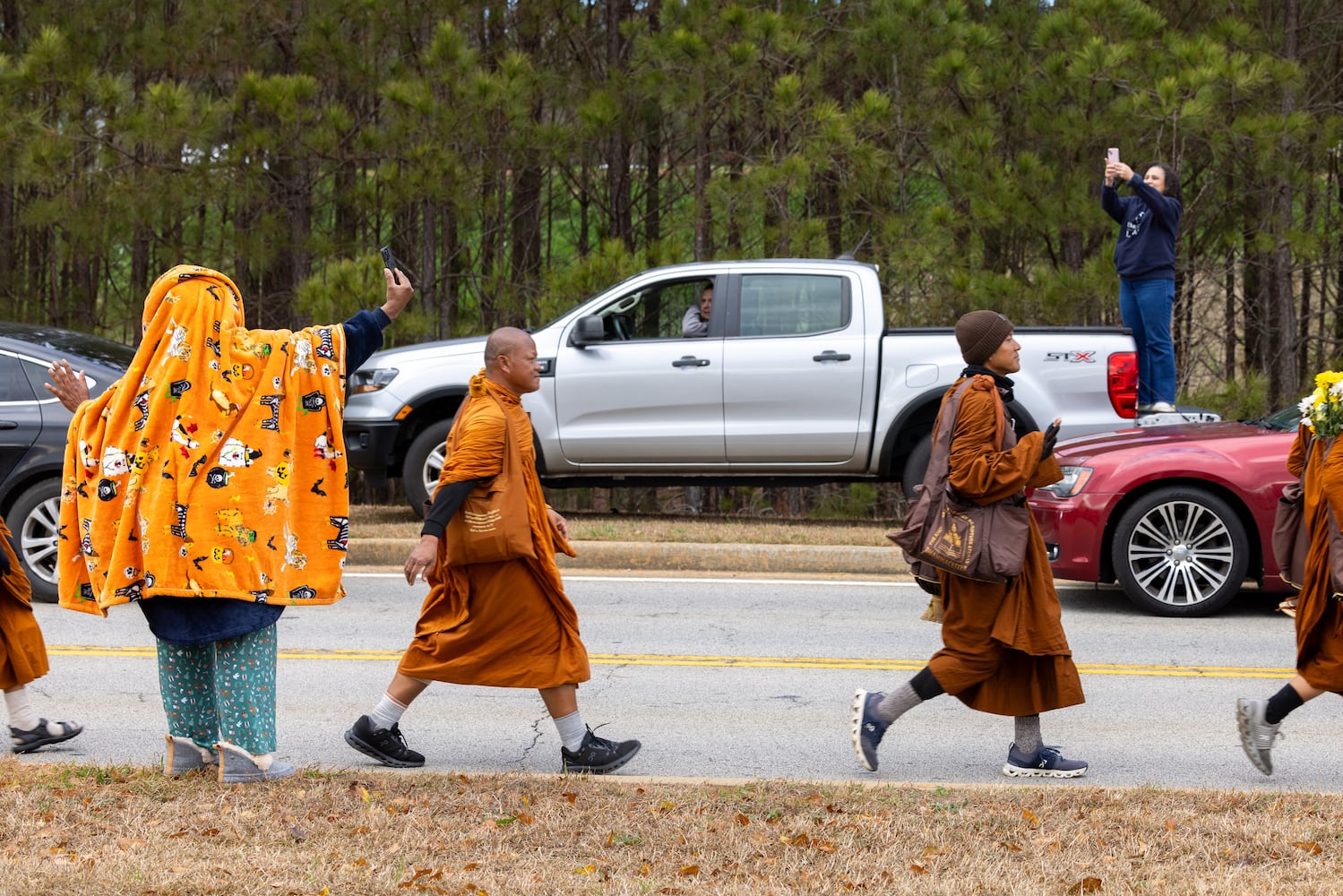
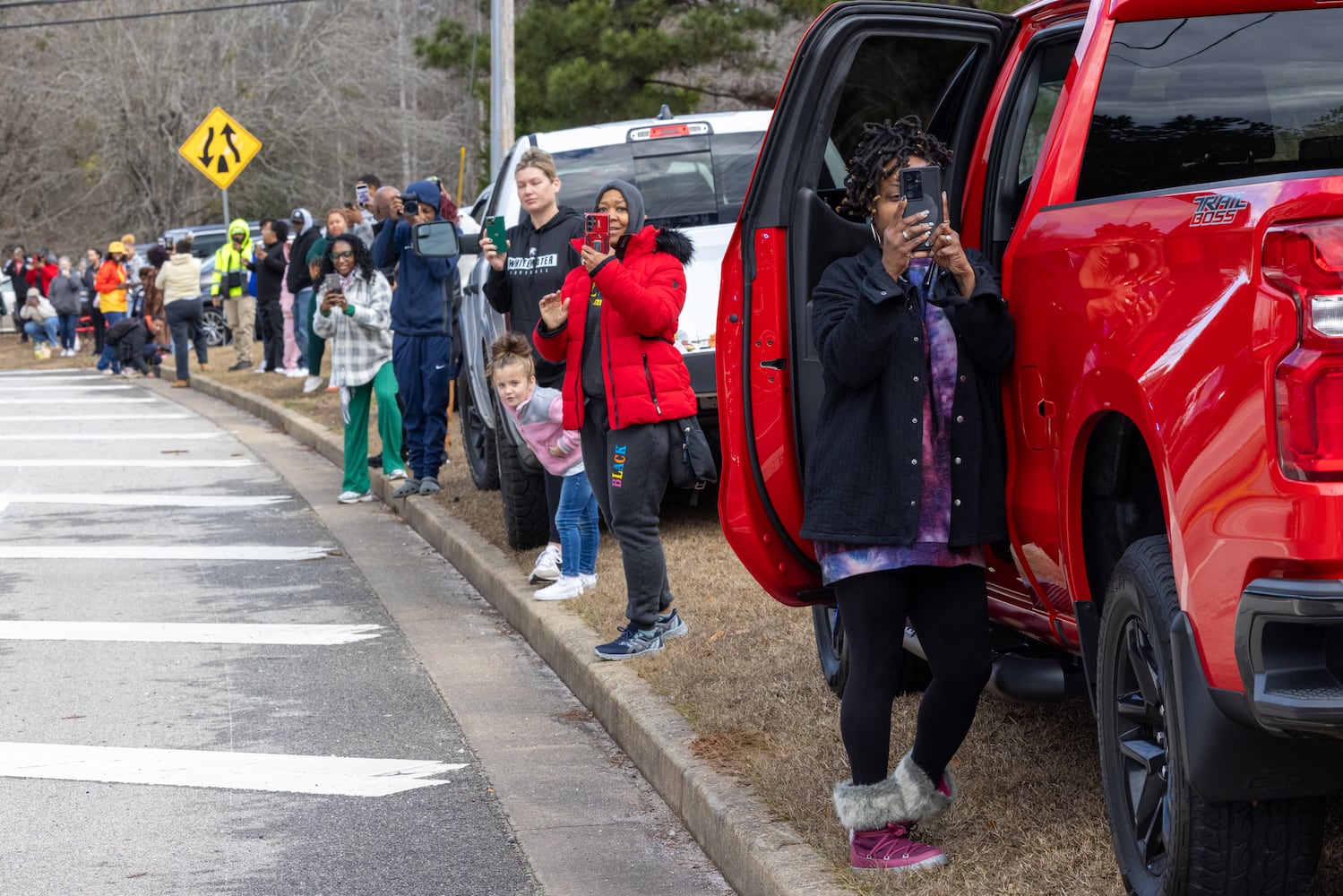
They waited on the grassy shoulder of Veterans Parkway in Fayetteville. They waited on foot and in lawn chairs, seated in sedans and standing atop the beds of trucks. They waited outside homes and on sidewalks along storefronts.
They were waiting for the Buddhist monks. It wasn’t clear exactly when the monks would arrive — some time around 10:30 a.m., according to the Instagram announcement — but it wasn’t like a movie screening or a football game. The monks were walking. They would arrive when they arrived. There was something Zen-like about the situation: You just had to be present.
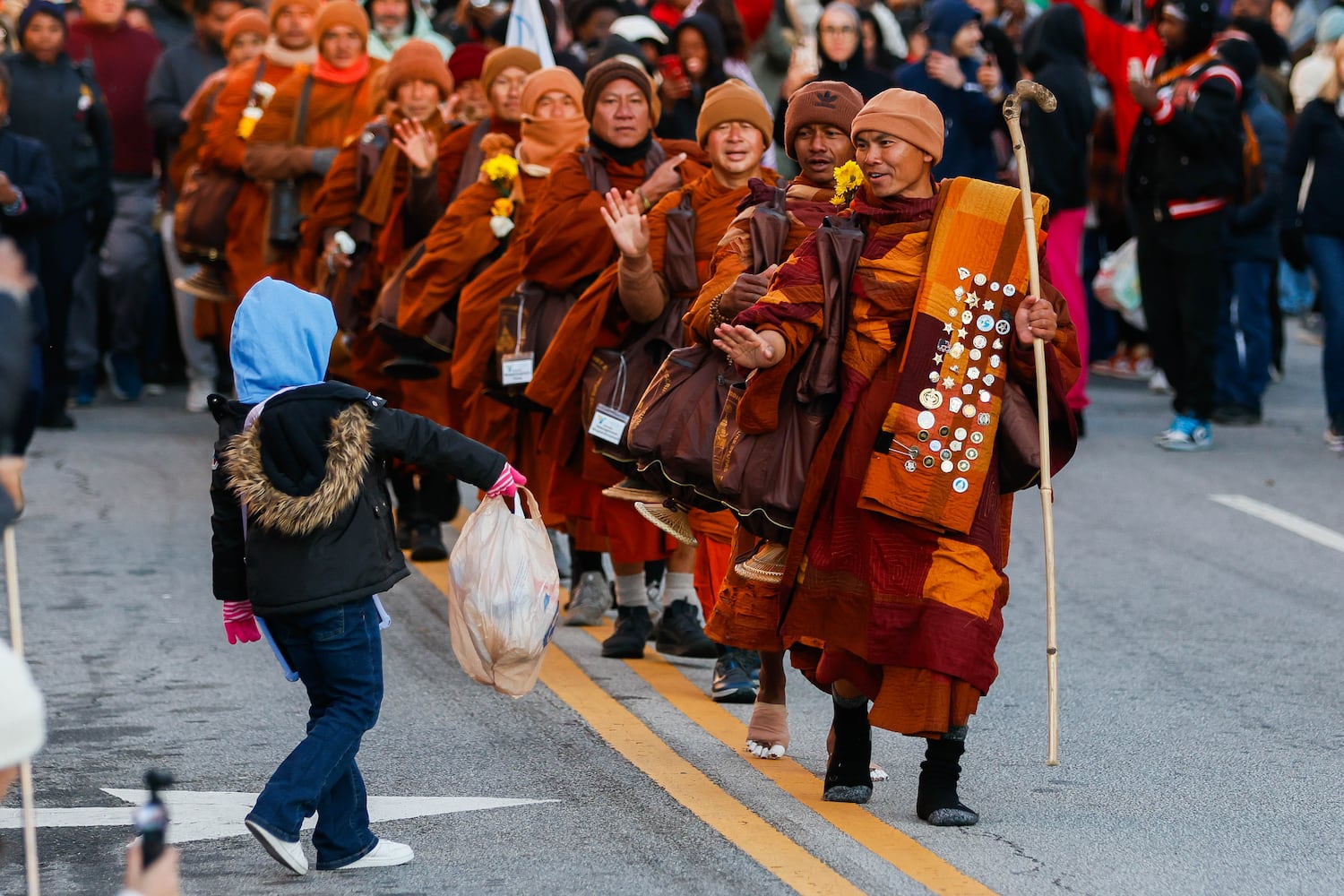
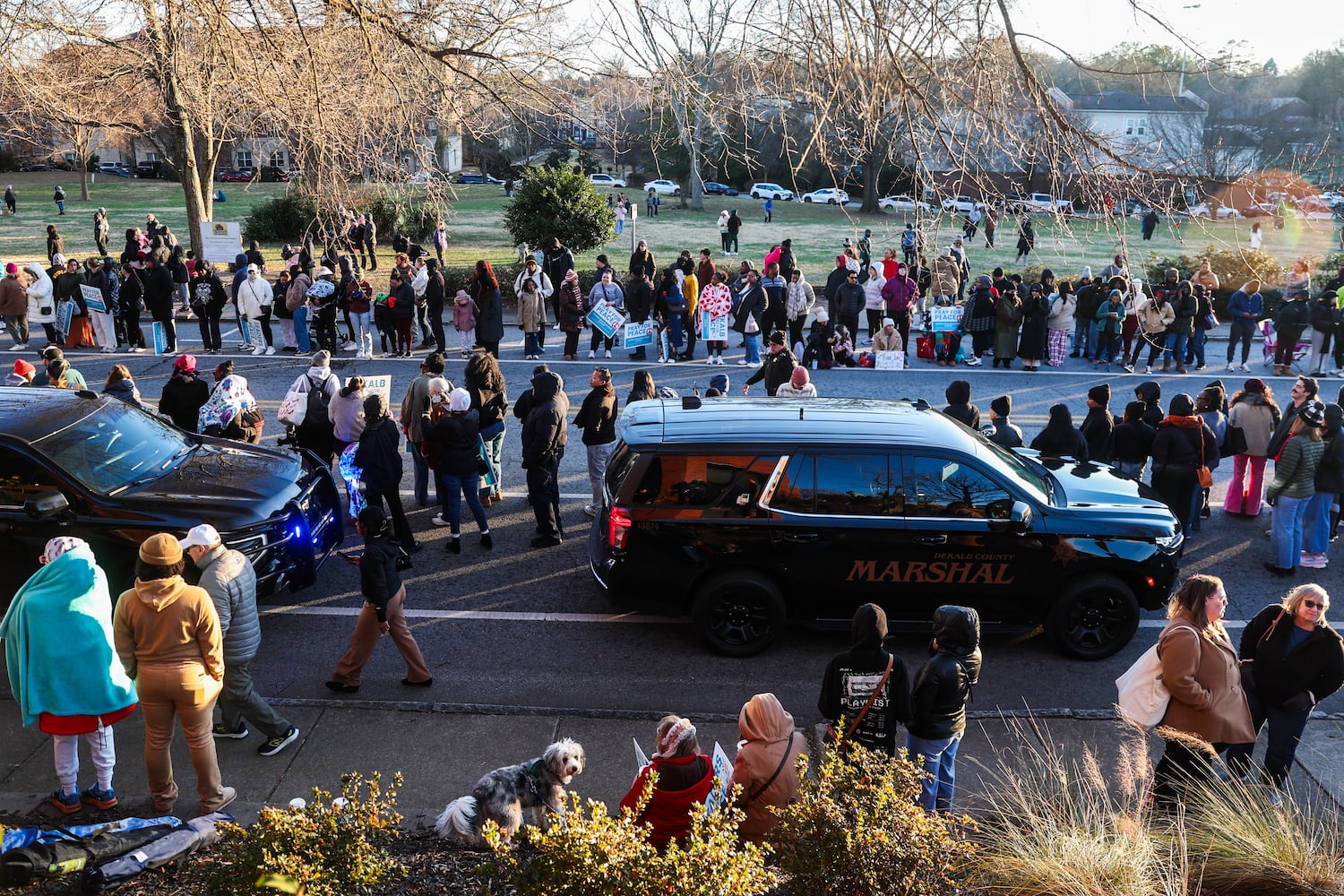
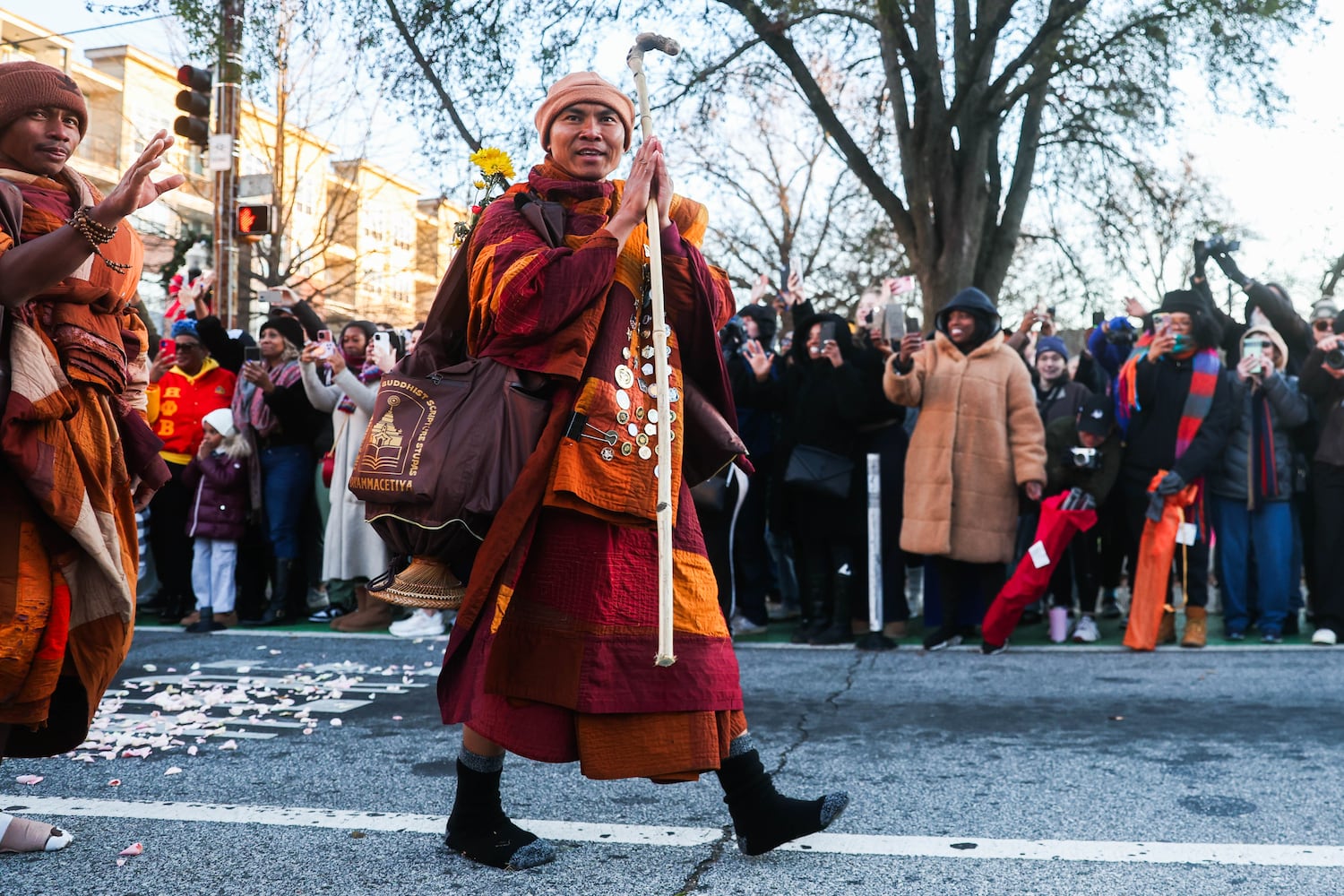
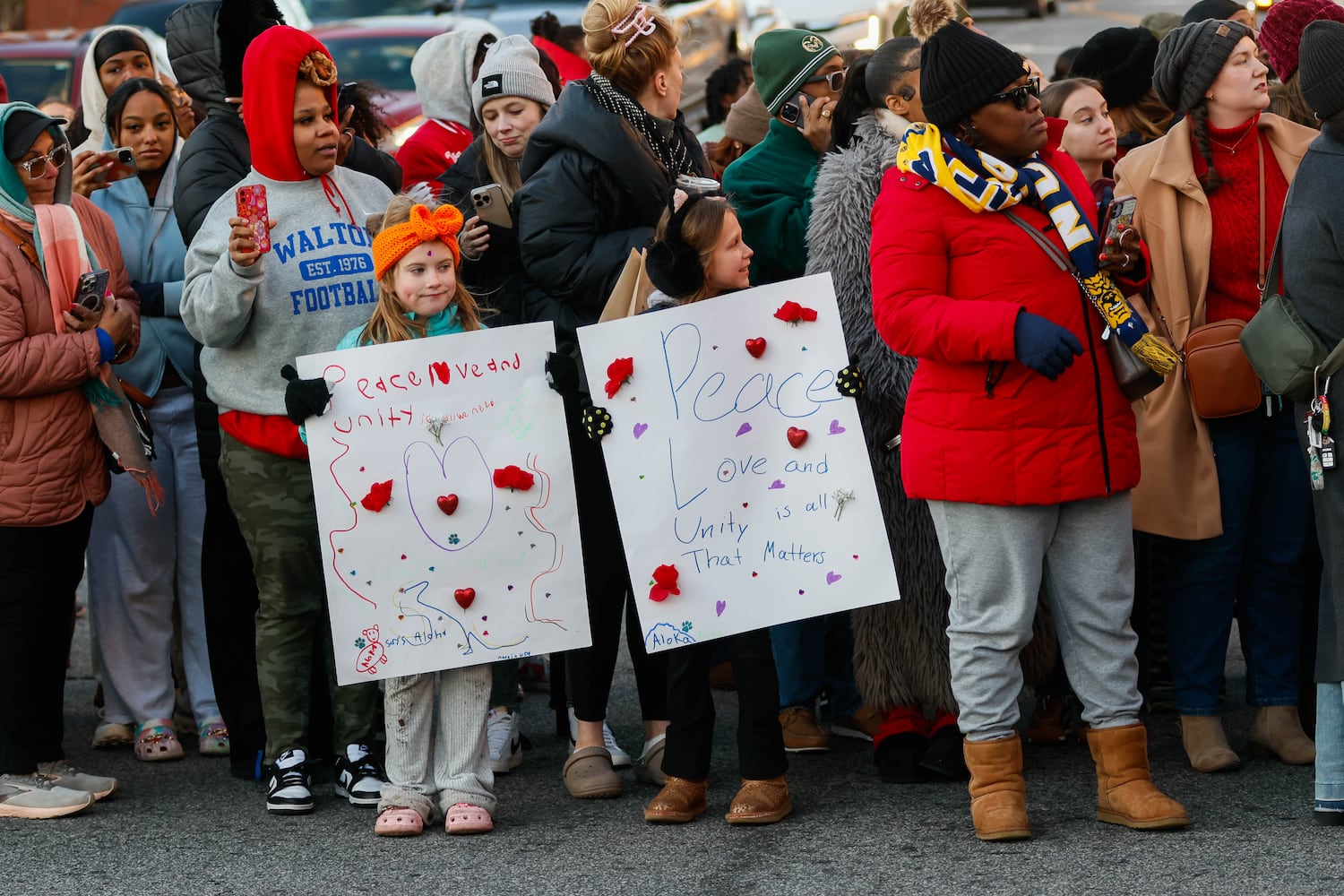
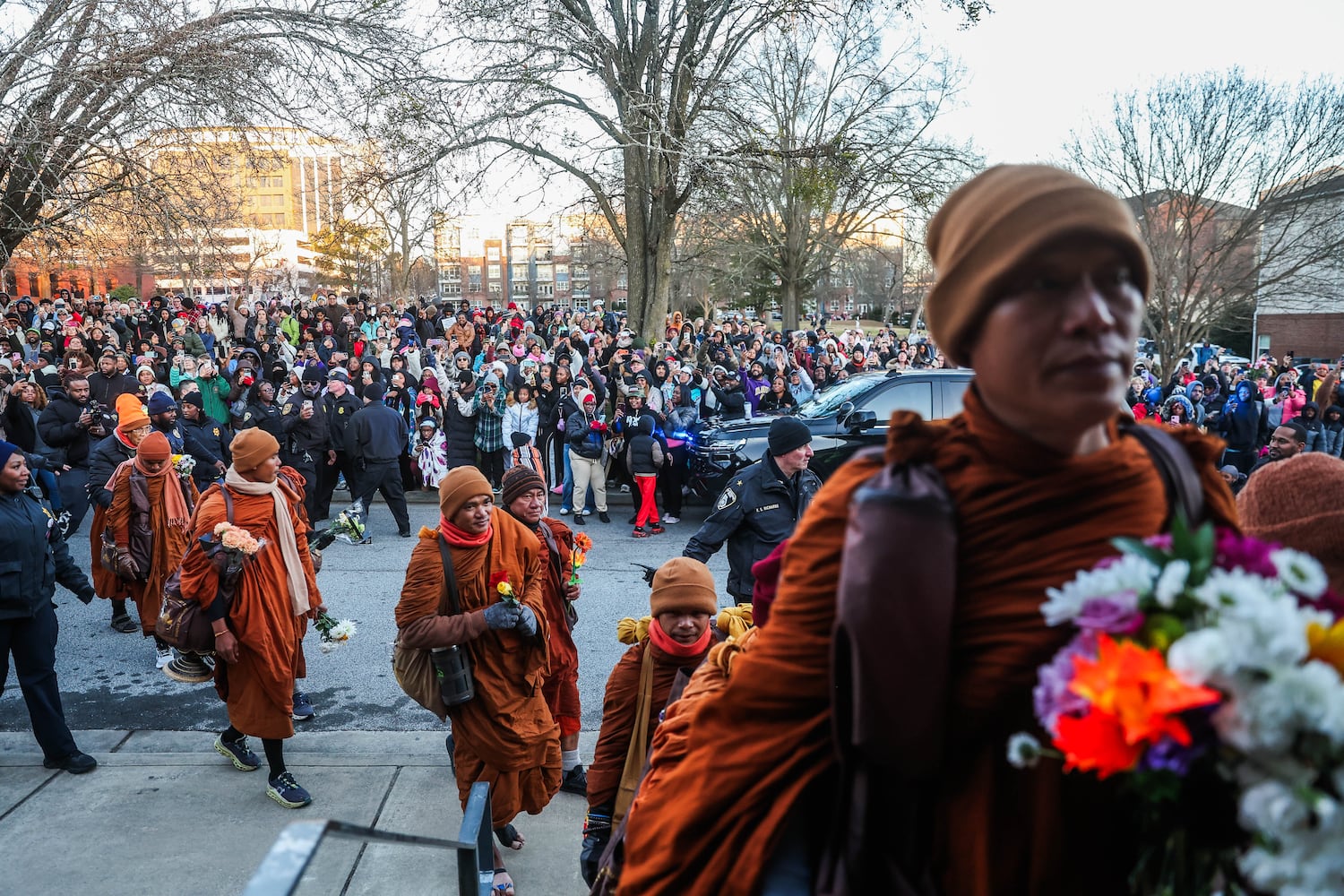
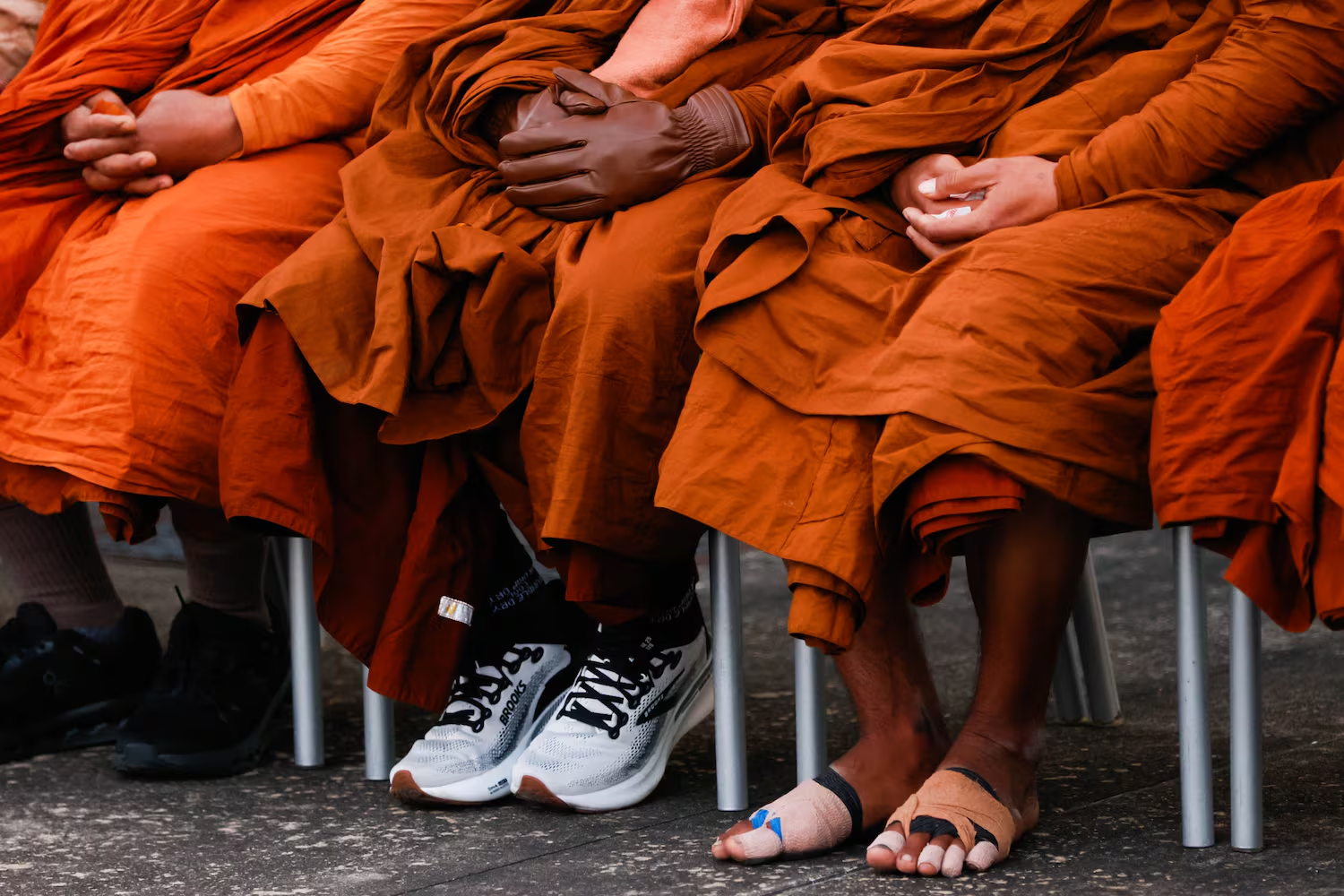
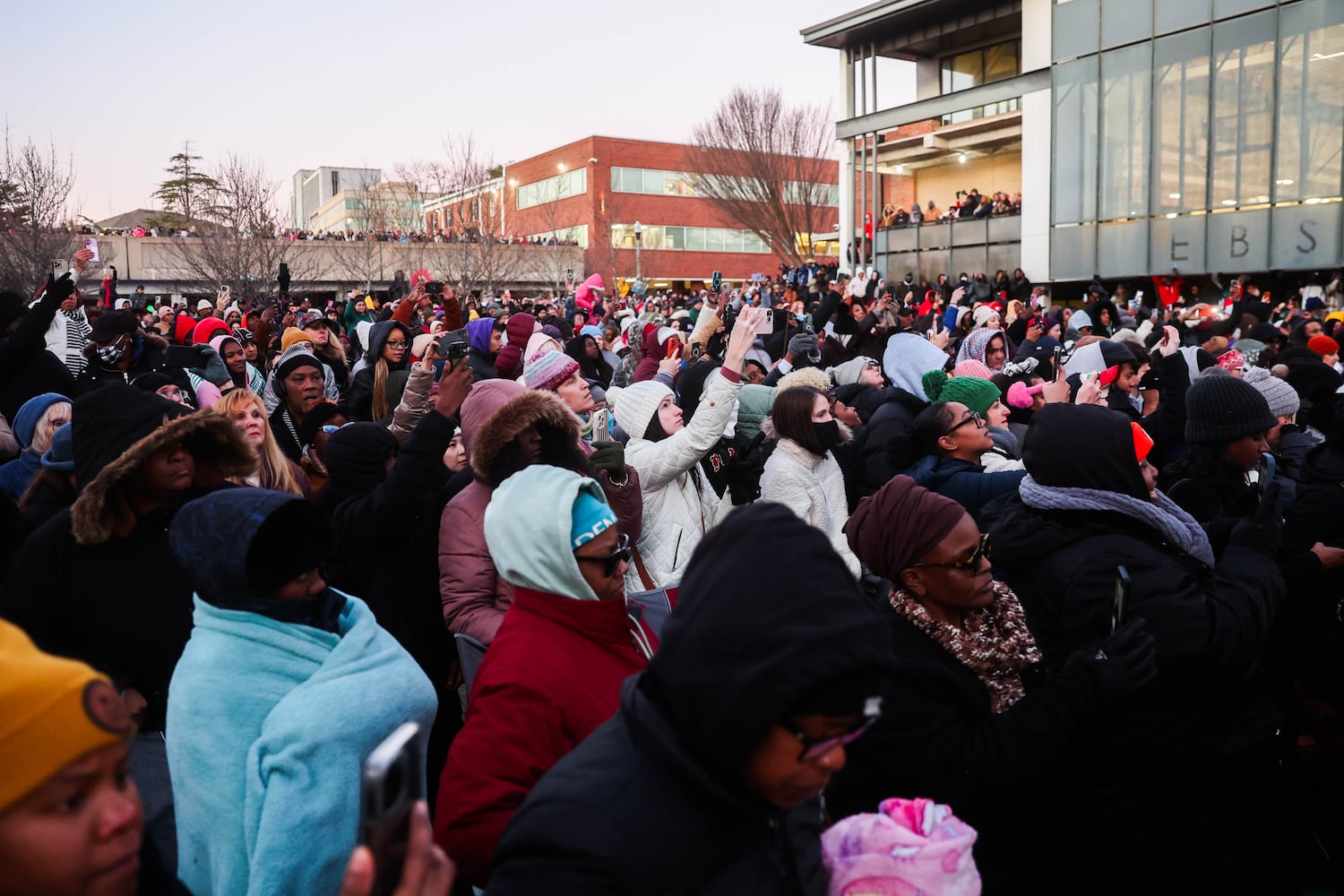
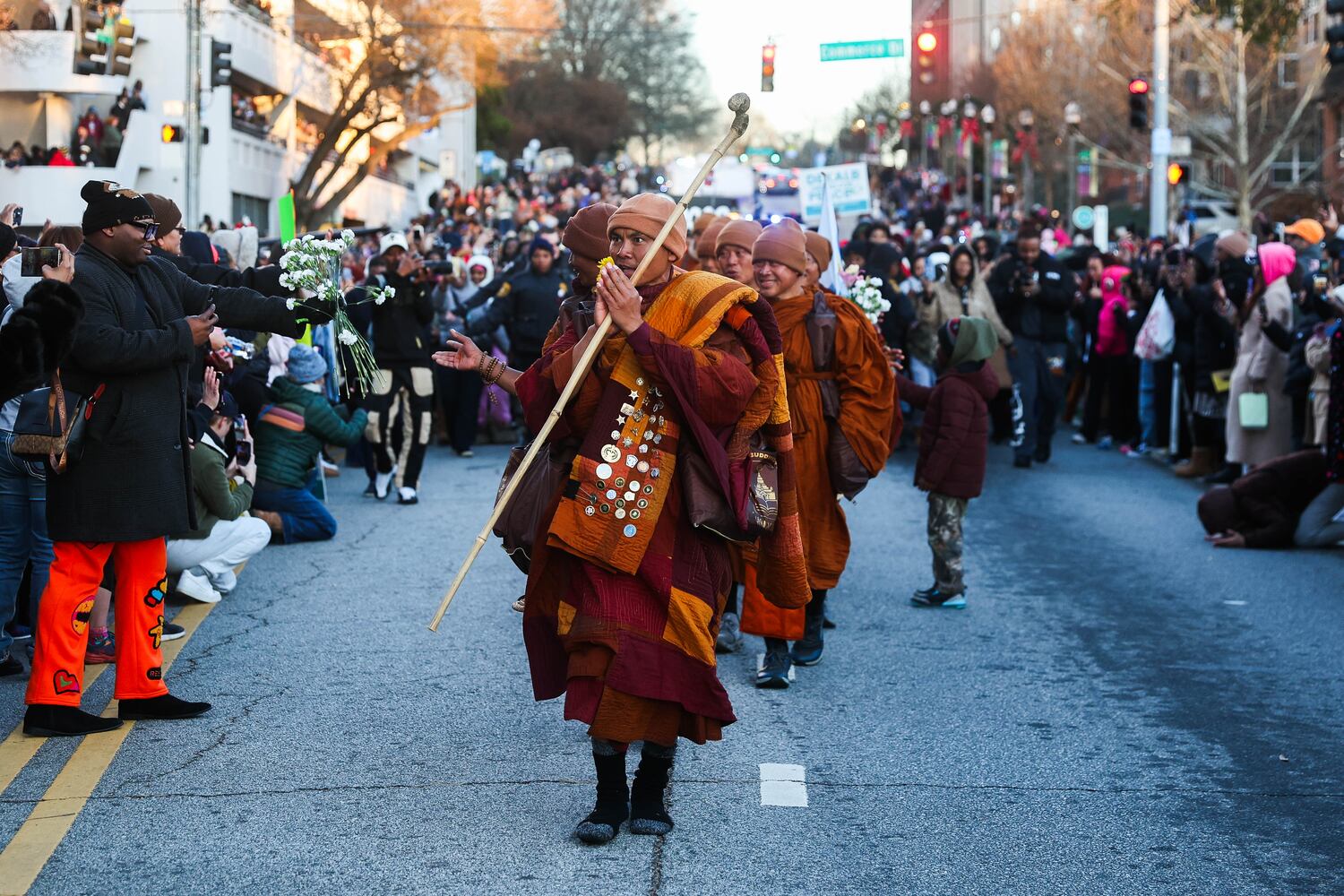
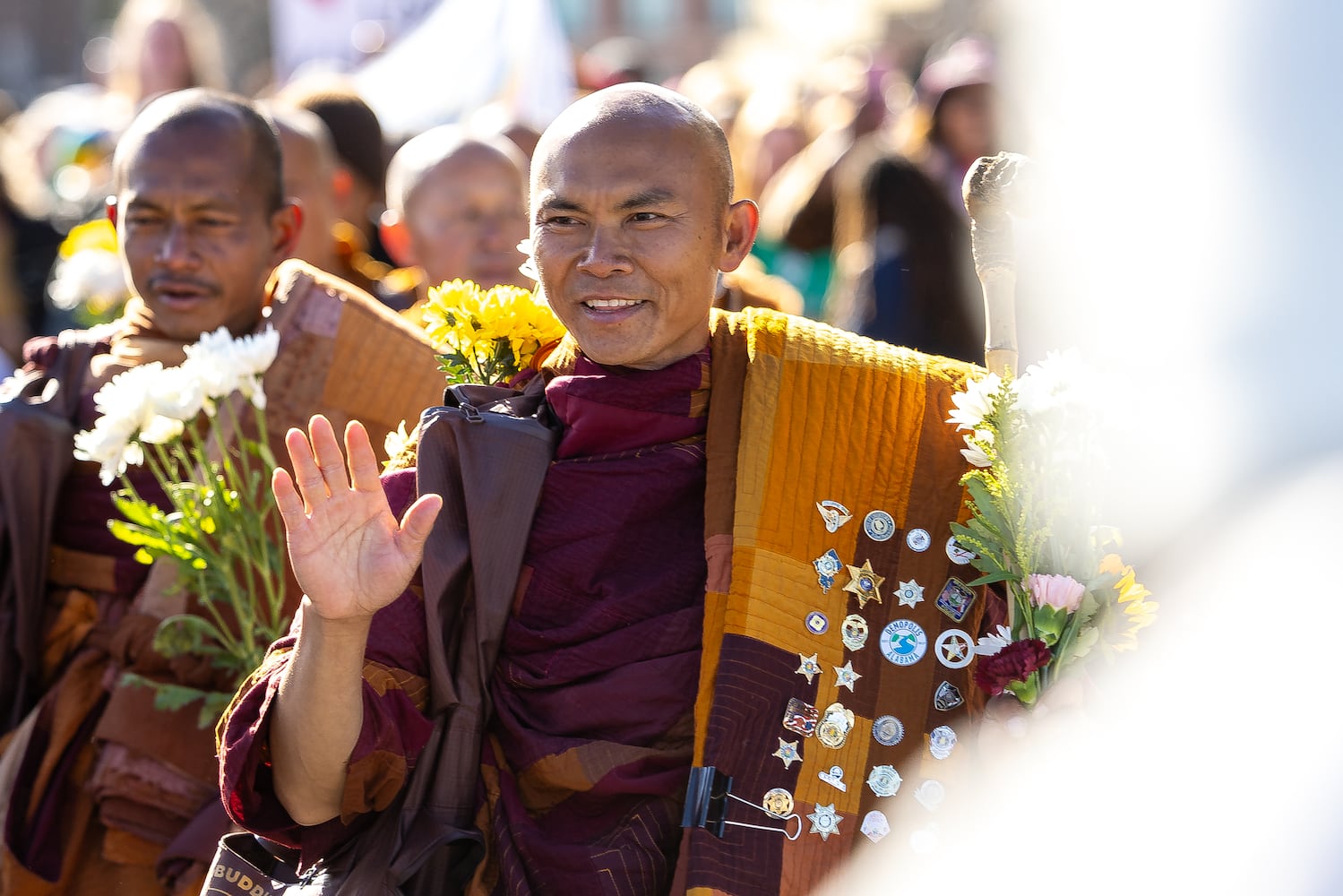
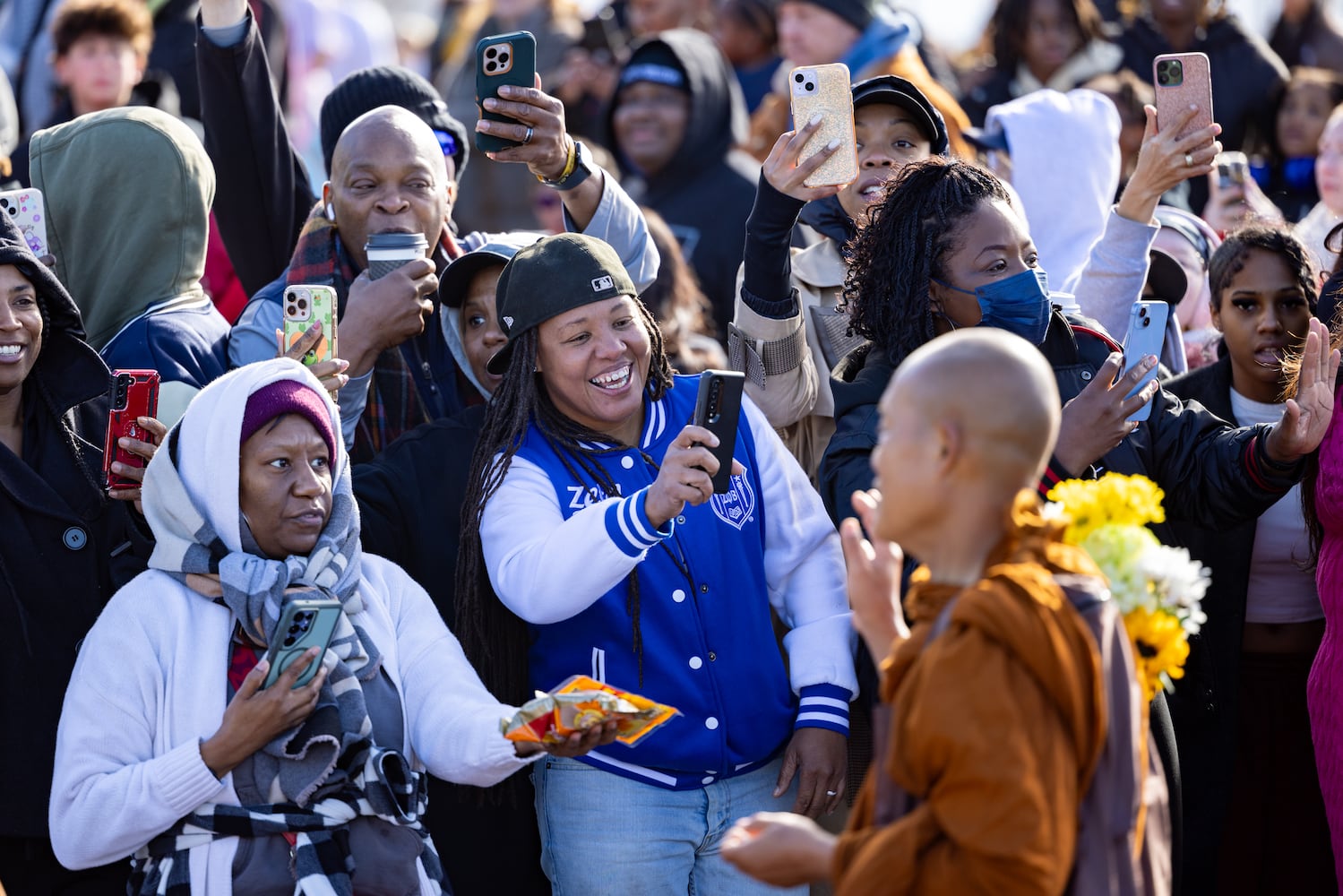
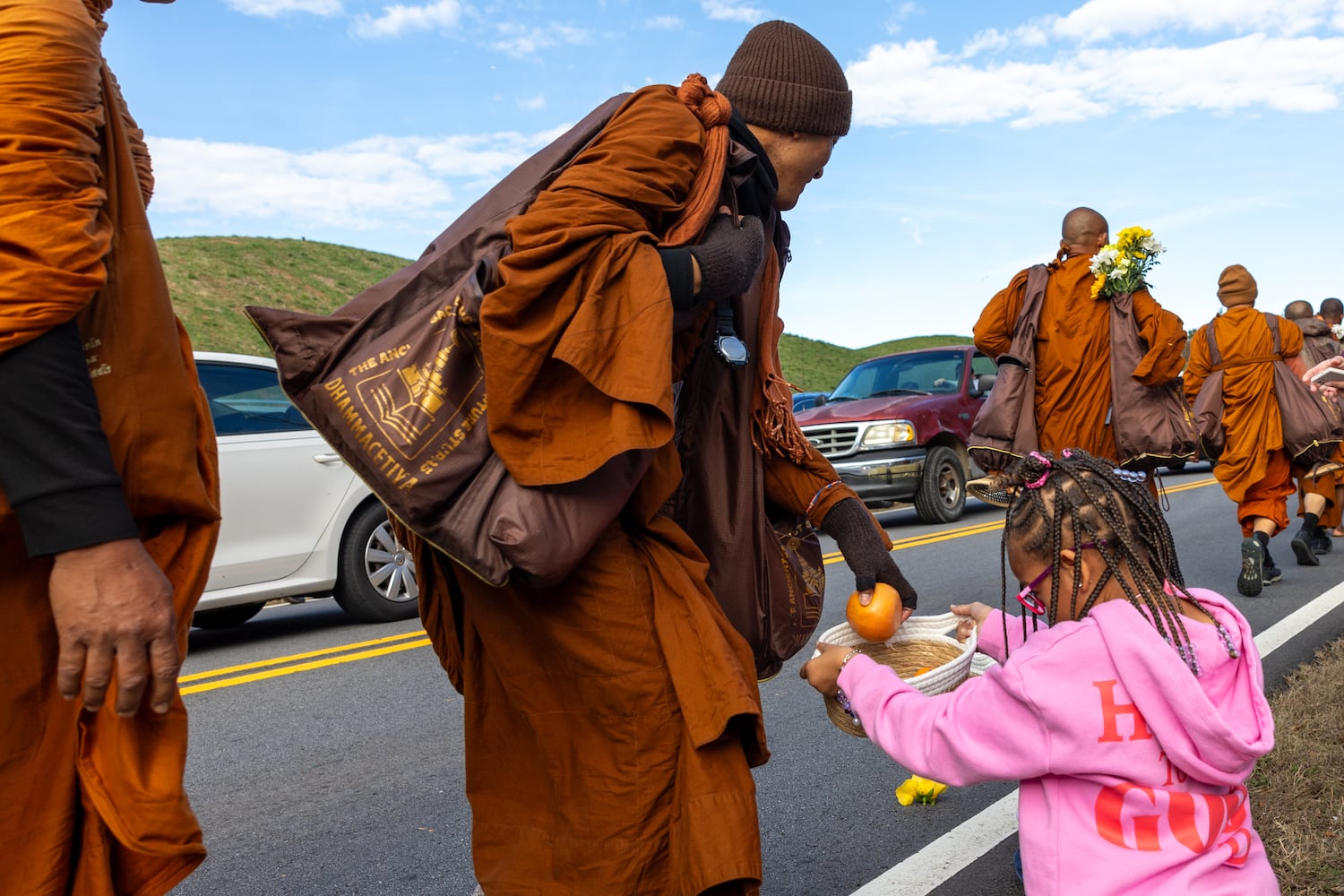
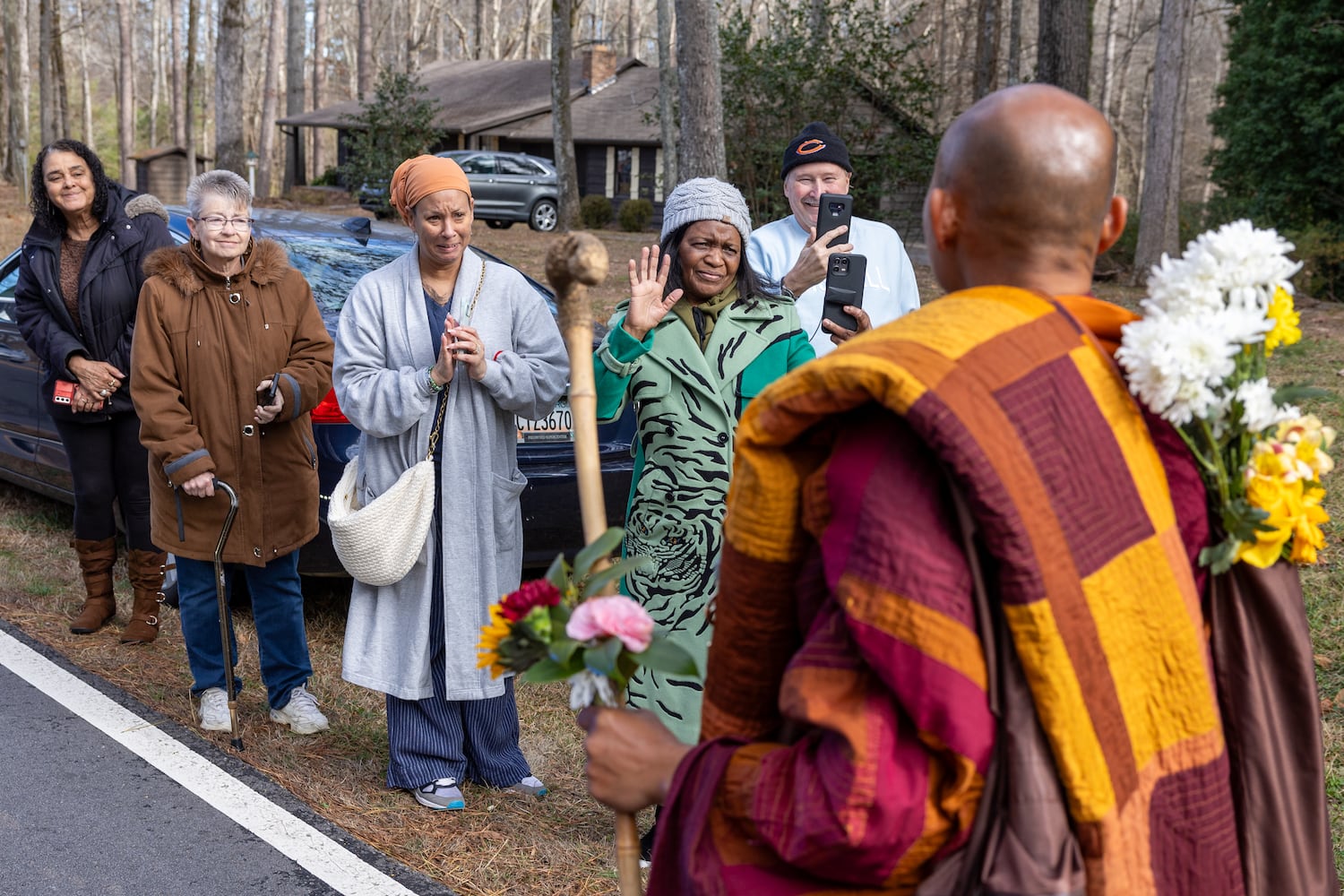
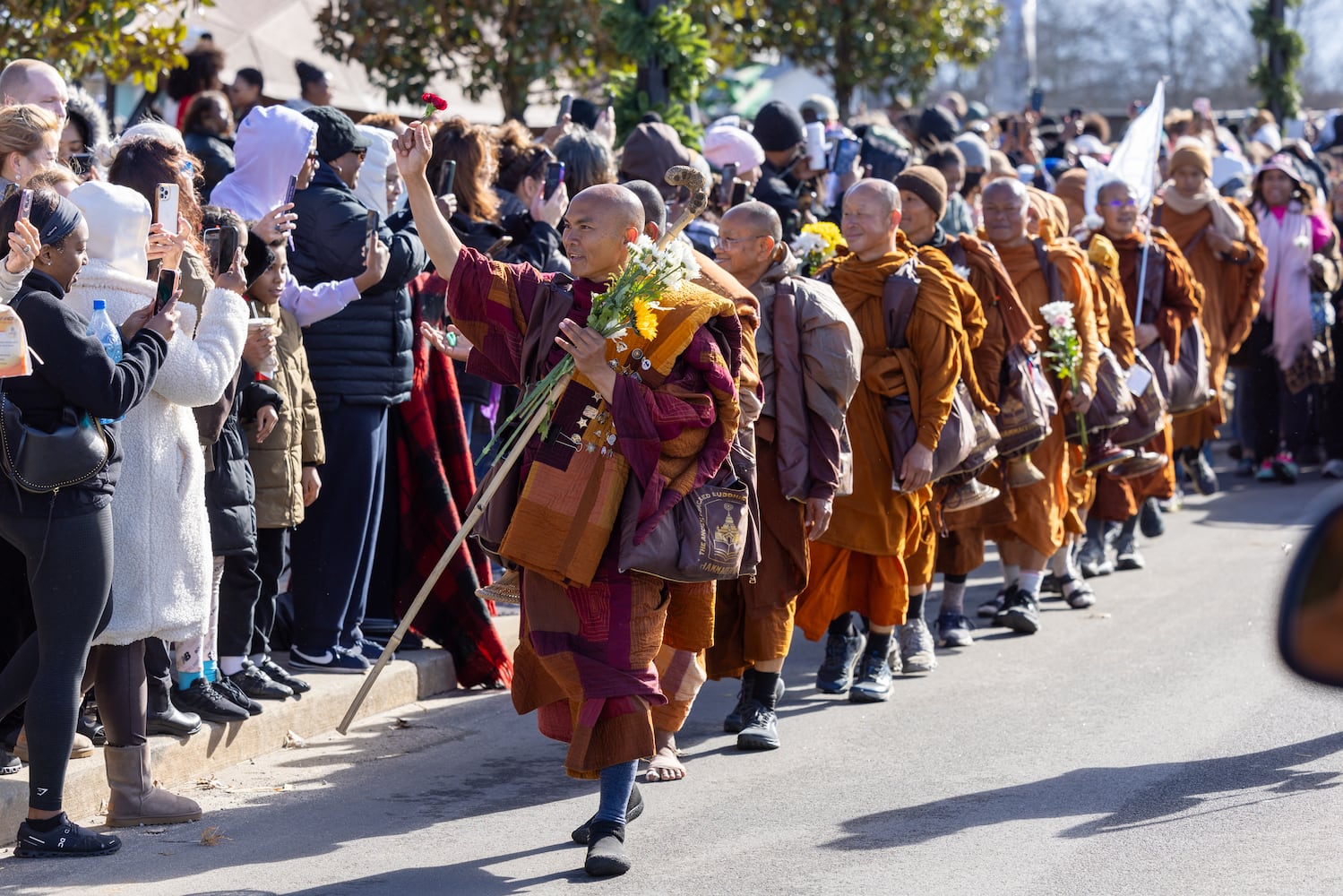
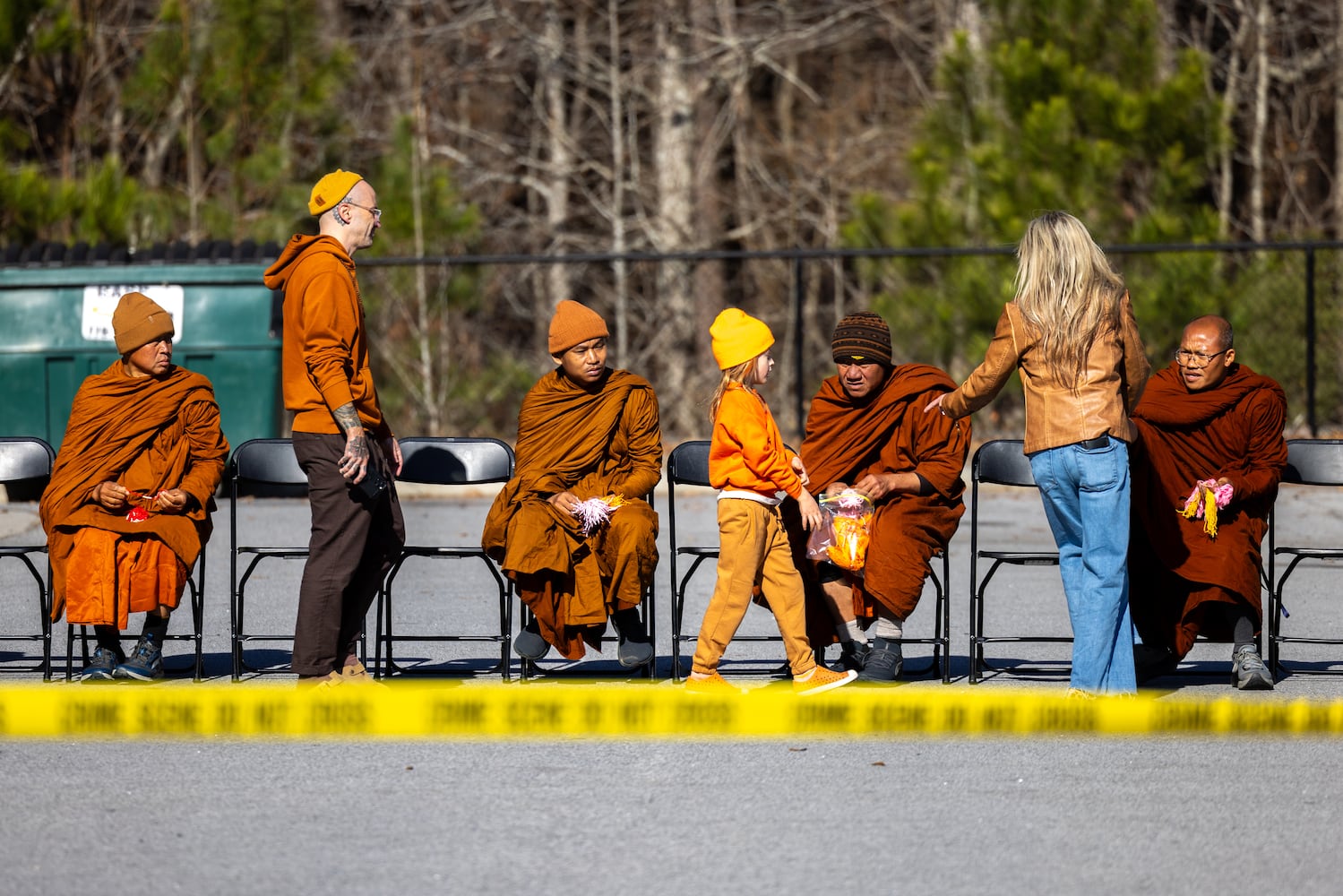
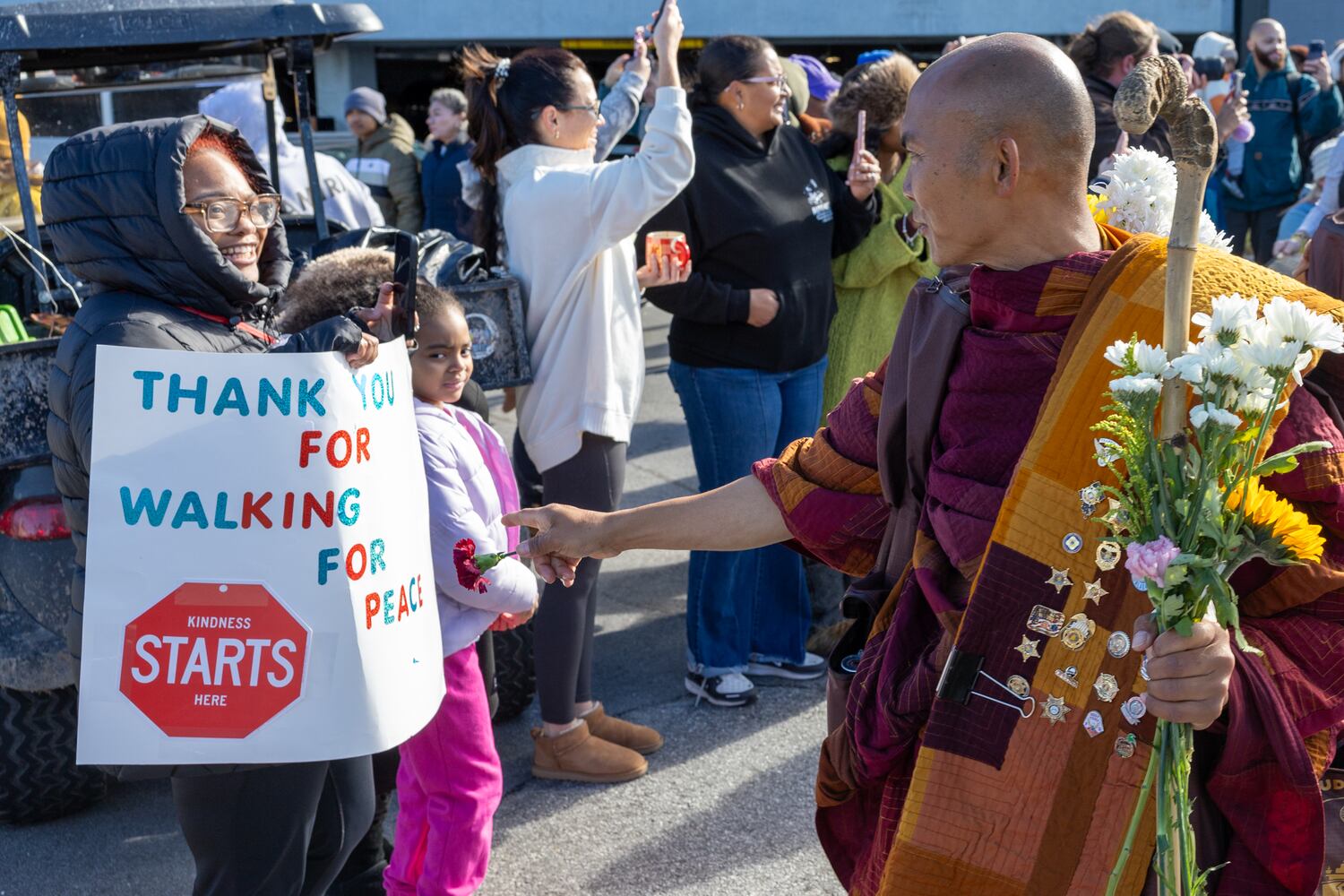
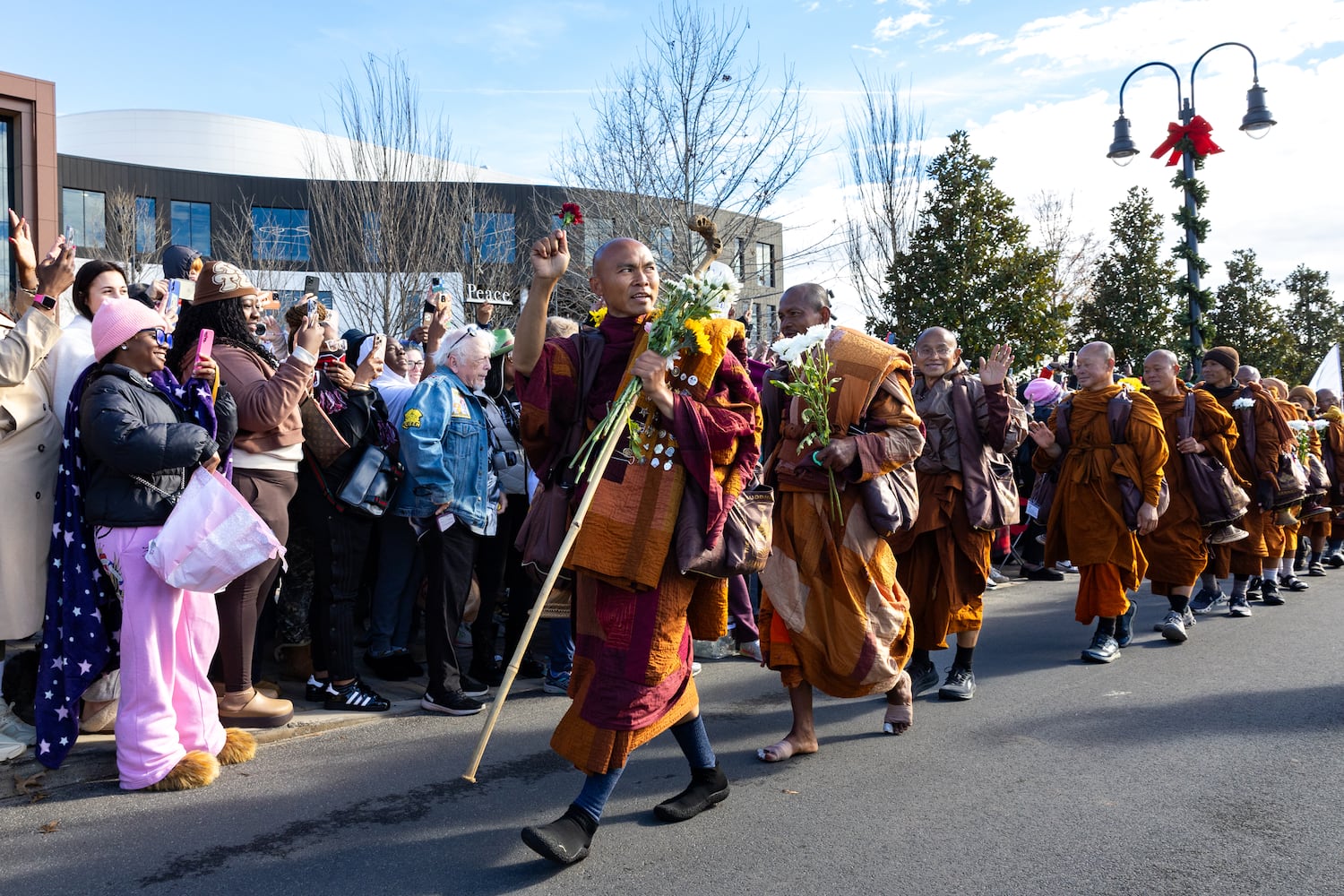
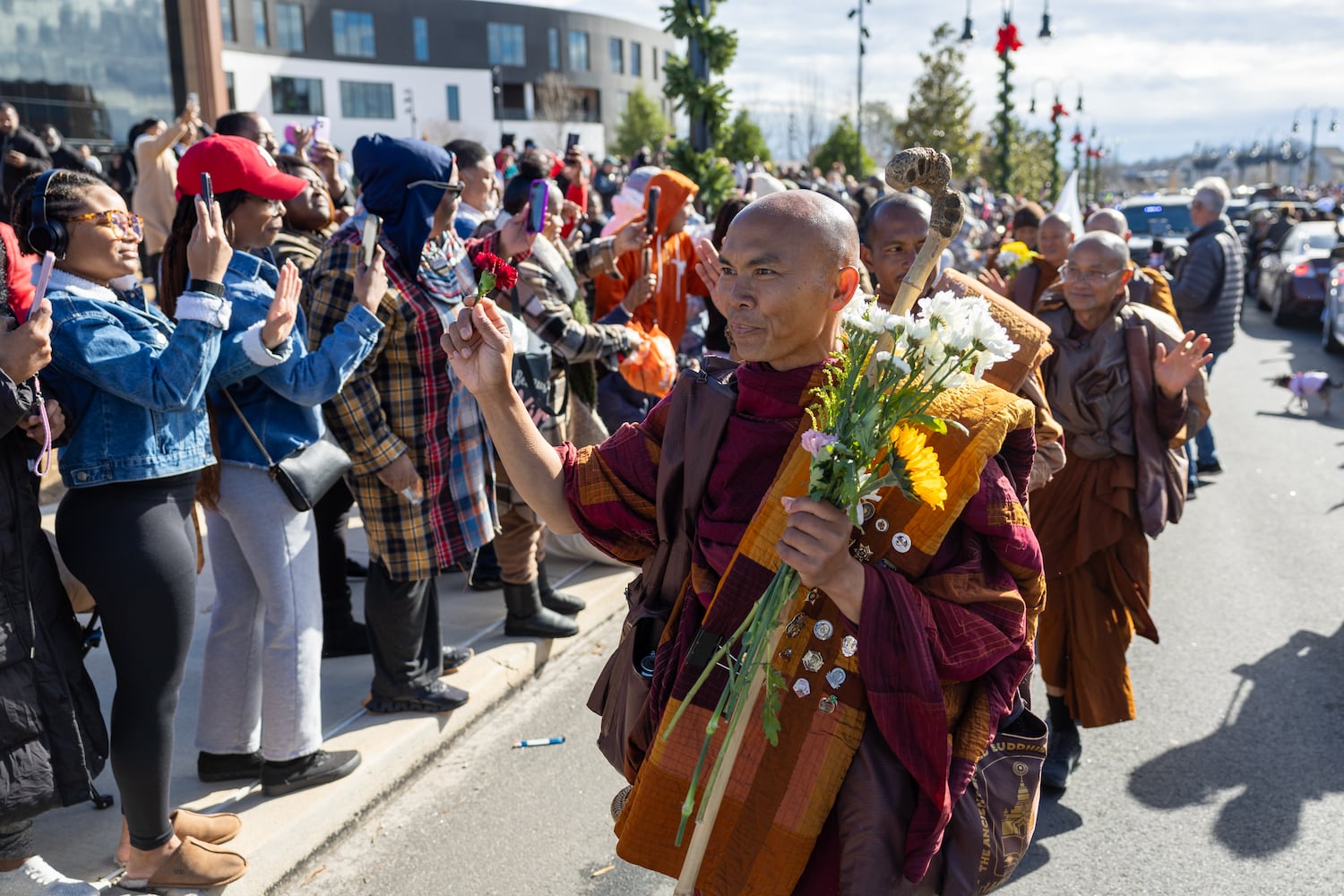
I went to Fayetteville on Dec. 29 to photograph the walking monks for the AJC. There were hundreds of onlookers on the highway, and thousands more in the mixed-used development Trilith, where the monks had planned a lunch stop. Though I knew there would be some curious onlookers, I hadn’t anticipated the size of the crowds — or the excitement. I hadn’t realized the power of what the monks were bringing: hope.

Credit: arvin.temkar@ajc.com
Credit: arvin.temkar@ajc.com
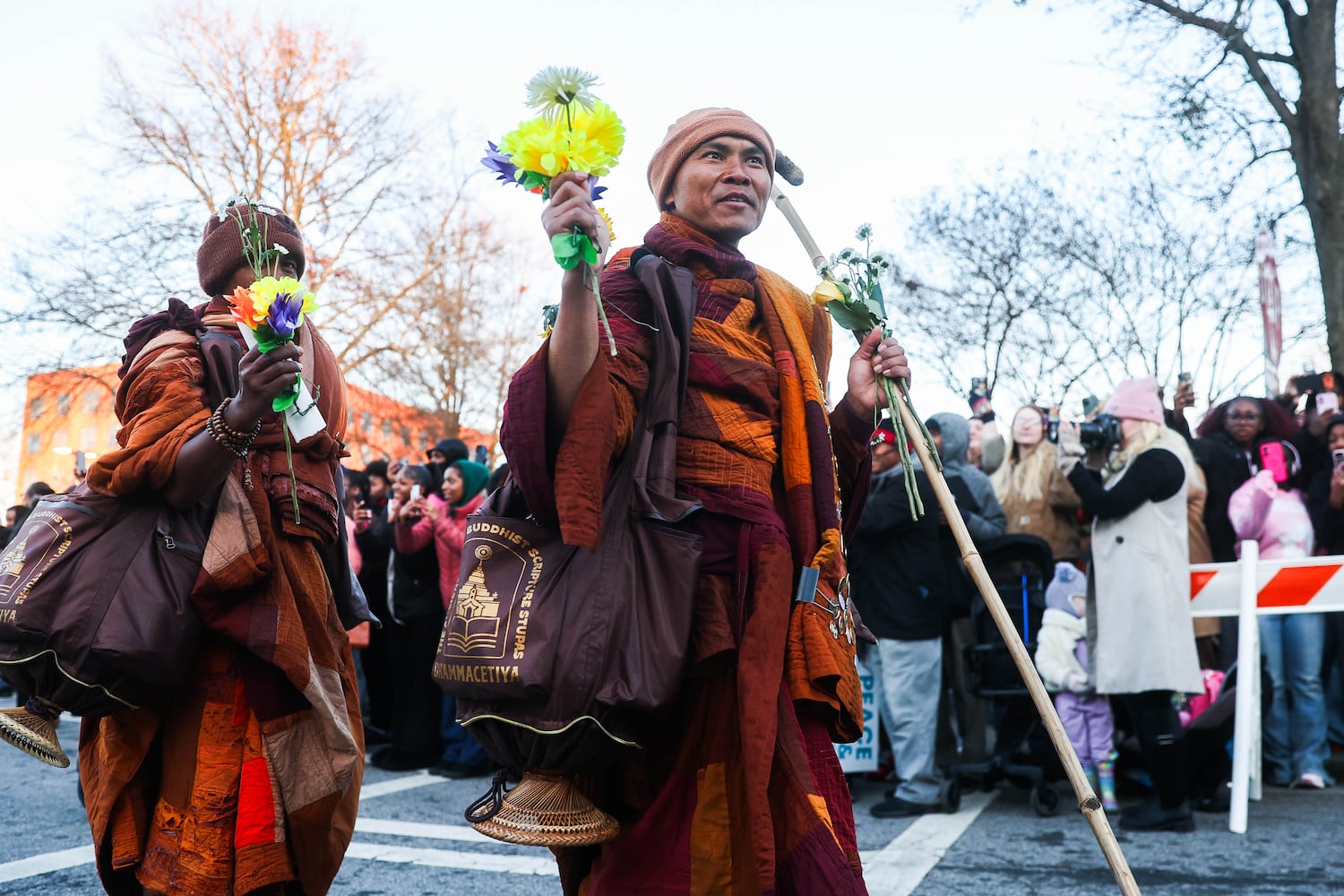
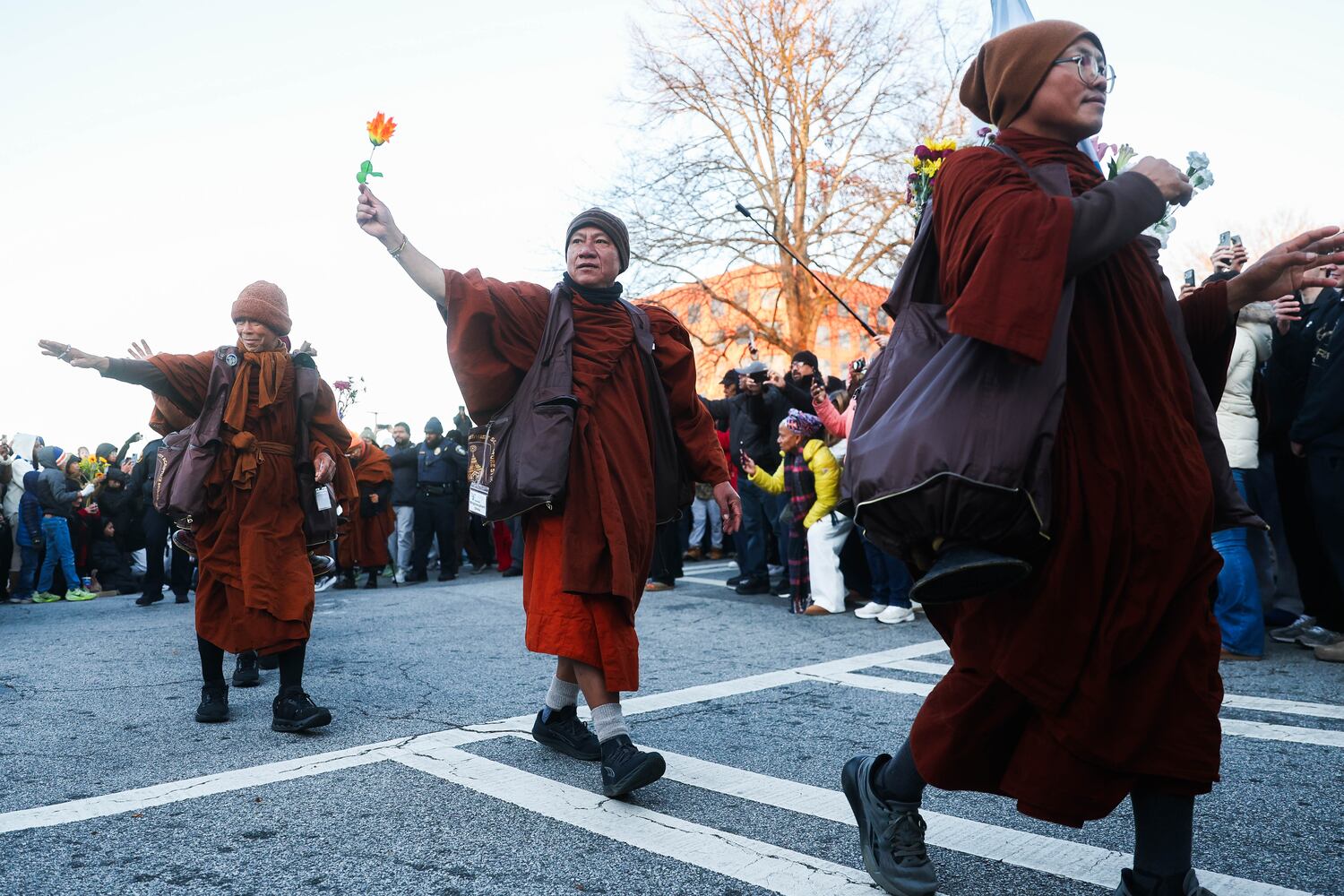
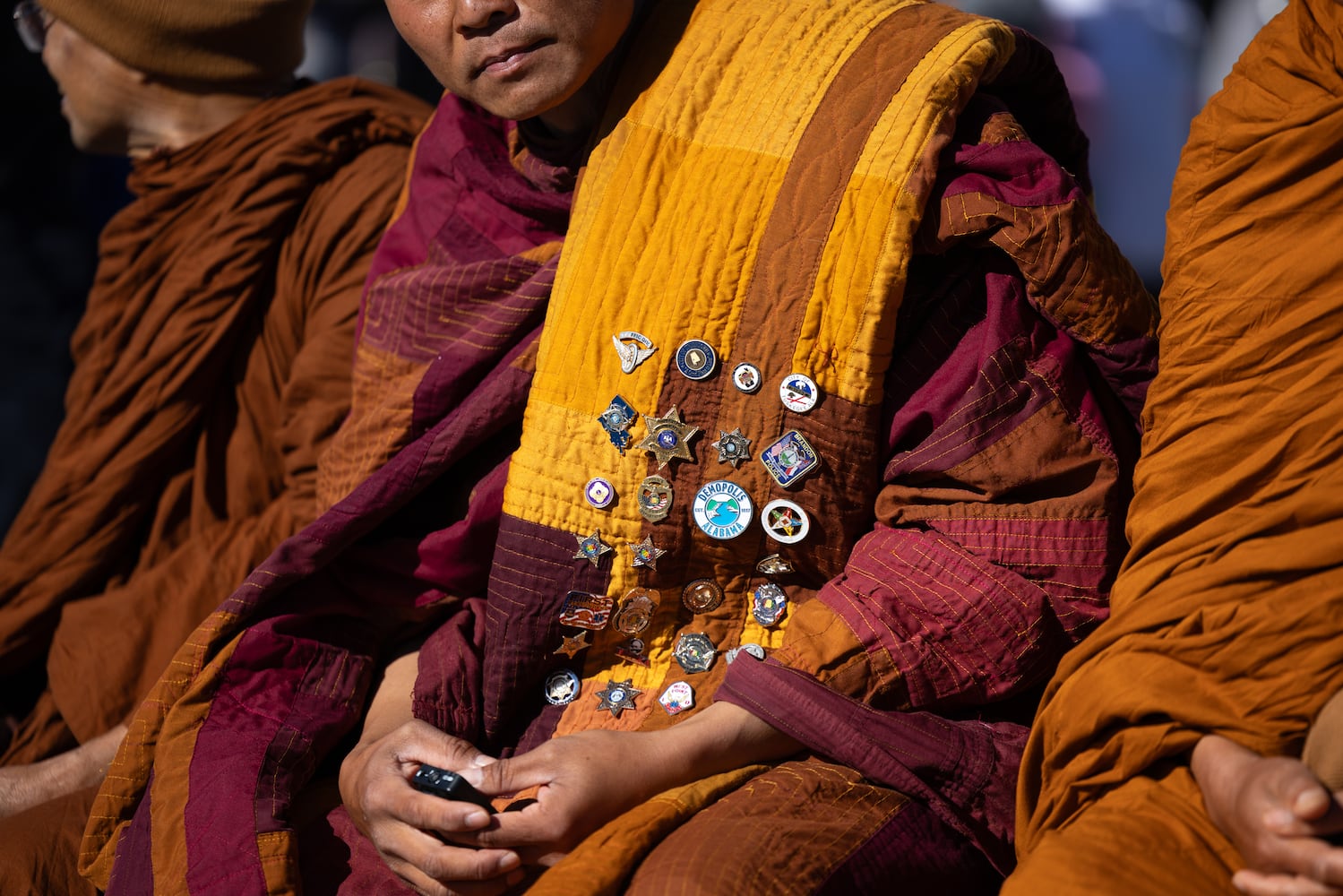
The group of about two dozen set off from Fort Worth, Texas en route to Washington, D.C., on Oct. 26, on a mission to promote peace. They have become a viral sensation.
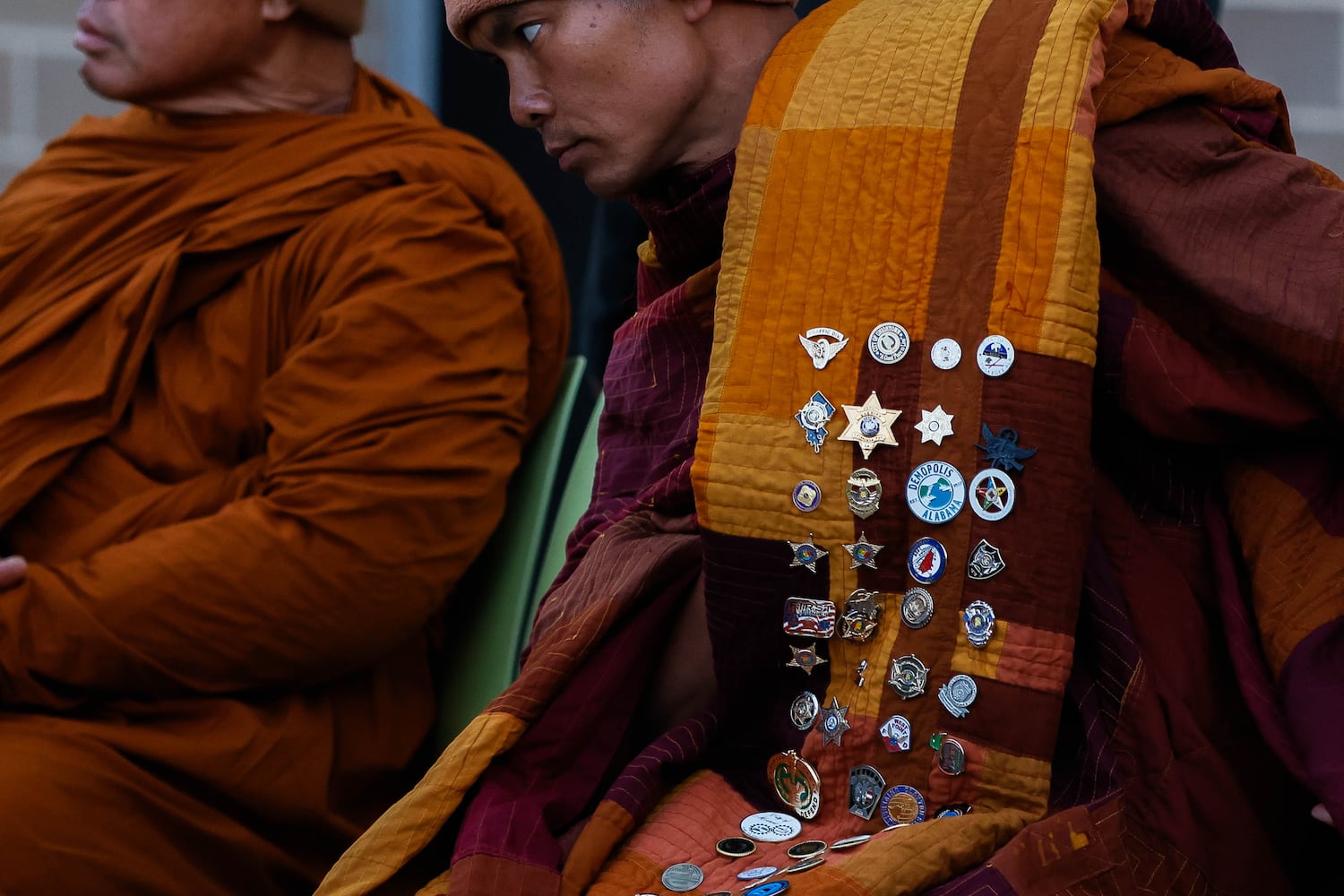
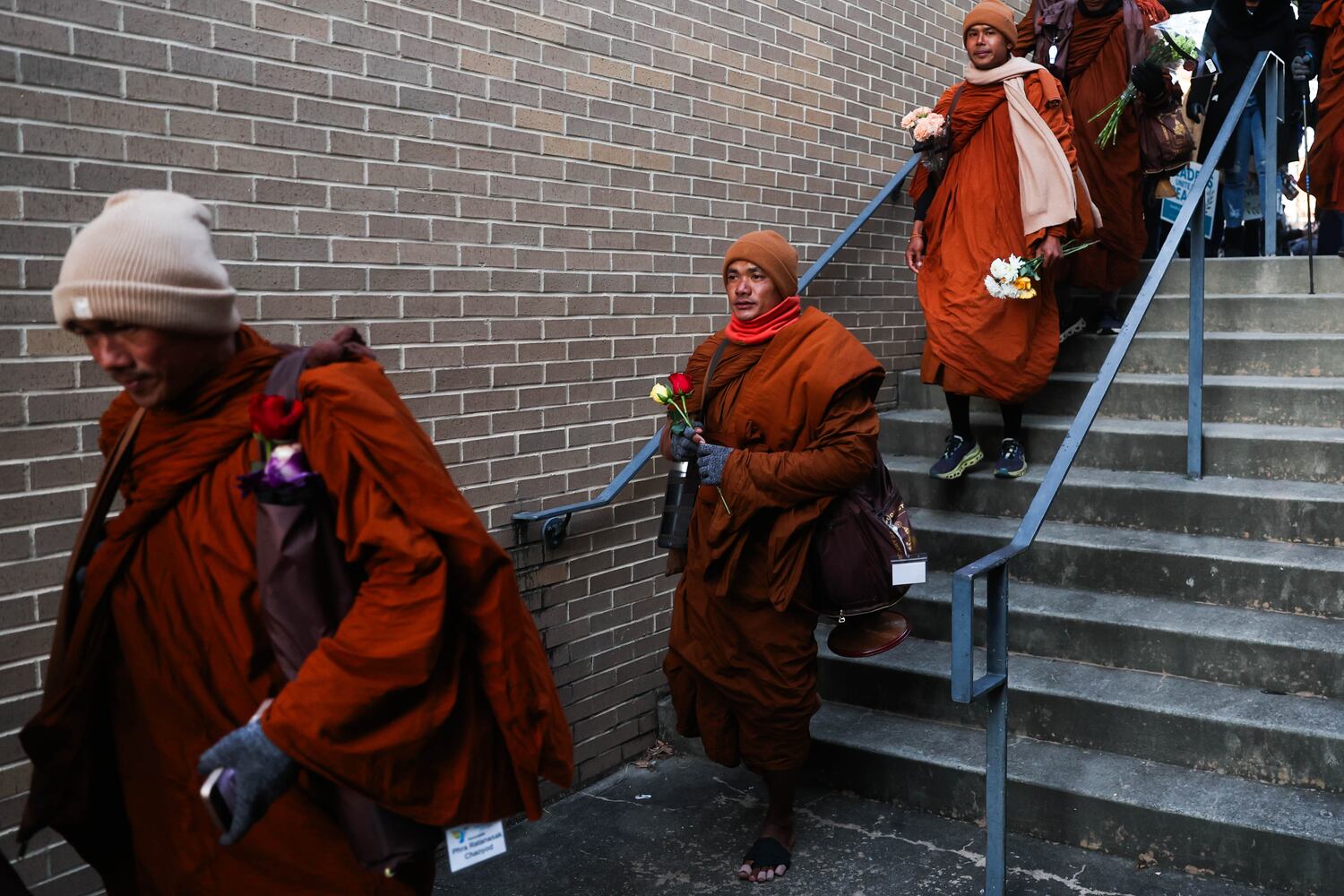
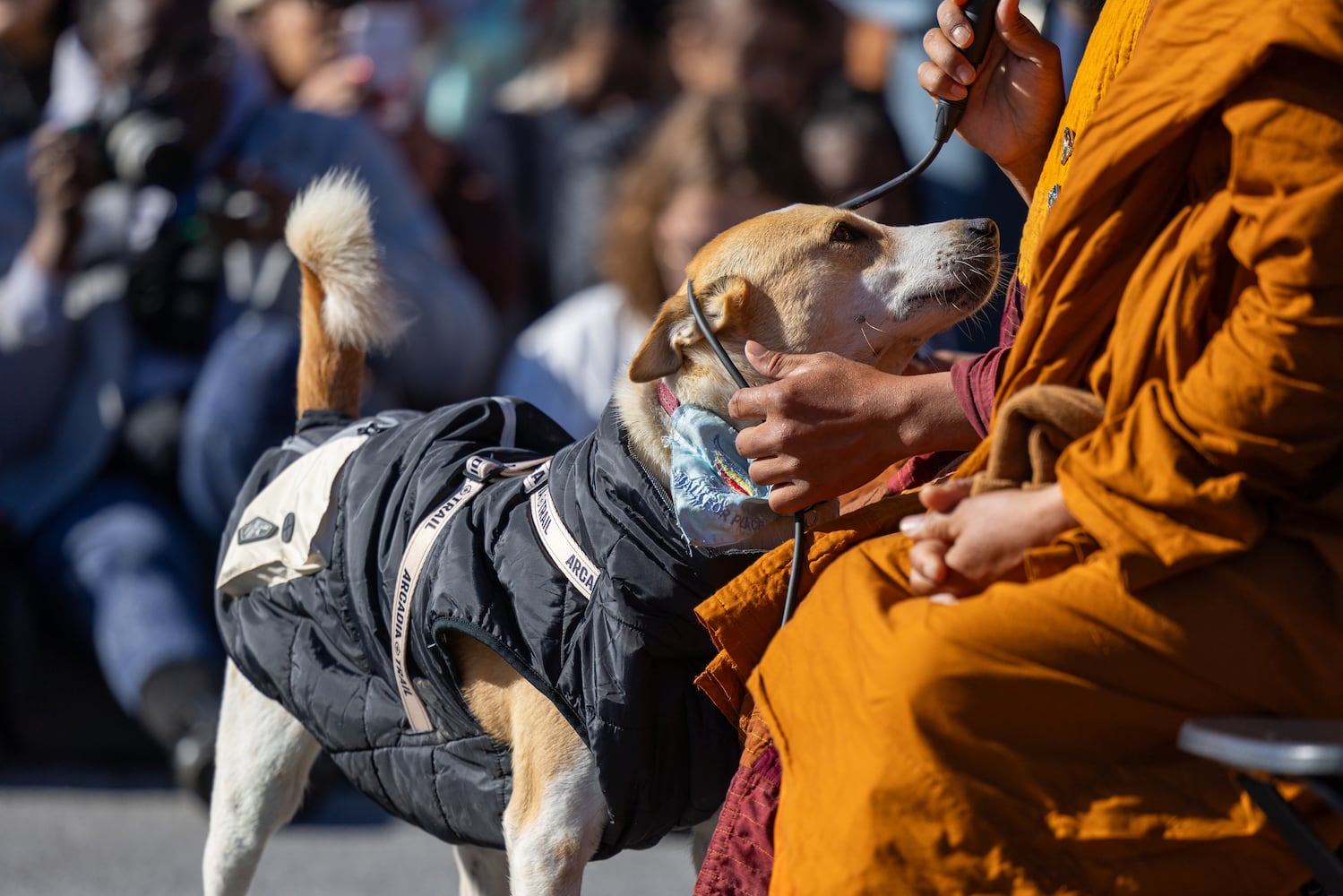
The group has more than 770,000 followers on Instagram, and their loyal dog Aloka, who has his own account and a dedicated hashtag, #AlokaThePeaceDog, has 162,000. The unassuming monastics, clad in orange robes and carrying flowers, have ambled directly into the conscience of the nation. “You are spreading love in a country that is desperate for it,” a social media user commented on a recent Instagram post.
‘Humble folks’ teach Georgians how ‘to walk humbly’
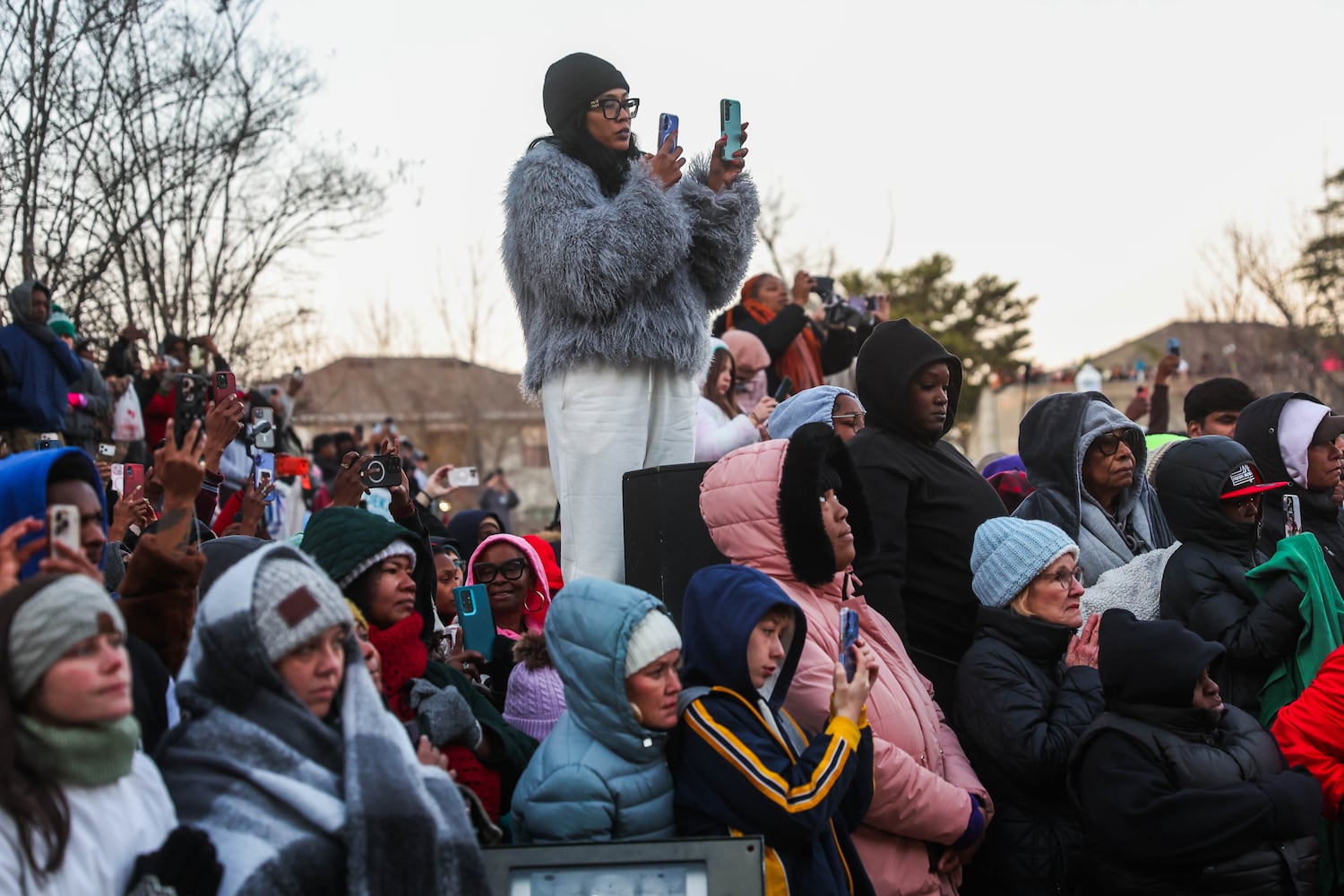
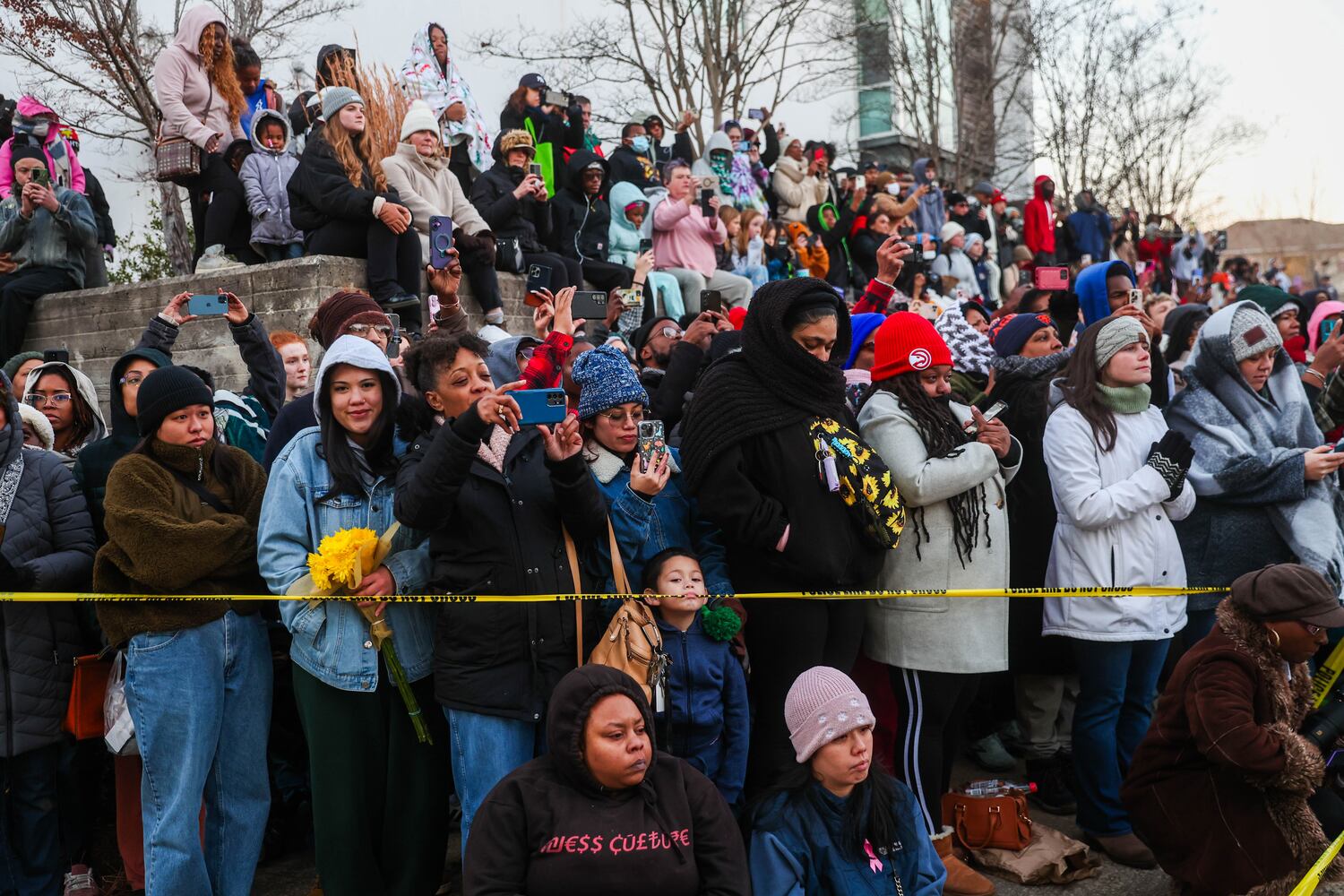
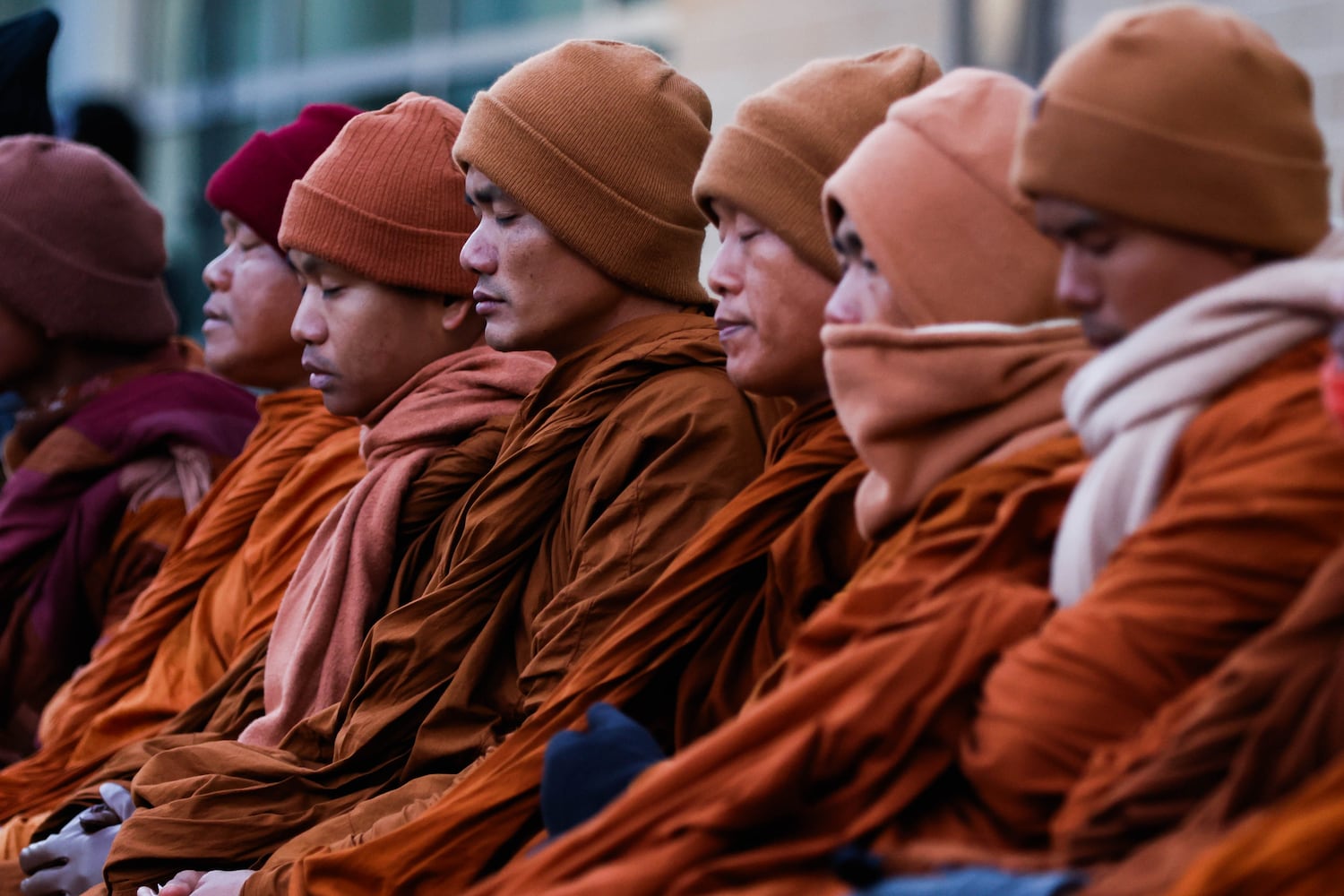
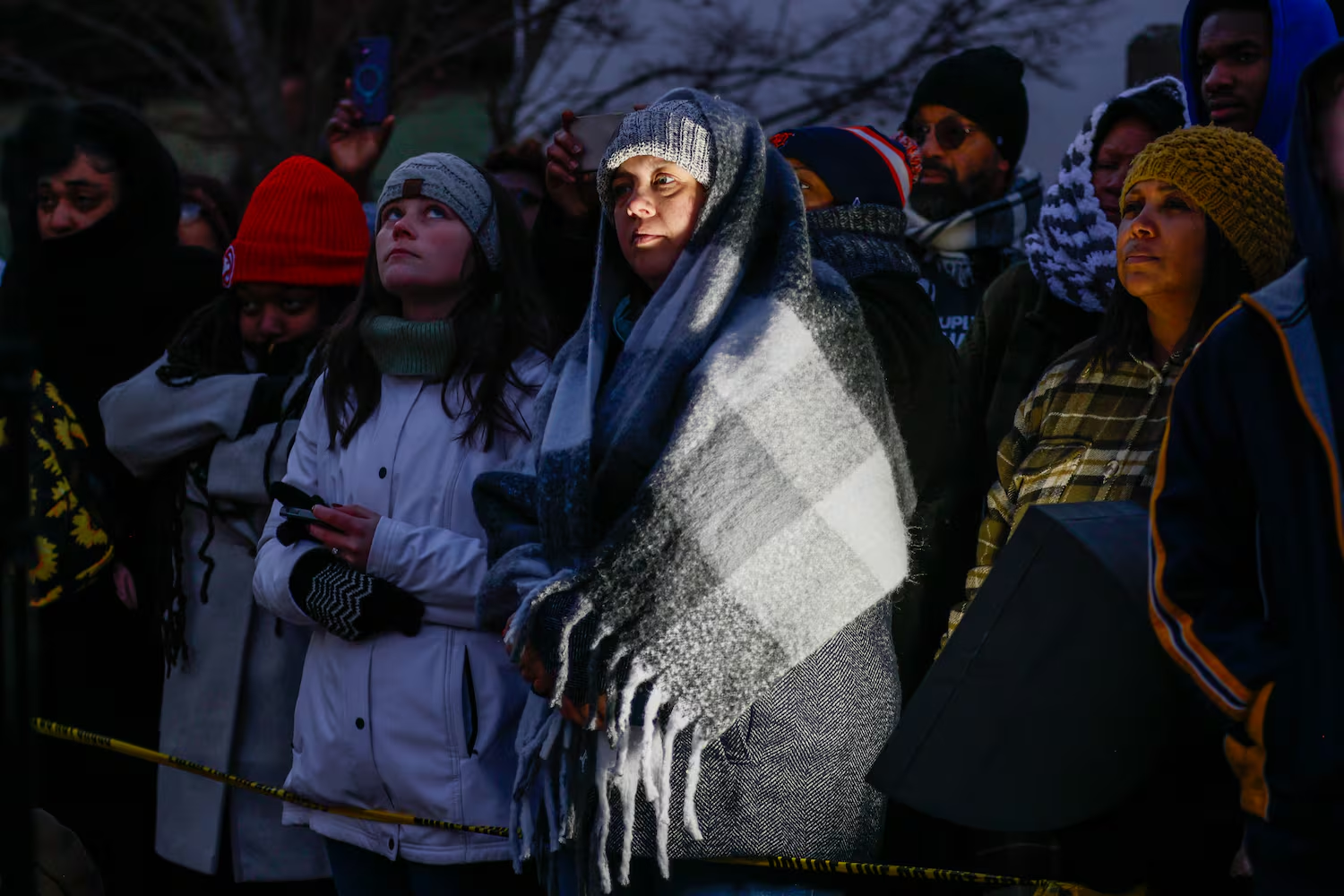
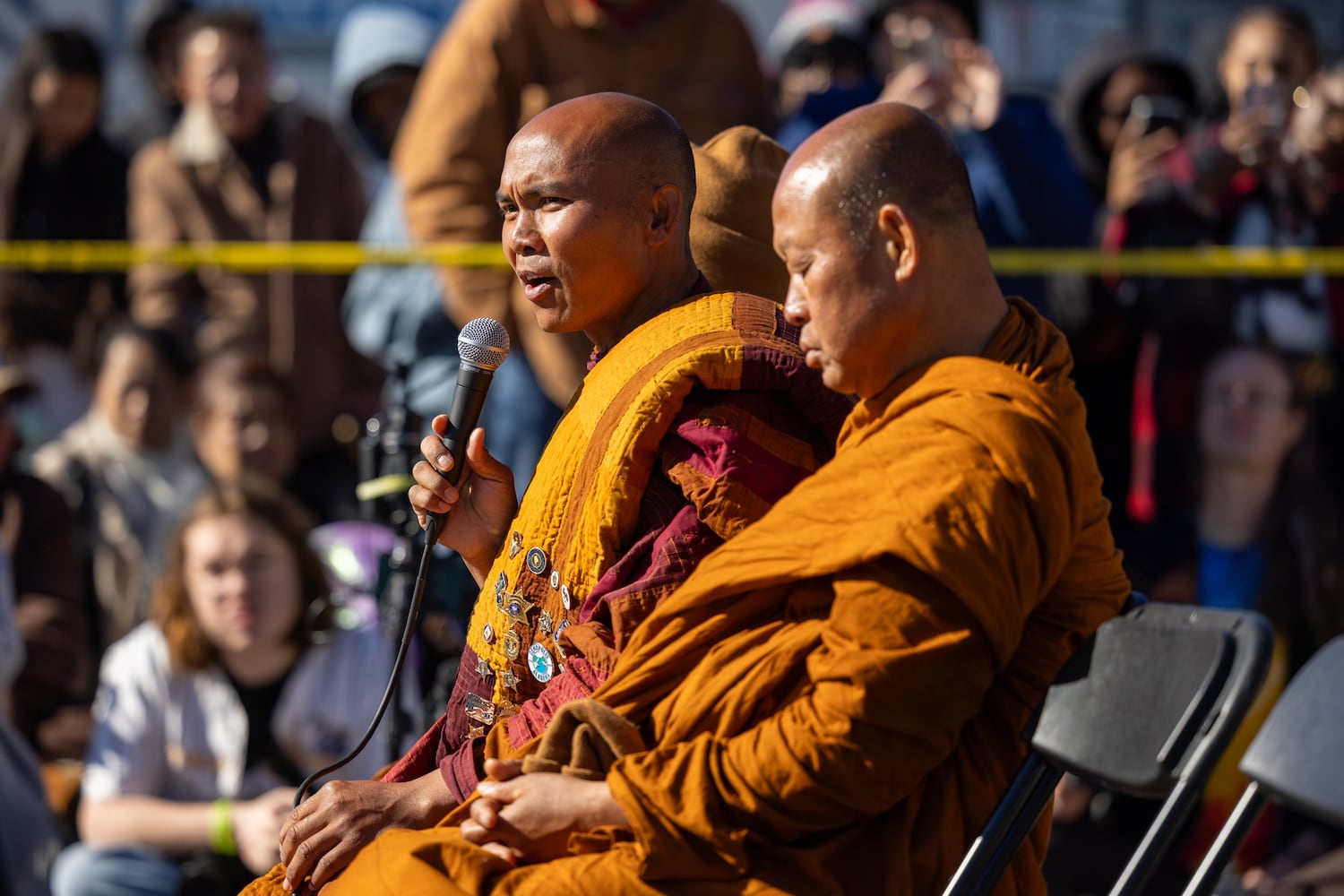
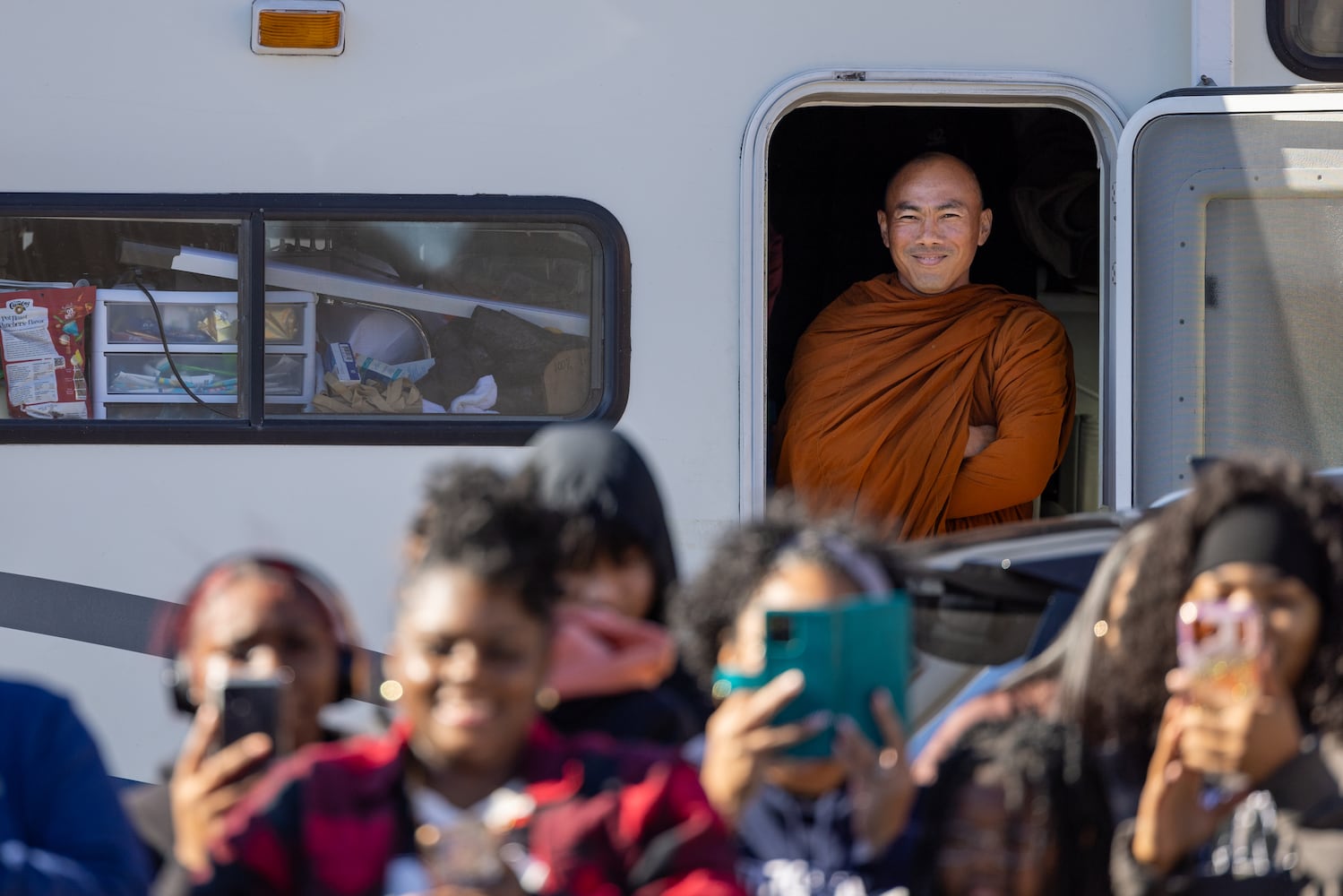
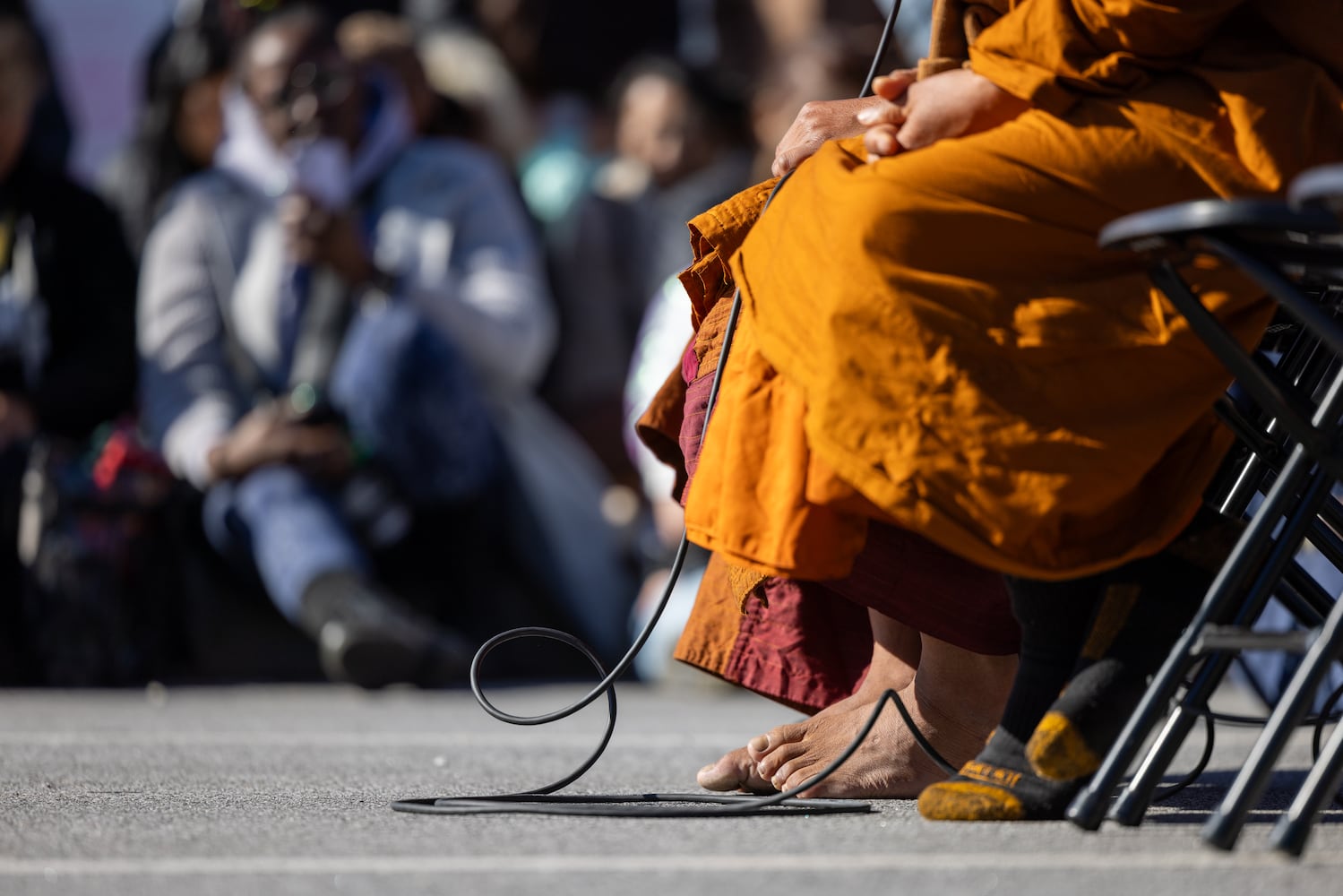
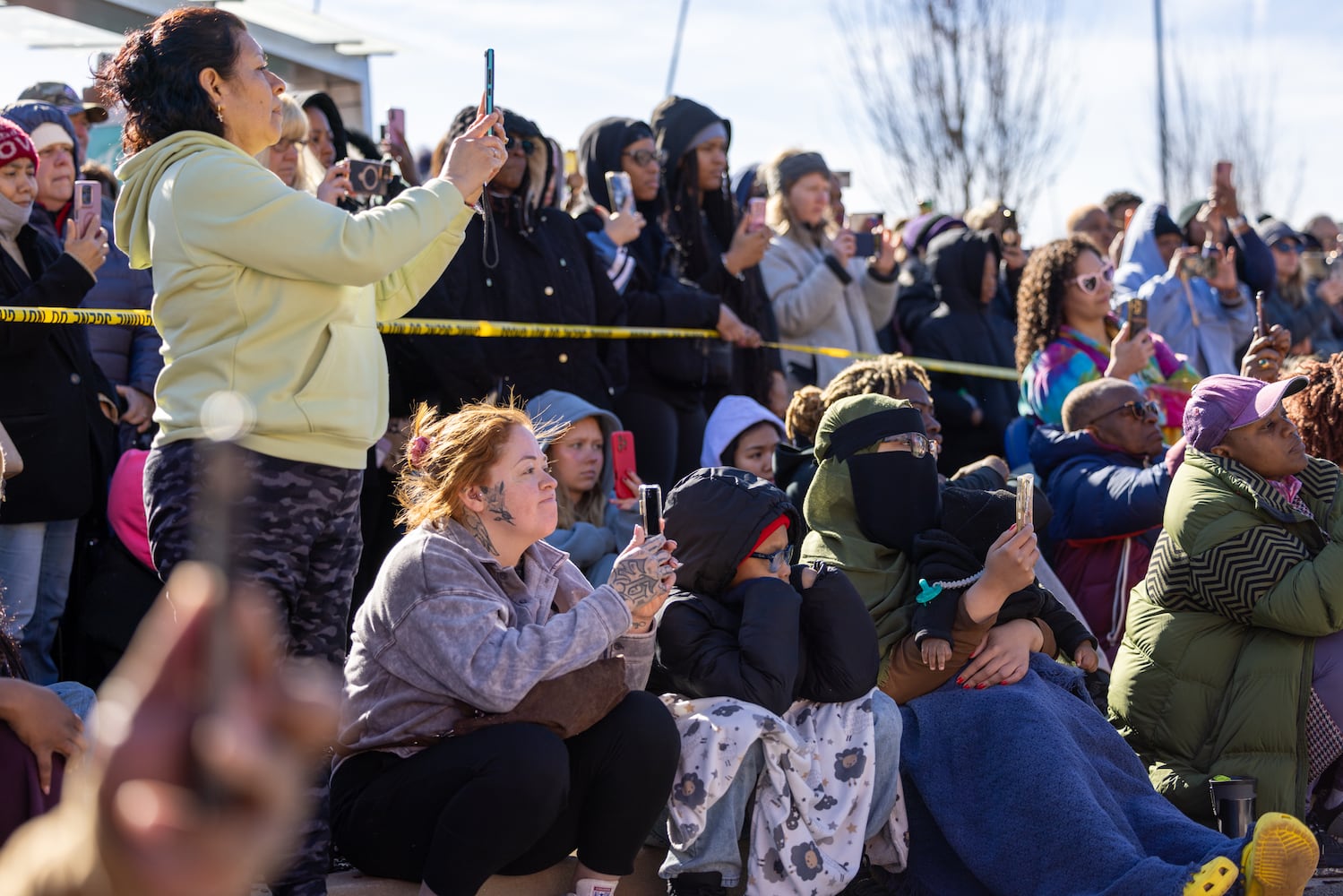
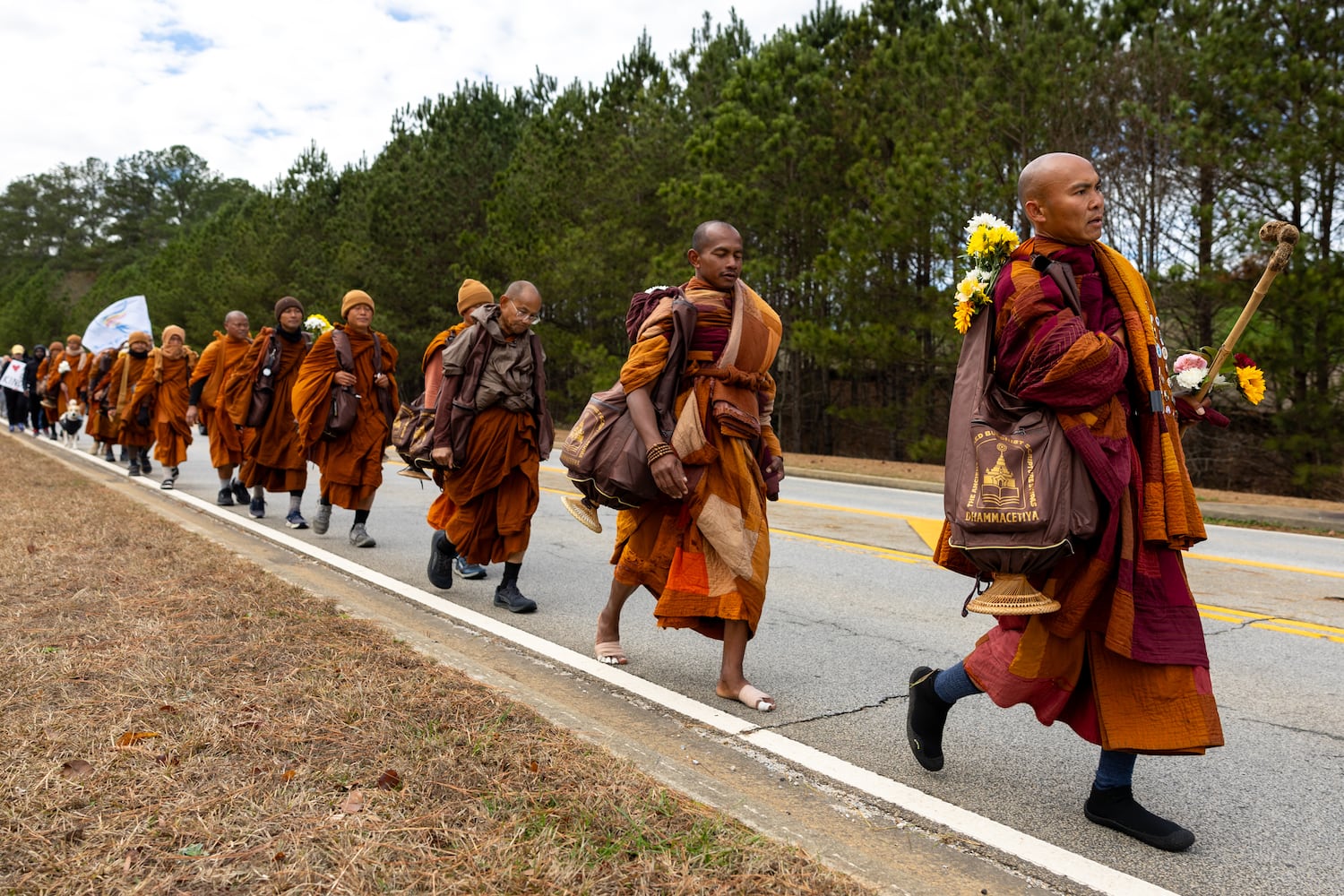
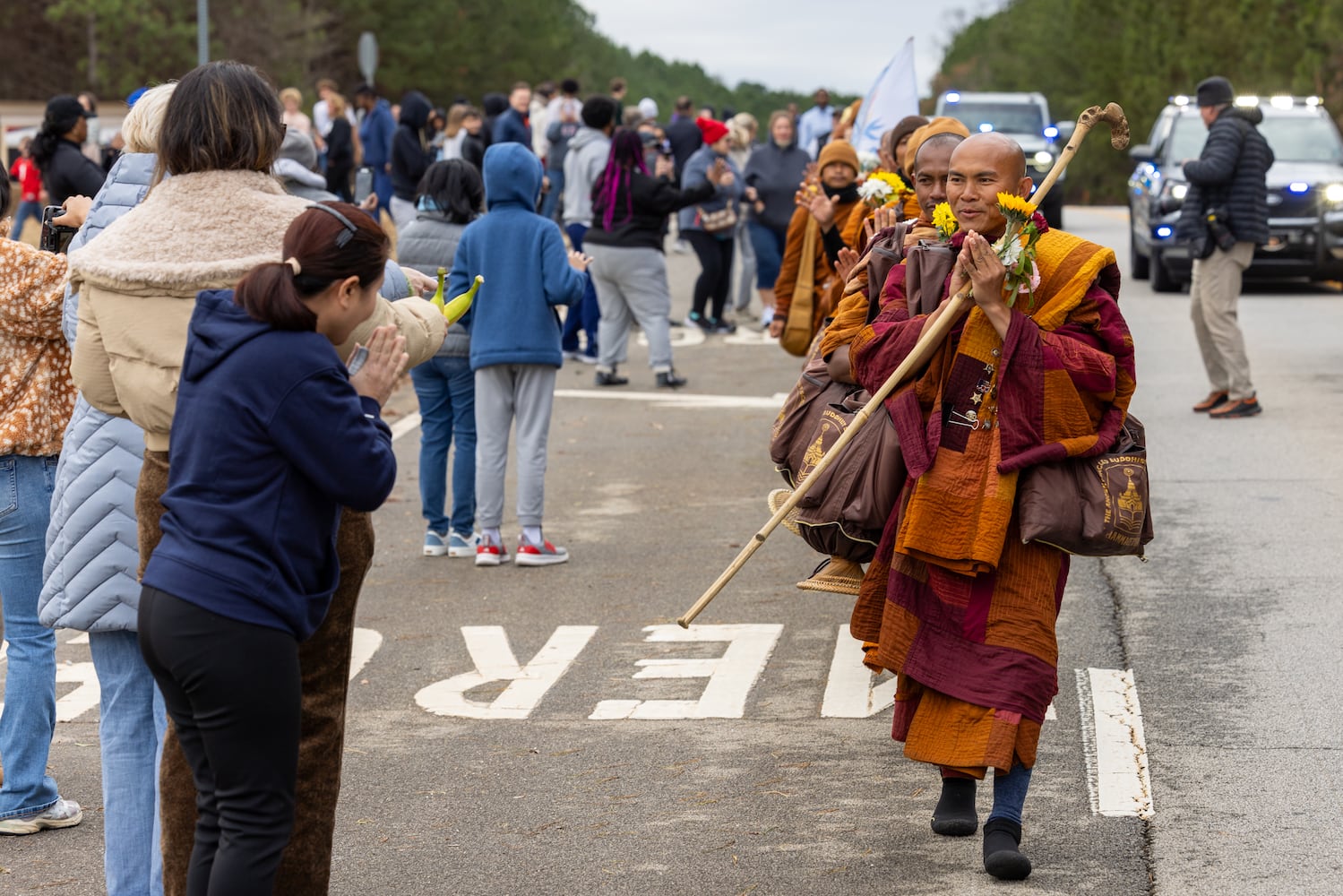
Our nation is fractured and troubled. Americans are afraid: of losing our health care to unemployment, our family and friends to deportation, our lives to gun violence.
As a photojournalist, I see the fear too often.
At a recent memorial at Kennesaw State University for slain right-wing activist Charlie Kirk, I spent the afternoon with a group of student attendees.
They speculated morbidly about the possibility of a politically motivated shooter appearing on campus to violently disrupt the event. Who will identify my body, one student asked. Who will tell my parents?

Credit: arvin.temkar@ajc.com
Credit: arvin.temkar@ajc.com
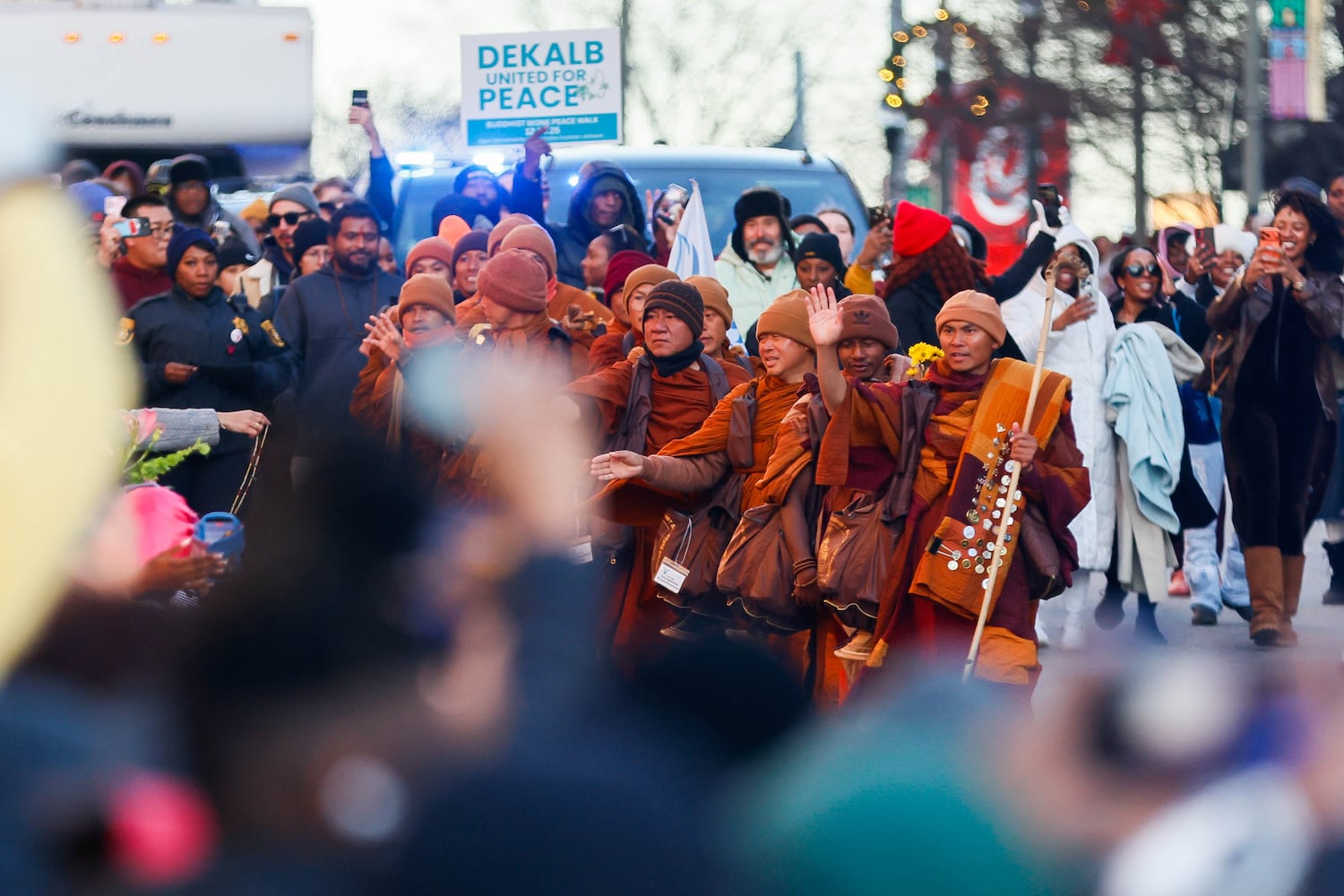
It’s no wonder people are so drawn to the monks. They offer a nonpartisan, universal message: Peace is possible. Peace is a choice.
Republican State Rep. Josh Bonner, R-Fayetteville, was among the public officials who greeted the monks in Peachtree City, as they made their way toward Fayetteville.
“It’s such a fascinating thing to have come to our community,” Bonner told the AJC. “They’re just humble folks trying to bring awareness to peace, and everybody can get on board with that.”
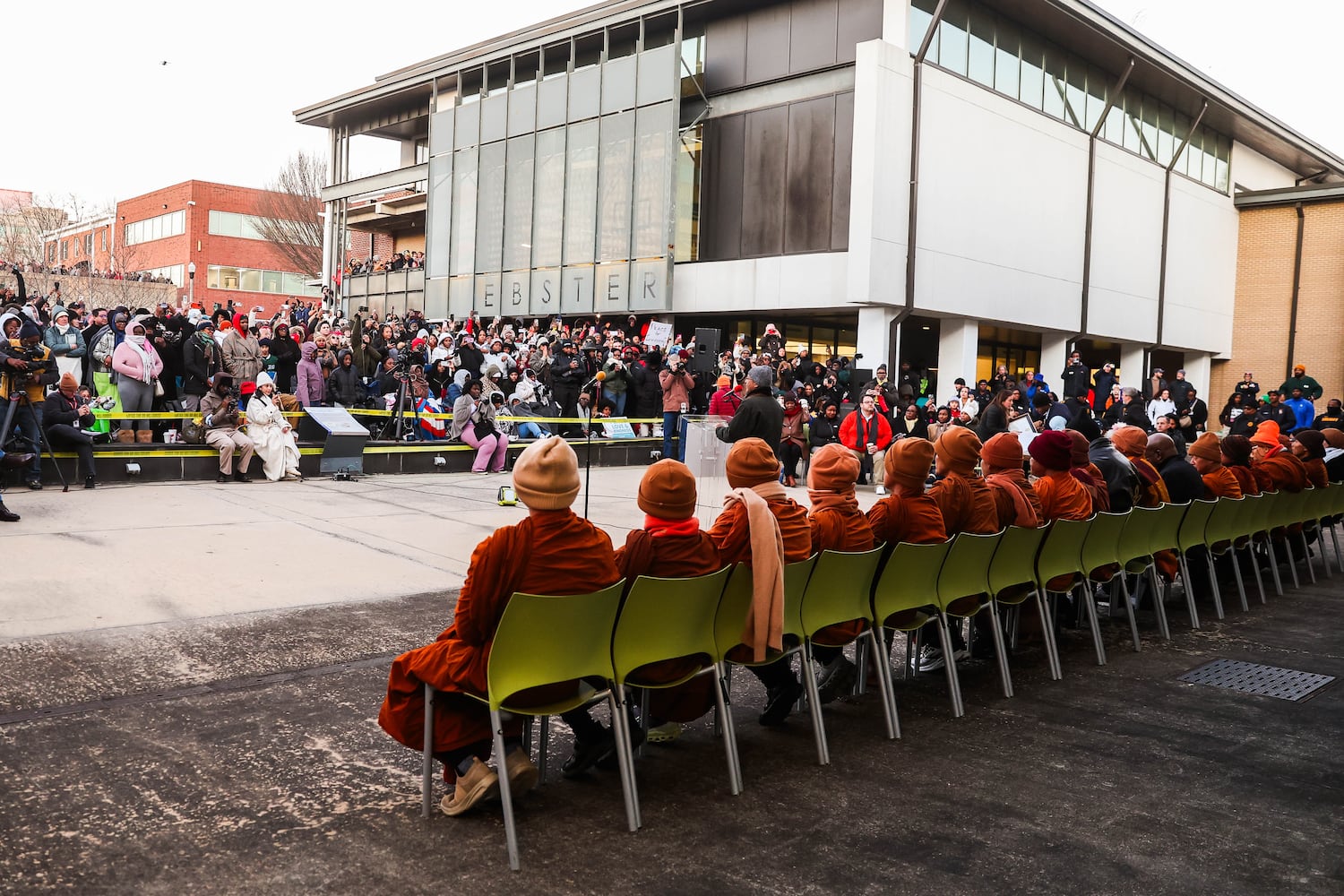
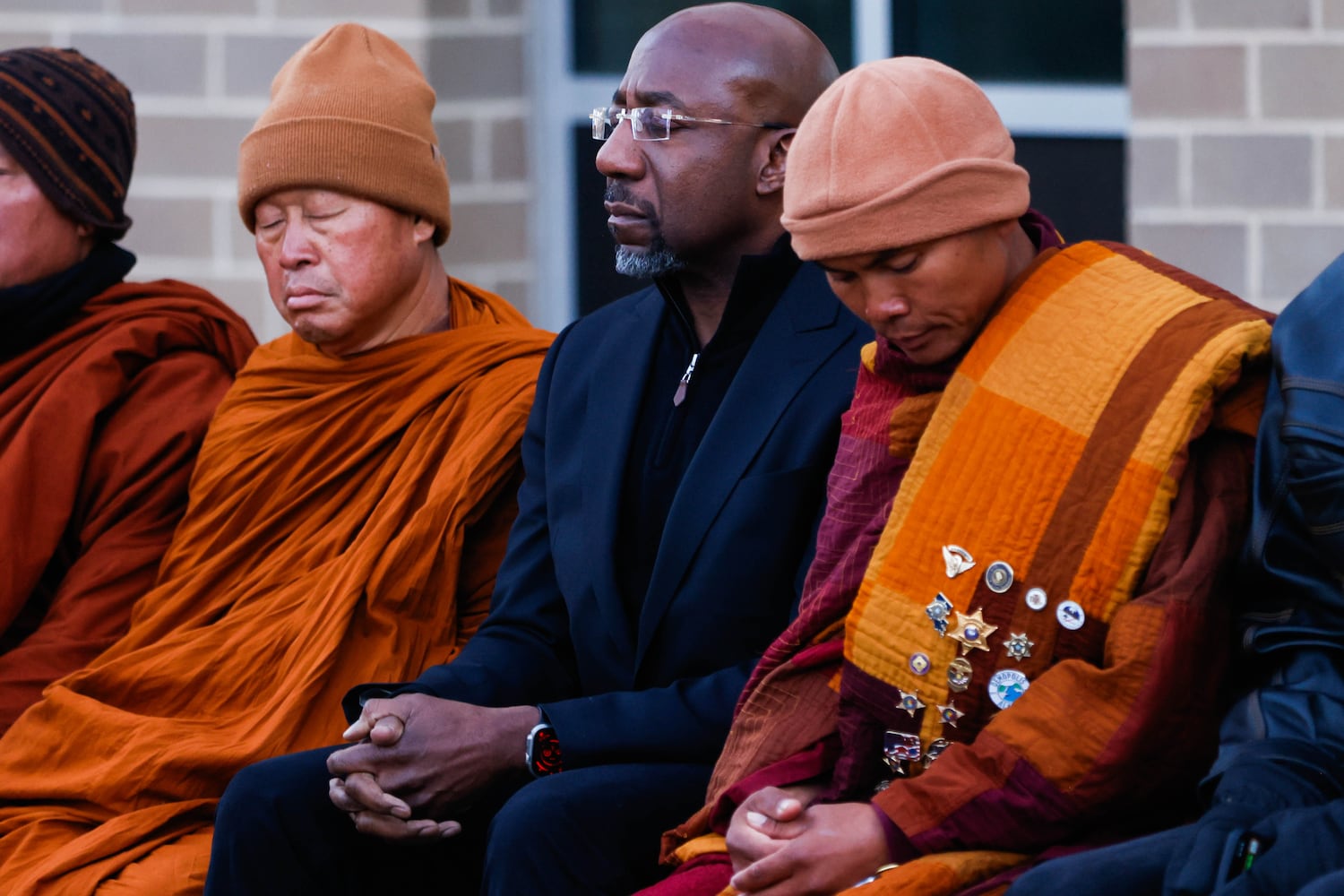
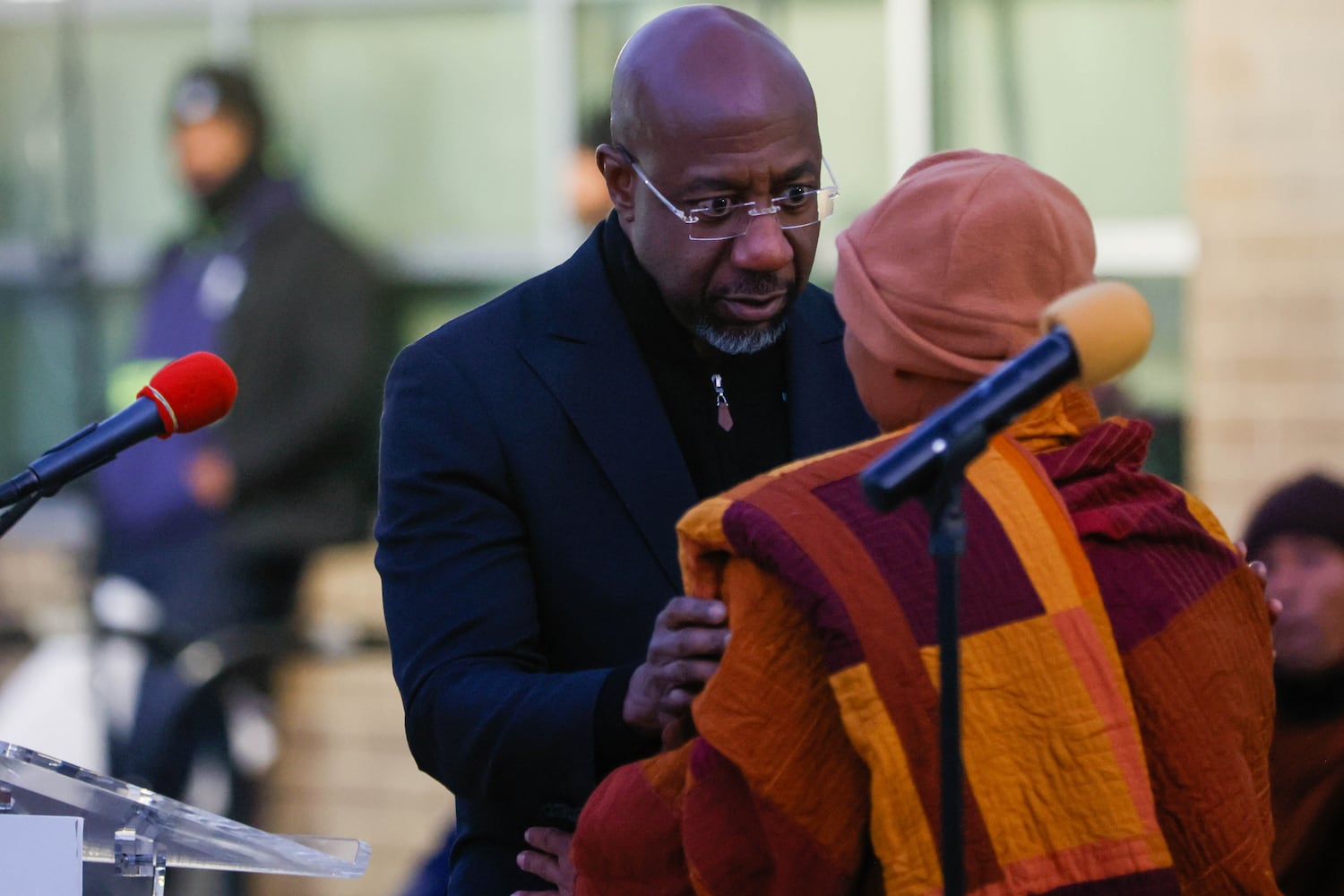
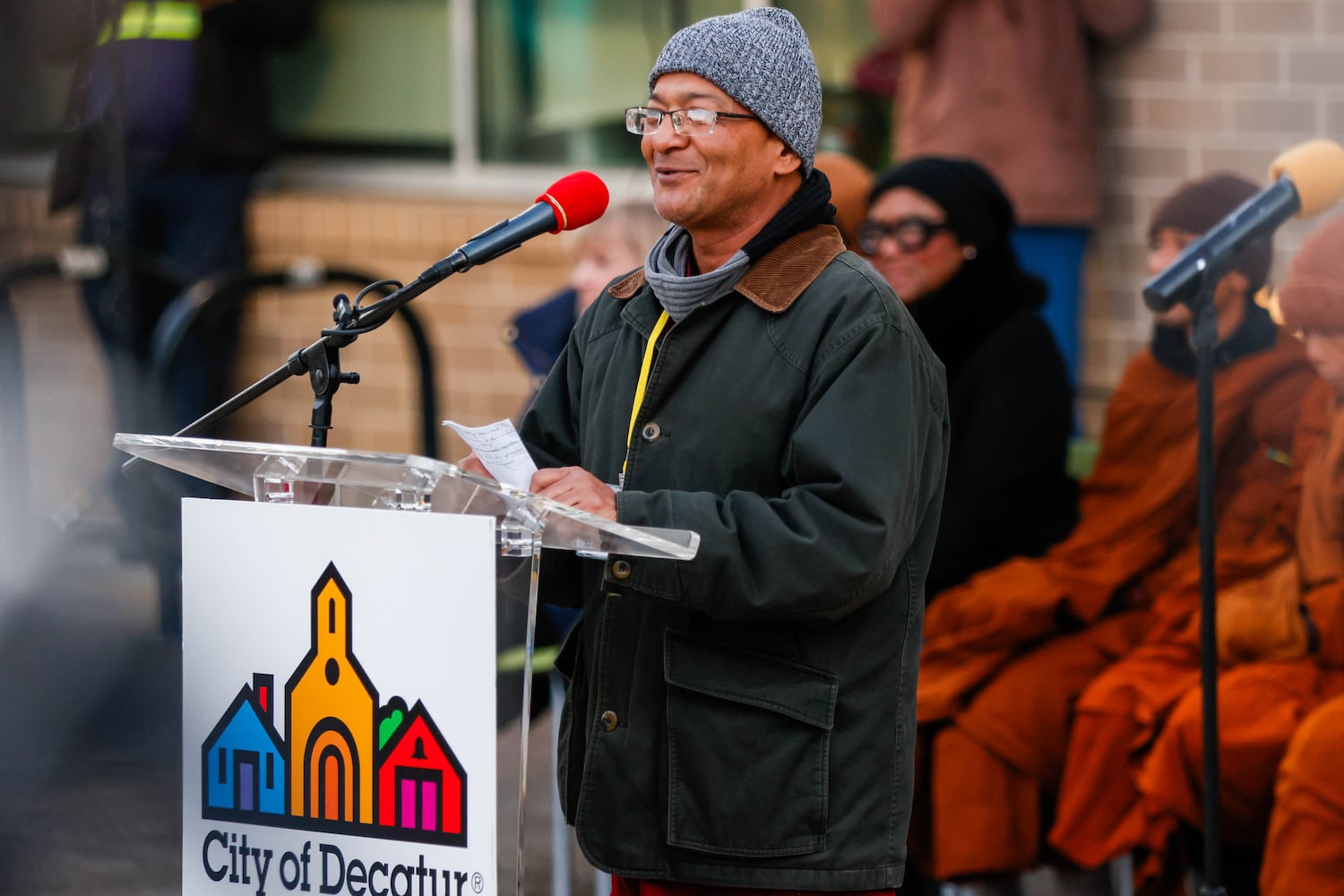
The next day in Decatur, Democratic U.S. Sen. Raphael Warnock told thousands of well-wishers that the monks have “taught us how to walk humbly.”
Detractors did not deter them. History shows why.

Credit: abbey.cutrer@ajc.com
Credit: abbey.cutrer@ajc.com
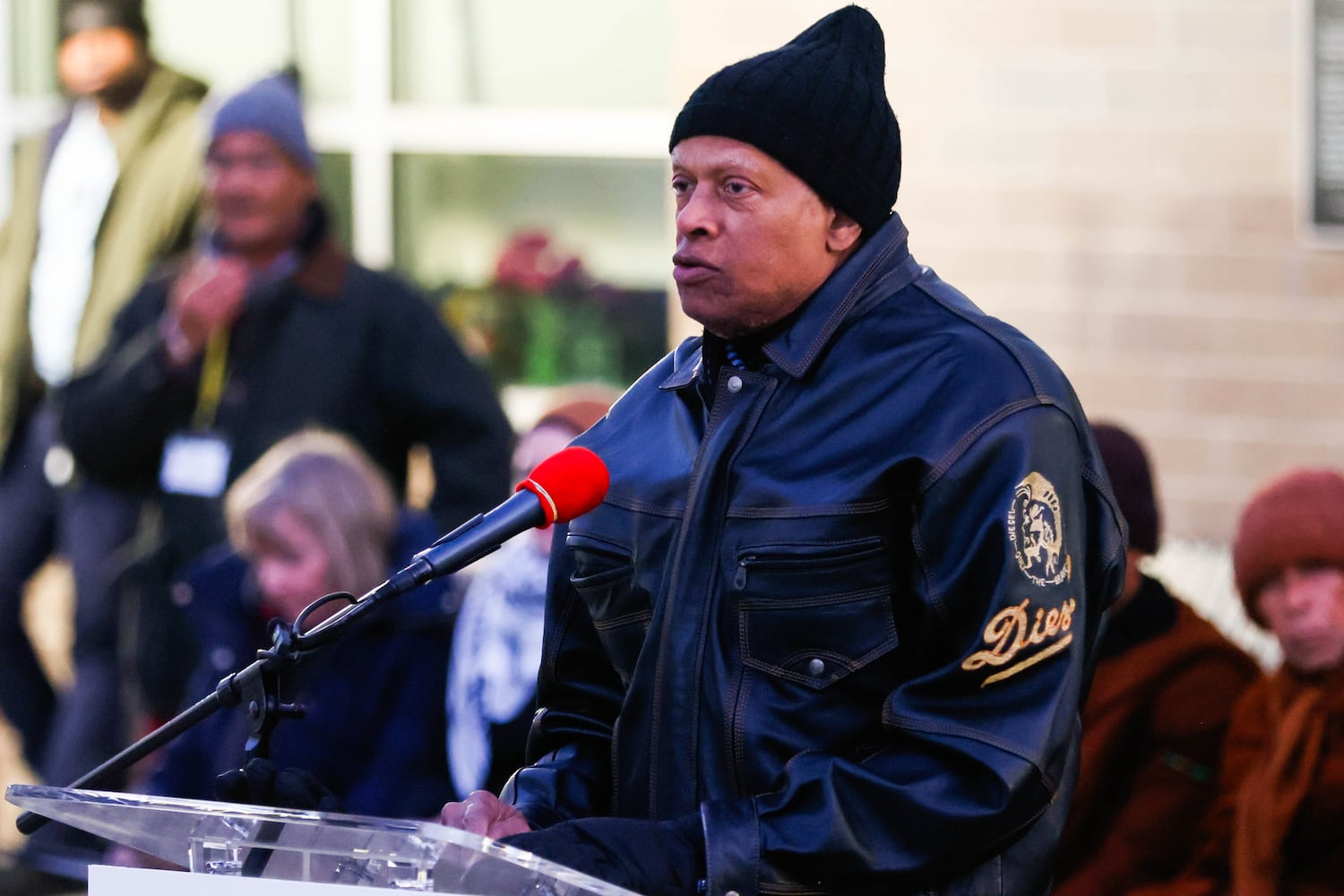
Not everyone has taken so kindly to the monks and their 2,300-mile journey, though. Some onlookers have cursed them or thrown things at them. But the group’s leader, Venerable Bhikkhu Pannakara, from Fort Worth, Texas, maintains his message of unity: “It doesn’t matter what background we are, what faith we believe, what skin color we have or what language we speak,” he said in Decatur. “We all have the same blood color of red.”

Credit: Elijah Nouvelage
Credit: Elijah Nouvelage
As I observed the crowds lining the highway, I was reminded of a set of pictures taken by photographer Paul Fusco in 1968. On June 5 of that year, Fusco was aboard the train that carried Robert F. Kennedy’s body from New York to Washington, D.C., for the presidential candidate’s funeral. Fusco’s iconic photographs from the train show the hundreds of thousands of mourners who gathered along the tracks to pay their respects to the assassinated politician.
Though the onlookers had gathered for very different reasons, it’s impossible to ignore the parallels between their times and ours. It was a time of political assassination, nationwide protests over civil rights, uncertainty about the nation’s future.
Just two months before his own violent death, RFK broke the news of Martin Luther King Jr.’s assassination to a predominantly Black audience in Indianapolis. “What we need in the United States is not division; what we need in the United States is not hatred,” he told the crowd, from atop a flatbed truck. “What we need in the United States is not violence or lawlessness; but love and wisdom, and compassion toward one another.”
It was a wise, open-hearted message — suited as much to 2026 as 1968. It could have come straight from a Buddhist monk.
Arvin Temkar is a staff photojournalist at the AJC.
About the Author
Keep Reading

The Latest

Featured

