


A tax policy committee formed by Lt. Gov. Burt Jones is recommending one of the most far-reaching overhauls of Georgia’s income tax system in decades — a plan that would eliminate state income taxes entirely for about two-thirds of Georgia workers beginning in 2027 and sharply reduce taxes for everyone else.
The proposal, outlined by state Senate Appropriations Chair Blake Tillery on Tuesday to The Atlanta Journal-Constitution, calls for making the first $50,000 of income for individual filers tax-free. Married couples filing jointly would pay no state income tax on their first $100,000 of income.
The plan envisions gradually lowering, and eventually eliminating, state income taxes on remaining taxpayers and businesses over time. But it does not propose a specific plan to make up that lost revenue beyond its first year.
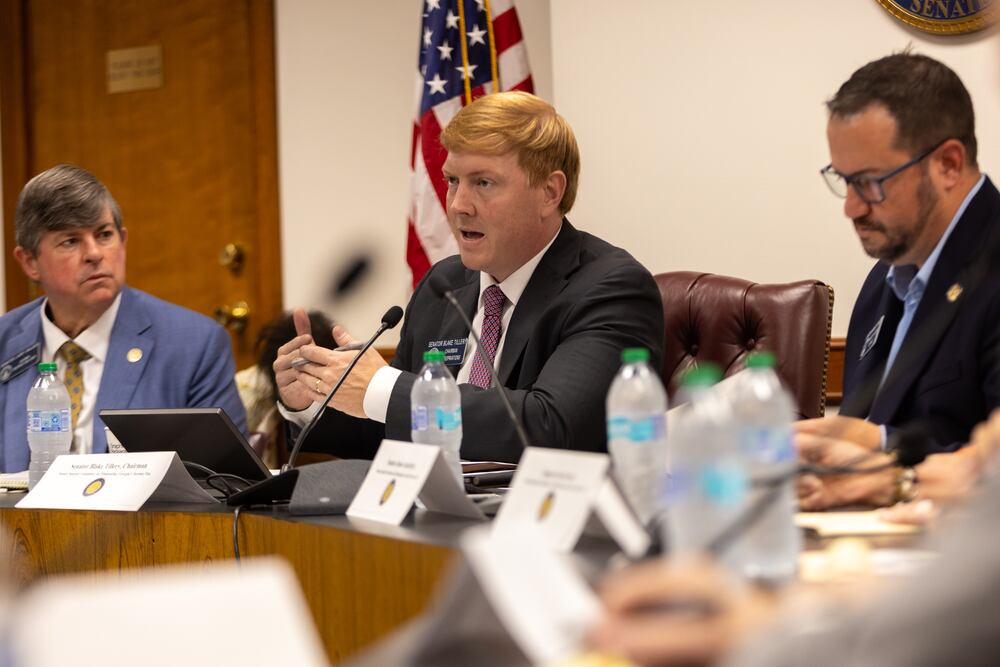
Credit: Arvin Temkar/AJC
Credit: Arvin Temkar/AJC
Instead, the report emphasizes what the plan would not do: raise the state sales tax, create a statewide property tax or mandate deep cuts to state services. Instead, Republicans backing the effort say economic growth and conservative fiscal adjustments can sustain the cuts.
Jones launched the committee last summer to study ways to eliminate the income tax. The committee is set to meet Wednesday to formally review and adopt its report.
“I look forward to building on the Committee’s valuable findings and commit to work with all members of the General Assembly on crafting a solution that responsibly delivers on my promise to let workers keep more of what they earn,” Jones said in a statement Tuesday.
Democrats have said eliminating the income tax would require big spending cuts or steep increases in the state sales tax — a move they say would give the biggest tax breaks to the wealthy and ultimately increase taxes on poor and middle-income Georgians.
Danny Kanso, a budget analyst for the liberal-leaning Georgia Budget and Policy Institute, didn’t see anything in the report to change that analysis.
“Most of the (state) revenue lost from eliminating this income tax is going to go to those earning six figures and above,” Kanso said. “The benefits are so skewed toward the very top.”
The plan also sets up a direct confrontation with Republican leaders in the Georgia House, who would rather back deeper cuts to property taxes than eliminate the income tax, which is by far the largest source of state revenue, accounting for about $15.7 billion this year.
And it sharpens a rift in the race for Georgia governor, where Jones faces two GOP rivals with contrasting tax policy views.
But the recommendation also raises key questions, including how the state would make up billions in foregone revenue over time, whether the economy could keep pace with the loss, and how the shift would affect school funding, health care programs and future budgets.
One of the biggest unknowns revolves around Gov. Brian Kemp. He’s backed a gradual reduction of the income tax, which now sits at 5.19%. But he hasn’t indicated whether he’ll support a broader push to eliminate it.
Jones, Tillery and their allies say the goal is to put more money in Georgians’ pockets at a time when inflation, housing costs and insurance spikes are straining budgets and candidates are increasingly focused on affordability.
Tillery said the plan’s first year would already be funded. He pointed to about $1.8 billion in surplus revenue last year and an additional $1 billion created by moving state spending from cash to bonds.
Starting in year two, Tillery said lawmakers would begin trimming special-interest tax credits — which total about $30 billion on the books — by about 10%.
Under the plan, a married couple earning $100,000 a year or more would save about $5,190 in state income taxes.
“Georgia families have been screaming at elected officials that affordability is their No. 1 issue,” said Tillery, who is running for lieutenant governor. “This plan provides real relief for hardworking Georgians.”
But despite months of talk of cutting “corporate welfare,” the plan proposes no specific tax breaks to be cut.
“Where are we going to raise the $16 billion from?” Kanso asked of the lost revenue. “It’s really remarkable that there’s not even a single source of revenue.”

Credit: Arvin Temkar/AJC
Credit: Arvin Temkar/AJC
Tillery said the corporate income tax rate will drop to 4.99% this year and then be “decoupled” from the rate for individual taxpayers, meaning reducing the individual rate would be the focus of lawmakers. Keeping the corporate income tax would also allow lawmakers to keep some corporate tax credits that would entice developments, such as the rural hospital incentives.
“In this plan, every taxpayer benefits and everyone still gets to zero,” Tillery said. “But the teacher, nurse, firefighter, restaurant worker and police officer go first.”
He and other supporters of the plan insist they’ll be able to slash the tax without hiking the state sales tax or raising other fees.
A recent Atlanta Journal-Constitution analysis found seven of the nine states without personal income taxes have higher sales tax rates than Georgia’s 4%, including neighboring Florida and Tennessee.
What’s more, those states assess sales taxes on a broader array of goods and services than Georgia. Tennessee, for example, taxes grocery sales — although at a reduced rate.
About the Authors





Keep Reading

The Latest
Featured
