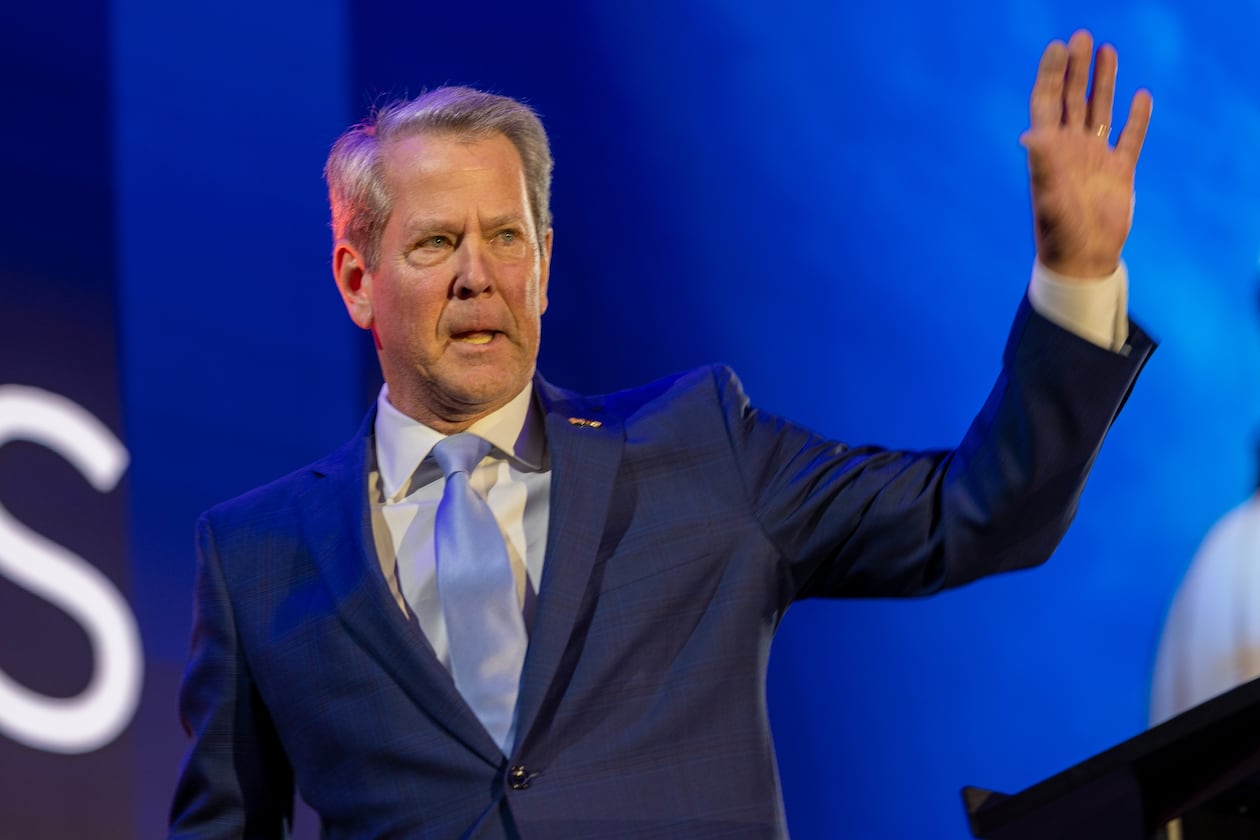
Gov. Brian Kemp set the stage for a courtroom battle when he signed a sweeping elections measure that could reshape local politics across metro Atlanta by making it harder for Democrats to hold onto power in the state’s most populous region.
Critics call it a direct attack on Democratic power in Clayton, Cobb, DeKalb, Fulton and Gwinnett counties and an effort to punish Fulton County District Attorney Fani Willis, who became a favorite GOP target after she sought election interference charges against President Donald Trump and his allies.
Now Willis and DeKalb District Attorney Sherry Boston are preparing lawsuits they say will challenge the law’s constitutionality and disproportionate impact on Black elected leaders in Georgia’s most liberal and populous region. All five counties covered by the law have Black Democratic women serving as district attorney.
“Sadly, thanks to the irresponsible actions of the Republican majorities in the legislature and Governor Kemp, taxpayers will be the ones footing the bill to defend it in court,” they said in a joint statement.
They may be joined by other local officials. Gwinnett County District Attorney Patsy Austin-Gatson called it a “deliberate act of voter disenfranchisement” and vowed to fight it with “every tool available to us.”
Republicans have framed the law as an effort to depoliticize local offices, though they don’t deny the optics of a measure that only applies only to counties in the Democratic stronghold of metro Atlanta rather than statewide.
It’s also part of an ongoing effort by the Republican-controlled Legislature to target Willis, who was invoked by several Republicans during debate over the measure.
‘Clearly unconstitutional’
The law applies to district attorneys, county commissioners and other elected officials in Clayton, Cobb, DeKalb, Fulton and Gwinnett counties beginning in 2028.
It moves elections for most of those posts, excluding district attorneys, to lower-turnout May contests held alongside nonpartisan judicial races.
The measure, House Bill 369, was one of dozens Kemp signed ahead of a Tuesday deadline to act on legislation that the Republican-controlled General Assembly approved this year.
Kemp has spent the last few days holding signing ceremonies with smiling lawmakers over popular proposals that cut income taxes and limited the growth in property tax assessments.

Credit: Ben Hendren
Credit: Ben Hendren
He also signed a slate of measures with more concrete effects for Georgians.
One would allow pharmacists to prescribe oral and injectable contraceptives. Another lets businesses round up or down when giving change to account for the U.S. Mint’s decision to stop making new pennies.
He also signed a bill to publicly disclose sexual harassment settlements involving lawmakers, an issue that has been an undercurrent in the heated GOP race for lieutenant governor.
State Sen. Blake Tillery, one of five current or former sitting legislators vying for the party’s nomination, challenged his rivals during a debate to sign a waiver saying they would comply with the legislation even if Kemp didn’t sign it. All did so.
But much of the attention on Tuesday was what Kemp blocked. He blocked $300 million in spending from the state budget to help offset what he said is a $1.3 billion deficit created by signing the tax cuts.
And he nixed 12 bills, including several tax incentive measures. One measure he vetoed would have boosted the percentage of sales tax revenue from outdoor recreation equipment to a conservation trust fund, but Kemp said he vetoed it because lawmakers failed to offset the cost in the budget.
The stakes over the nonpartisan election measure were especially high because the legislation is deeply intertwined with the political fallout from Willis’ failed prosecution of Trump and his allies.
Georgia Republicans and Trump allies have steadily escalated efforts to sanction Willis. A Senate committee spent months probing Willis’ handling of the election interference case. And Trump allies in Washington have hinted at broader scrutiny still to come.
She and Boston called the measure a “clearly unconstitutional” effort to subvert the will of voters.
“This is a blatant attempt by Republicans to give their candidates an edge in Democratic counties by hiding their party affiliation from voters,” she said.
About the Author




Keep Reading

The Latest

Featured