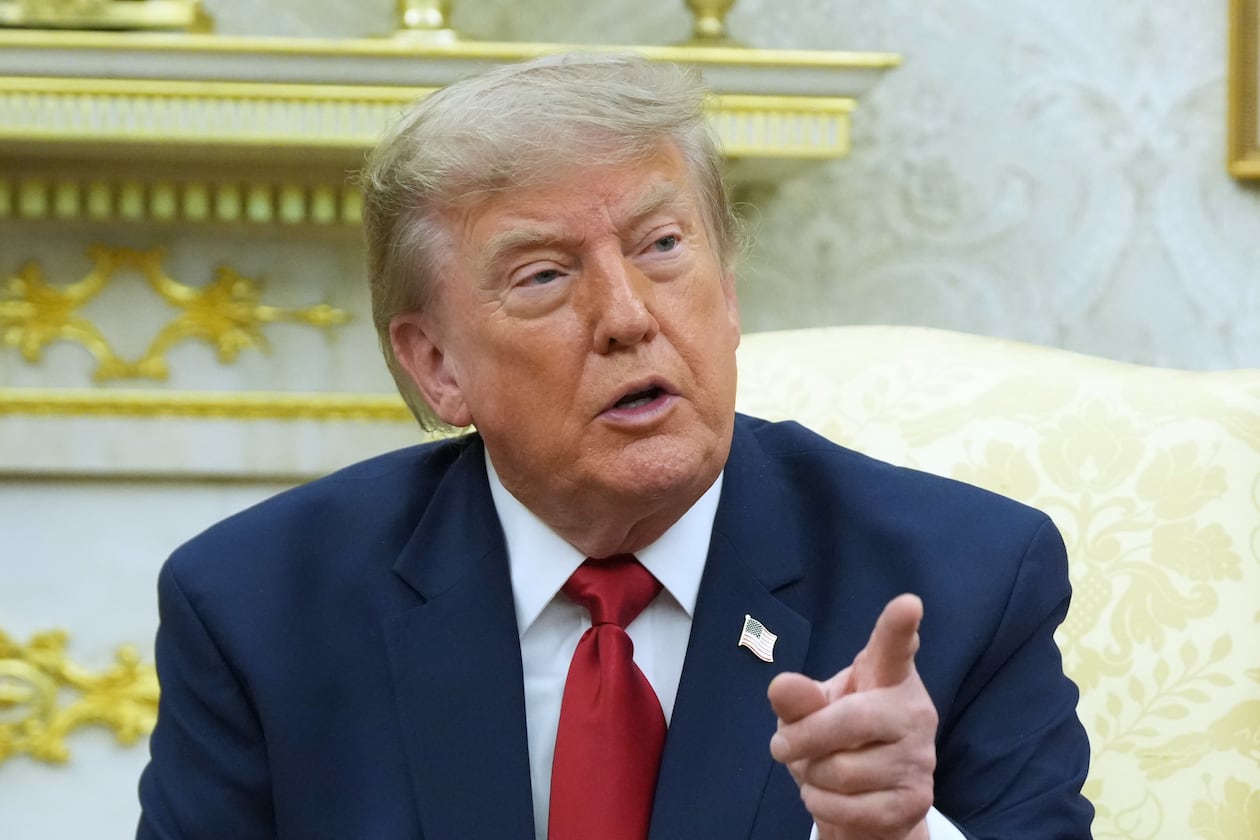
WASHINGTON — Erica Schwartz, President Donald Trump’s nominee to lead the Atlanta-based Centers for Disease Control and Prevention, said she will follow the science when it comes to addressing public health emergencies as she works to restore trust in the agency.
But in a Senate confirmation hearing Wednesday, she stopped short of making promises to roll back hiring decisions and messaging from Health and Human Services Secretary Robert F. Kennedy Jr. linking vaccines to autism. Instead, she said she was confident Kennedy would allow her to run the agency without improper interference.
“You have my assurances that I will continue to lead by my integrity,” Schwartz said. “I will never compromise on the science. I will always, always have the public’s health in mind.”
Schwartz, who served as deputy surgeon general during Trump’s first administration, was nominated to head the CDC after the abrupt firing of Susan Monarez after just a month on the job.
Monarez later told senators that Kennedy had asked her to commit to firing CDC experts and wanted her to preapprove new vaccine guidelines without any review or input. She said she refused on the grounds it would violate both her oath of office and ethics standards.
U.S. Sen. Bill Cassidy, the Louisiana Republican who chairs the Senate’s Health, Education, Labor and Pensions Committee, said he came to regret voting against Monarez’s nomination to the role. During Wednesday’s hearing he said he worried that Schwartz would not be willing to stand up to Kennedy in the way her predecessor did.
“Will you have the ability to say no to junk science and to say yes to that which has been firmly established?” he asked Schwartz. “And to stick up for what is actually right and true, as opposed to that which is superstition and prejudice?”
She responded that she could and would.
Sean Kaufman, a Woodstock native nominated by Trump to serve as assistant secretary for preparedness and response at HHS, was asked during the hearing to clarify past comments on vaccine safety.
He said some of his more controversial statements have been taken out of context, such as when he said he would not vaccinate his young children against COVID-19. Kaufman said that was because they were healthy, but he had recommended the vaccine to the elderly or those with other health challenges.
Kaufman has also been criticized for arguing in the past against giving infants the hepatitis B vaccine and questioning if vaccines are connected to autism and other health issues.
He said the topic requires wider dialogue between doctors and patients.
“I believe 100% that vaccines are safe and effective and that we should have conversations with our physicians to make a determination on which and what is the best risk-benefit equation for that patient,” he said.
Kaufman and Schwartz fielded questions from members of the committee for nearly three hours. The committee will vote in the coming days on whether to send their nominations to the Senate floor.
About the Author



Keep Reading

The Latest

Featured