

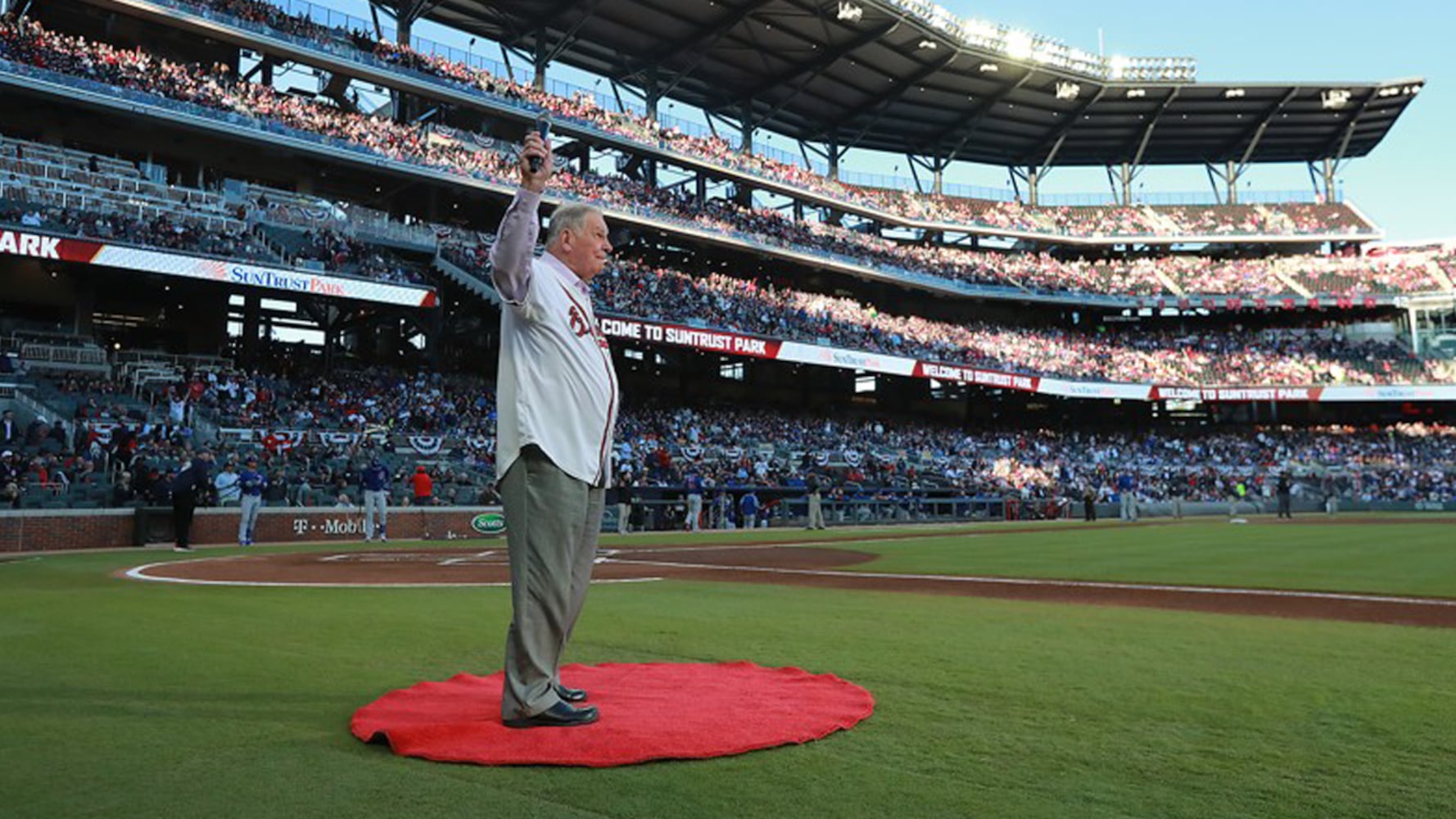
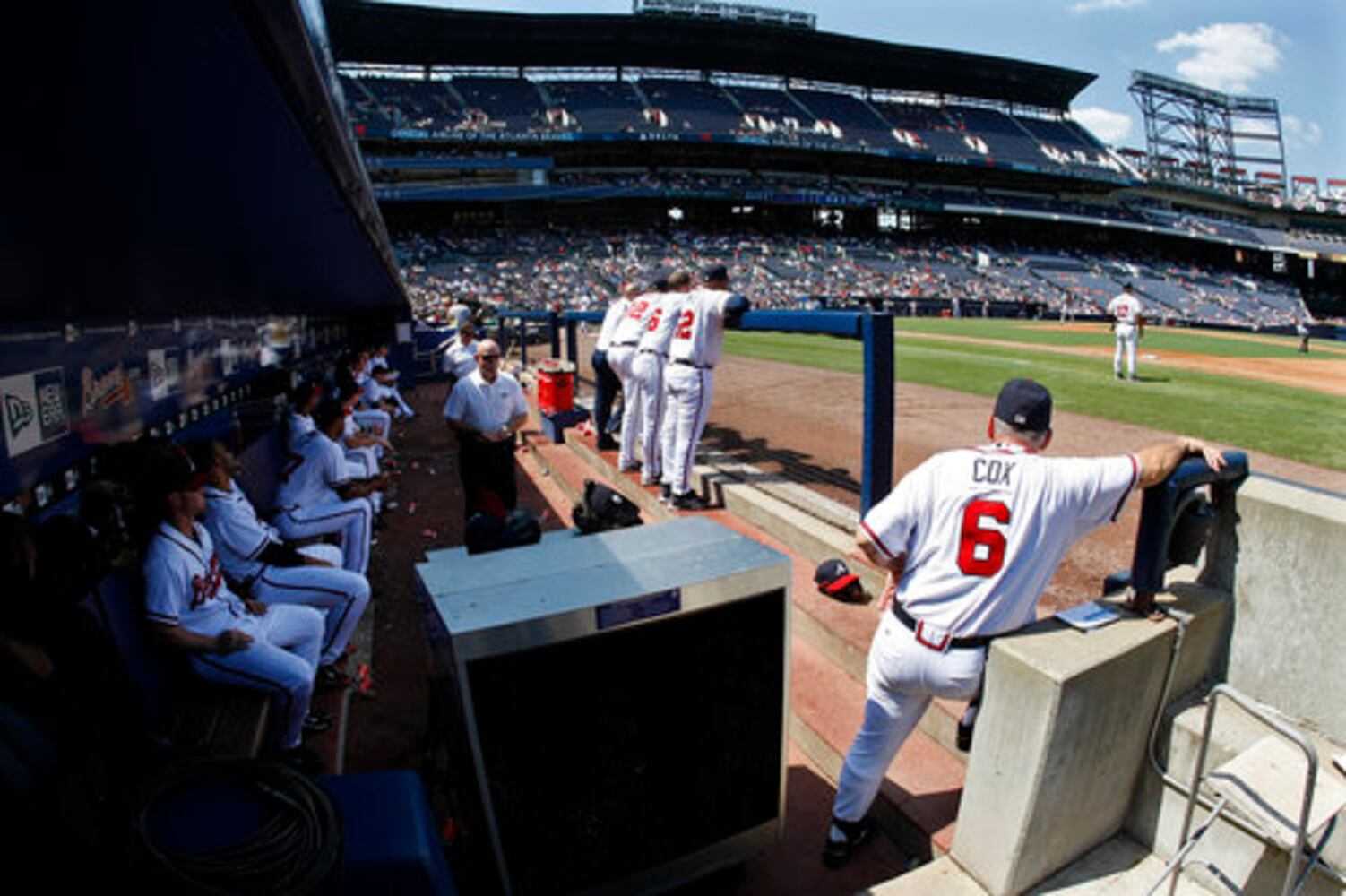
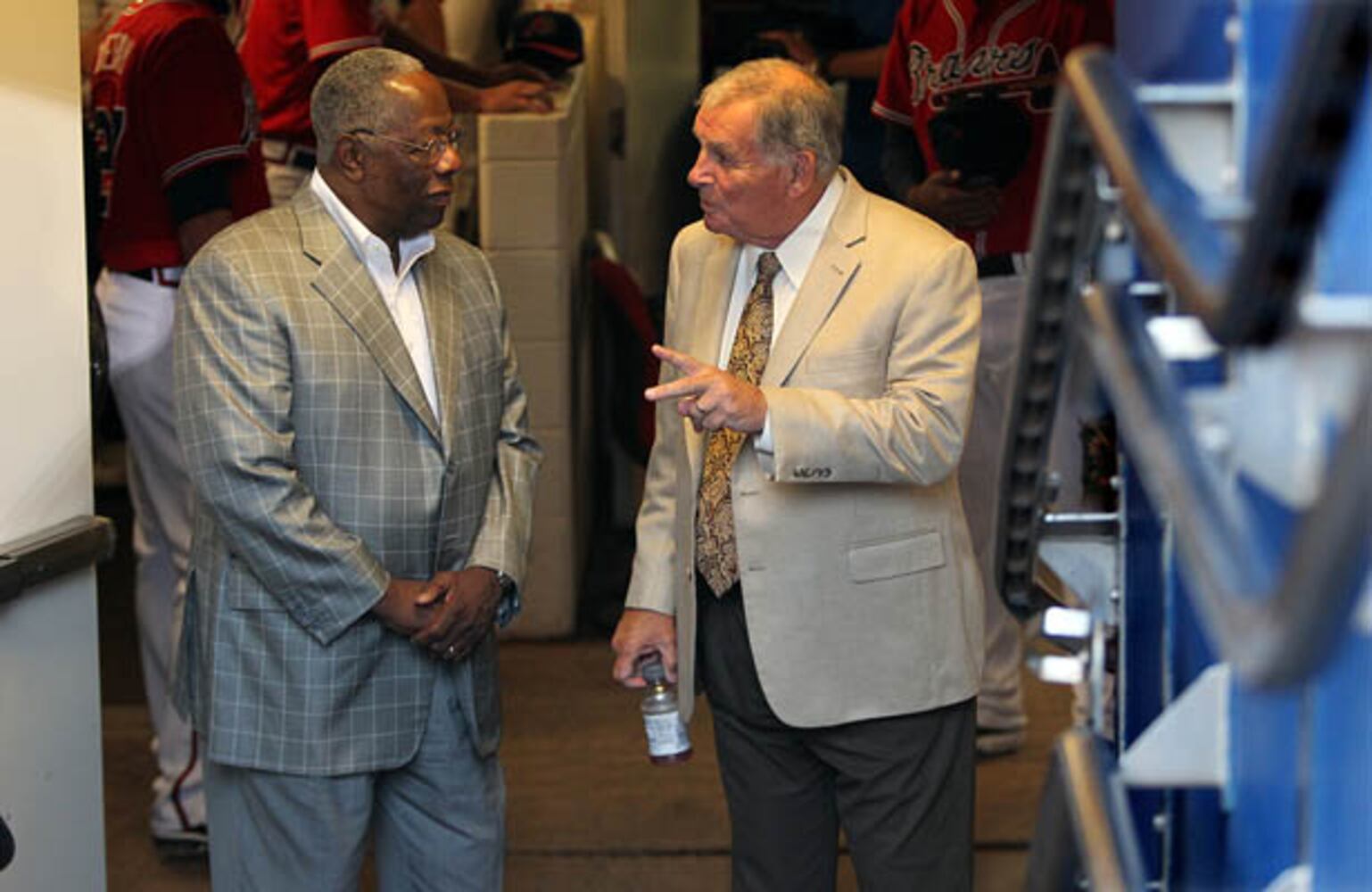
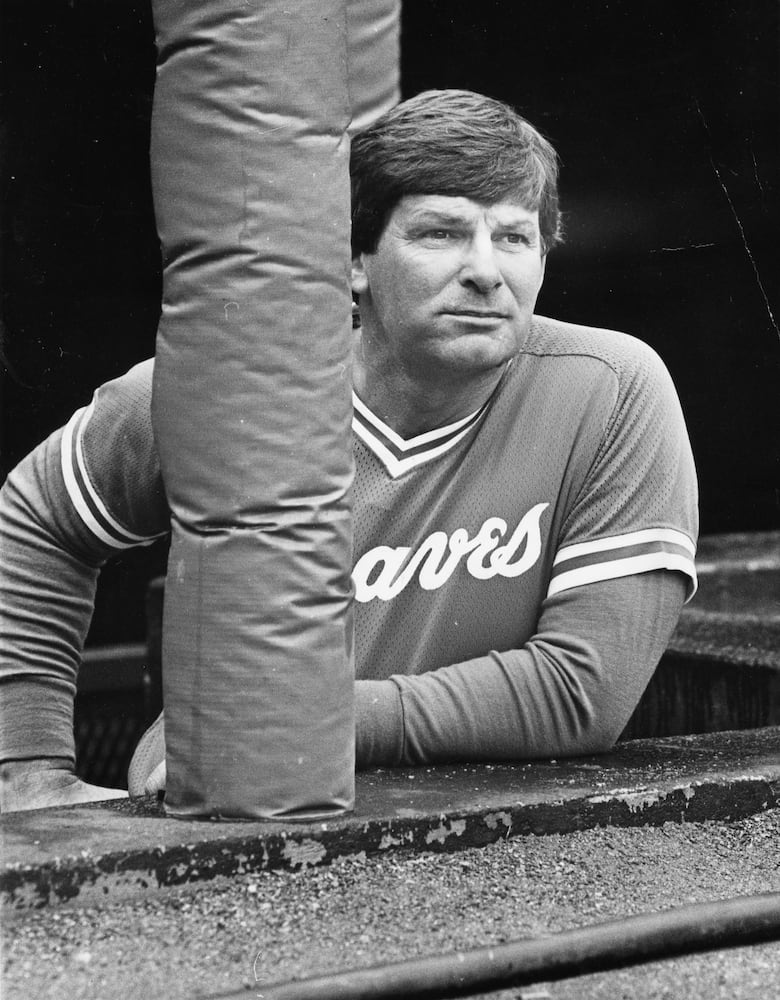
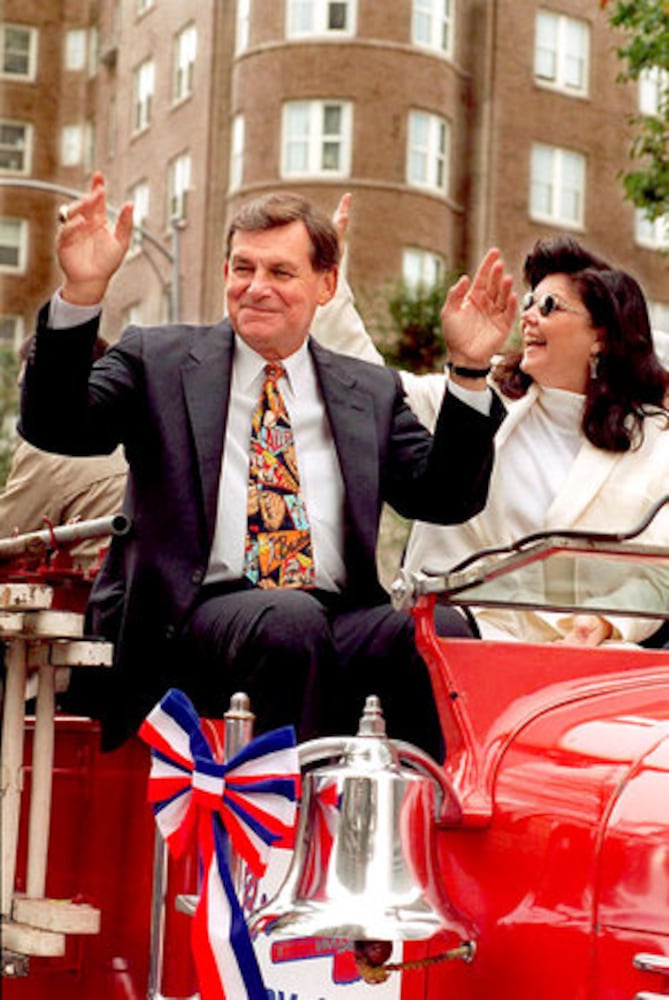
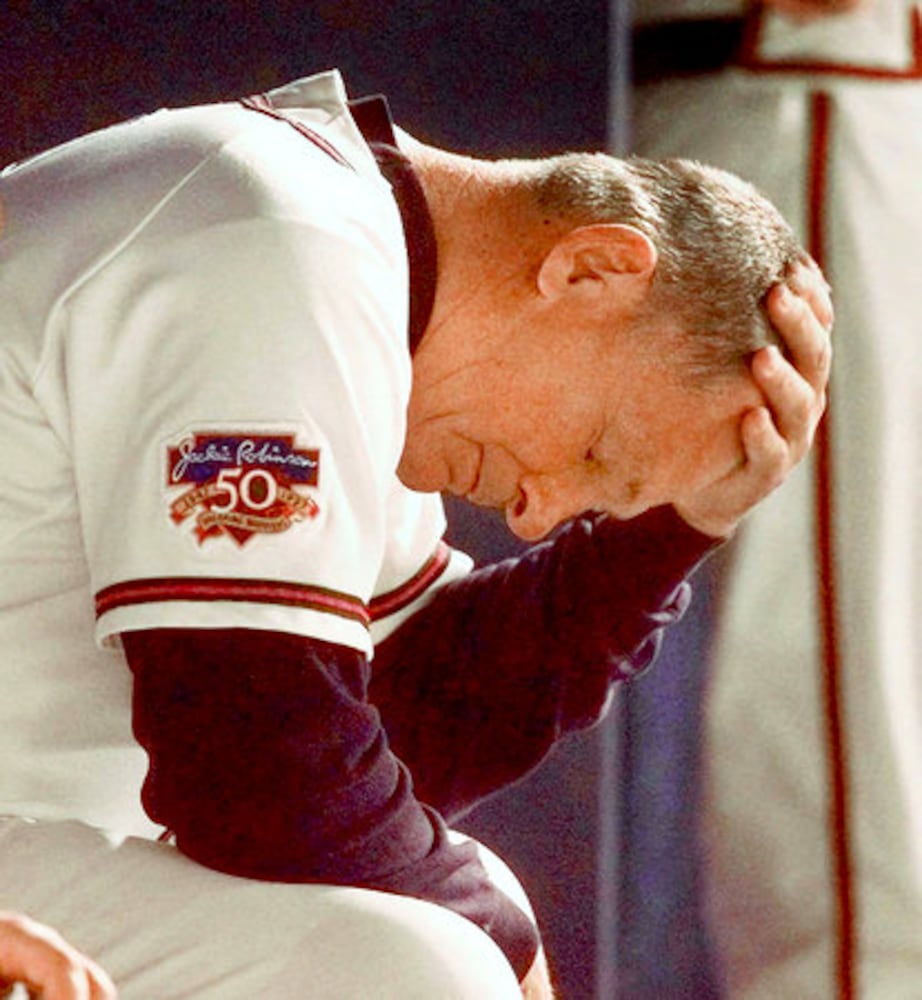
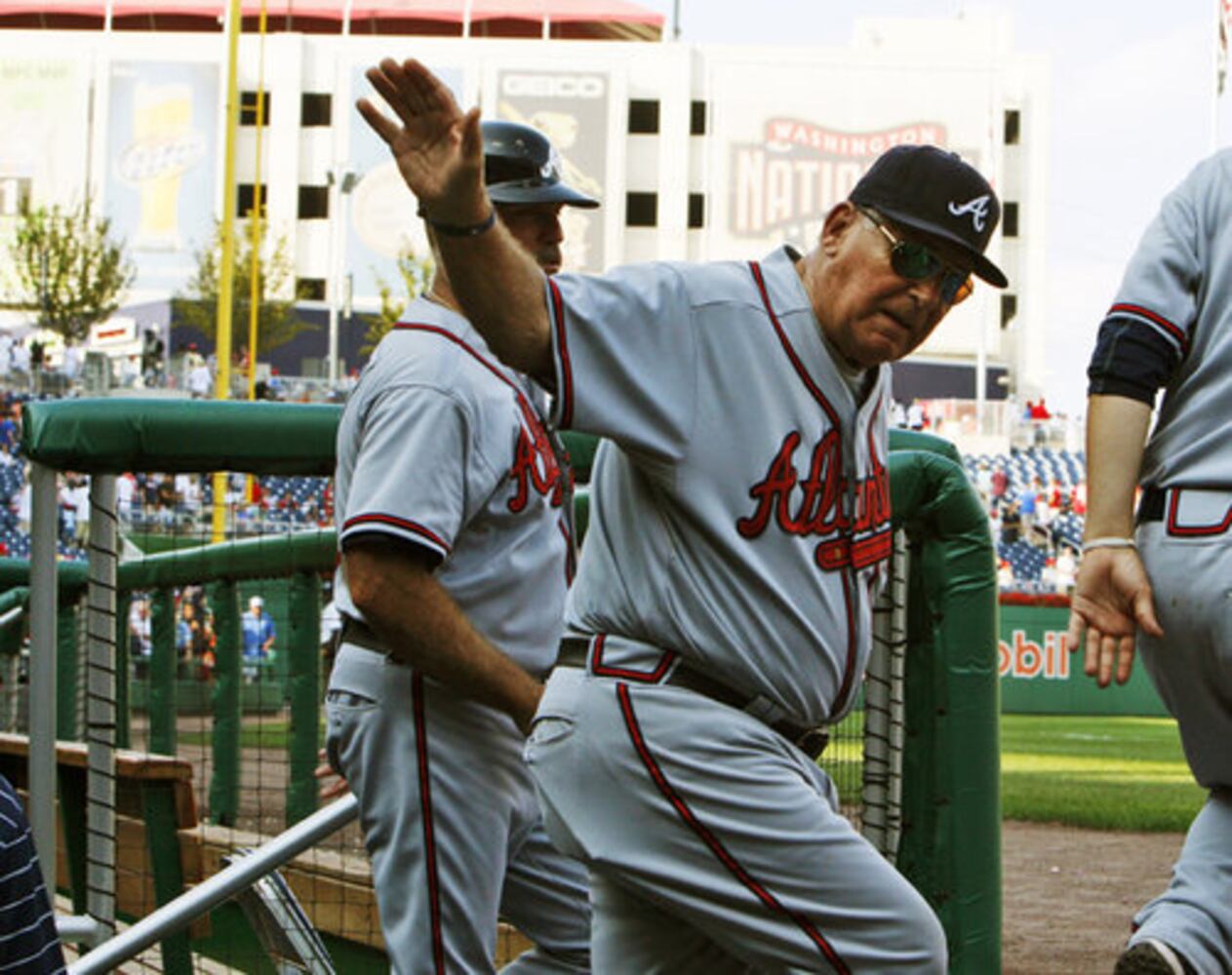


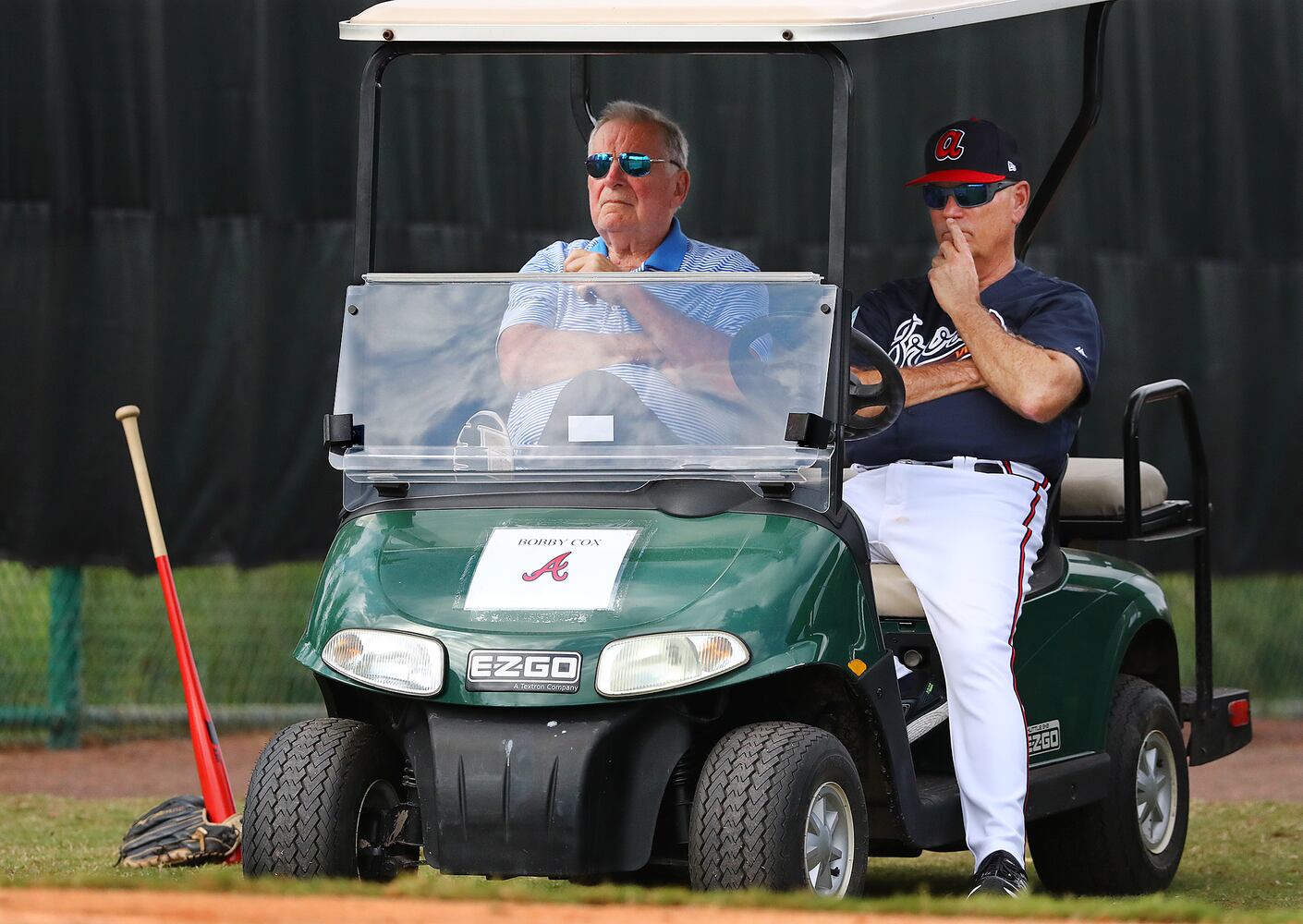
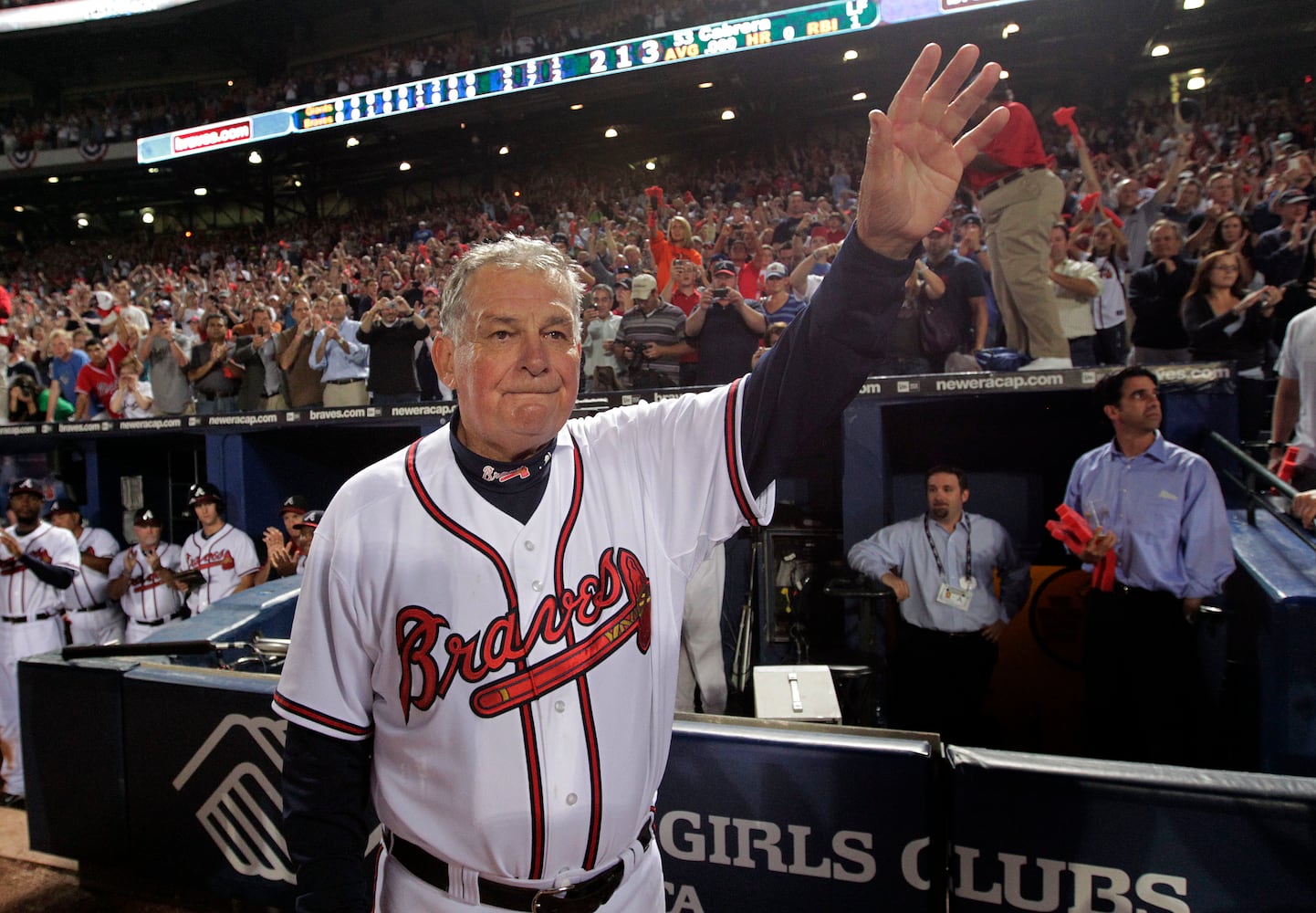
For almost five years, Bobby Cox worked for the Braves but didn’t wear a uniform. From 1985 through 1990, he was their general manager, watching games from an upstairs box at Atlanta-Fulton County Stadium and seeming, according to his wife, Pam, “like a fish out of water.”
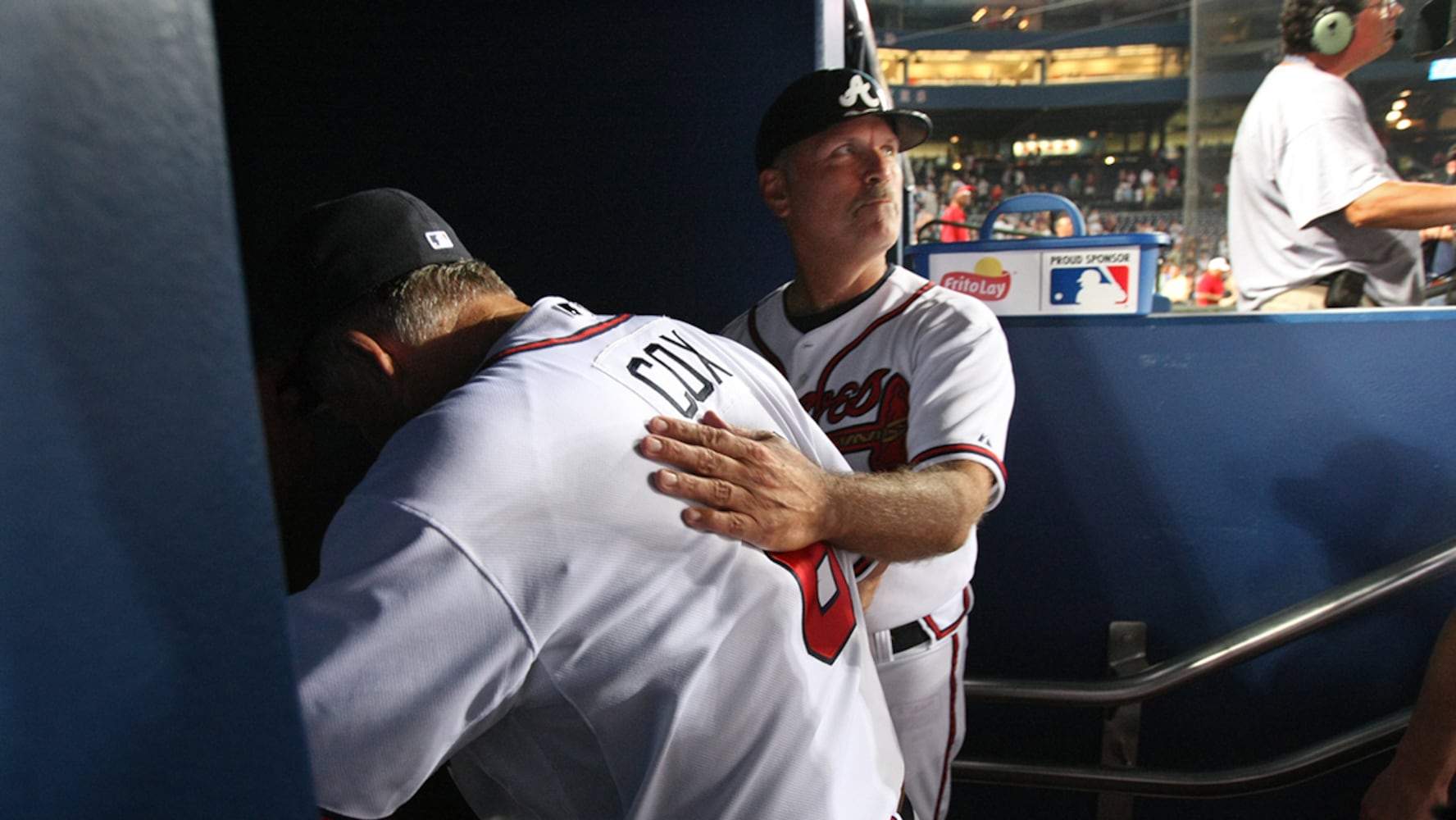
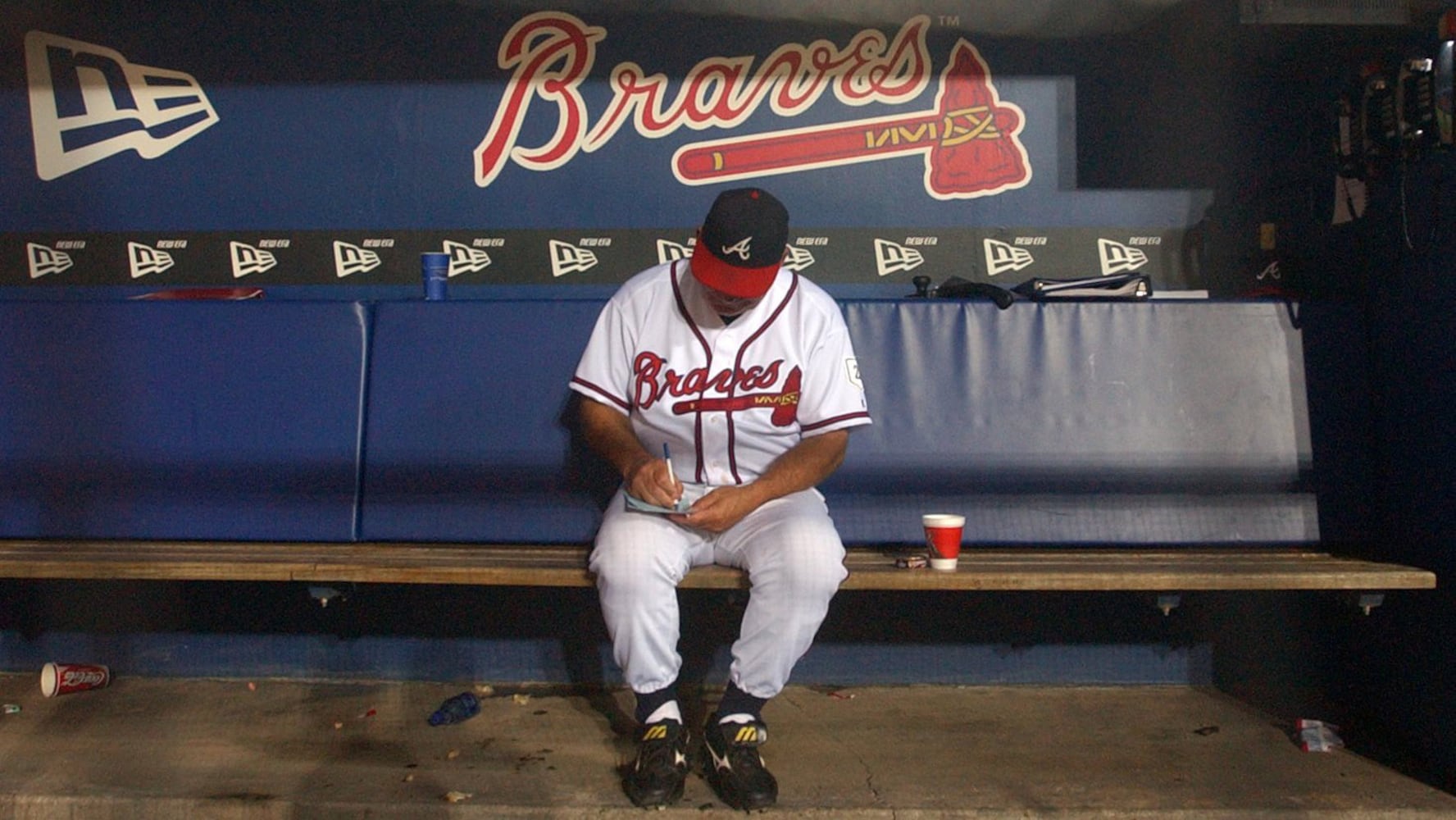
On June 22, 1990, Bobby Cox became the Braves’ field manager at the behest of team president Stan Kasten. (The team had been losing, as it did every year of Cox’s tenure as GM, and manager Russ Nixon was fired.) That day, Cox donned a Braves uniform and seemed like nothing so much as a prodigal son come home. Said Pam Cox: “He’s not a suit-and-tie guy. He’s a cleats guy.”
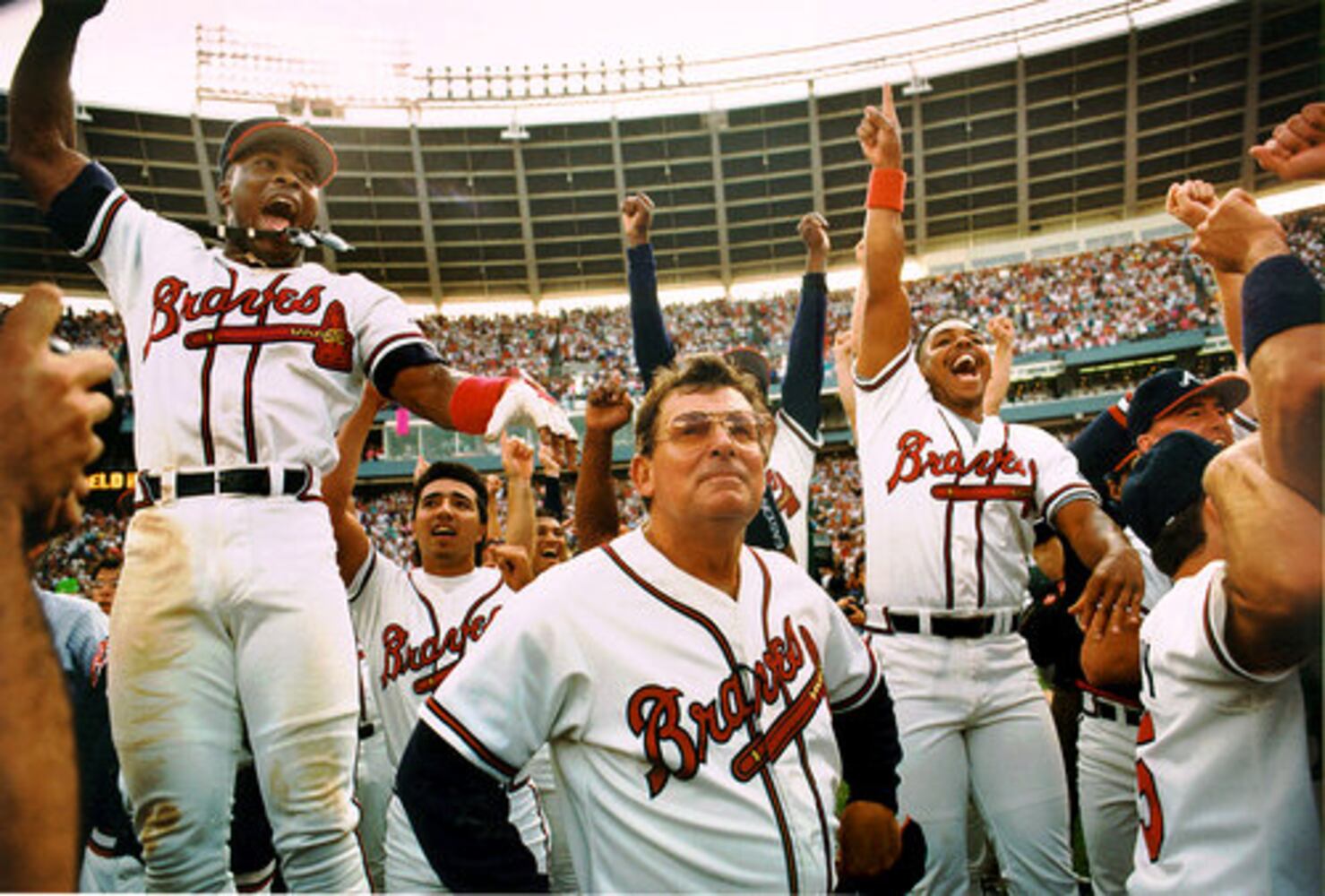
Over the next 15 years, the Braves under Cox would fashion the longest run of regular-season excellence in the history of baseball, winning 14 consecutive division championships with all manner of players and teams but with one formidable constant — the manager.
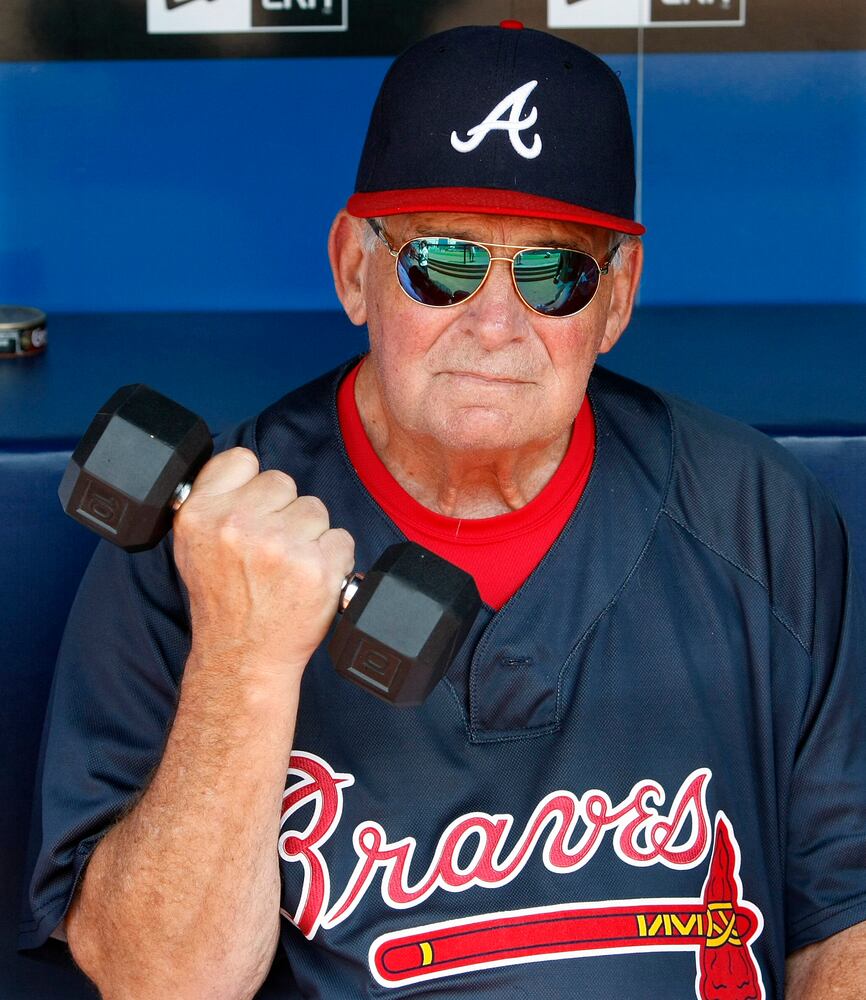
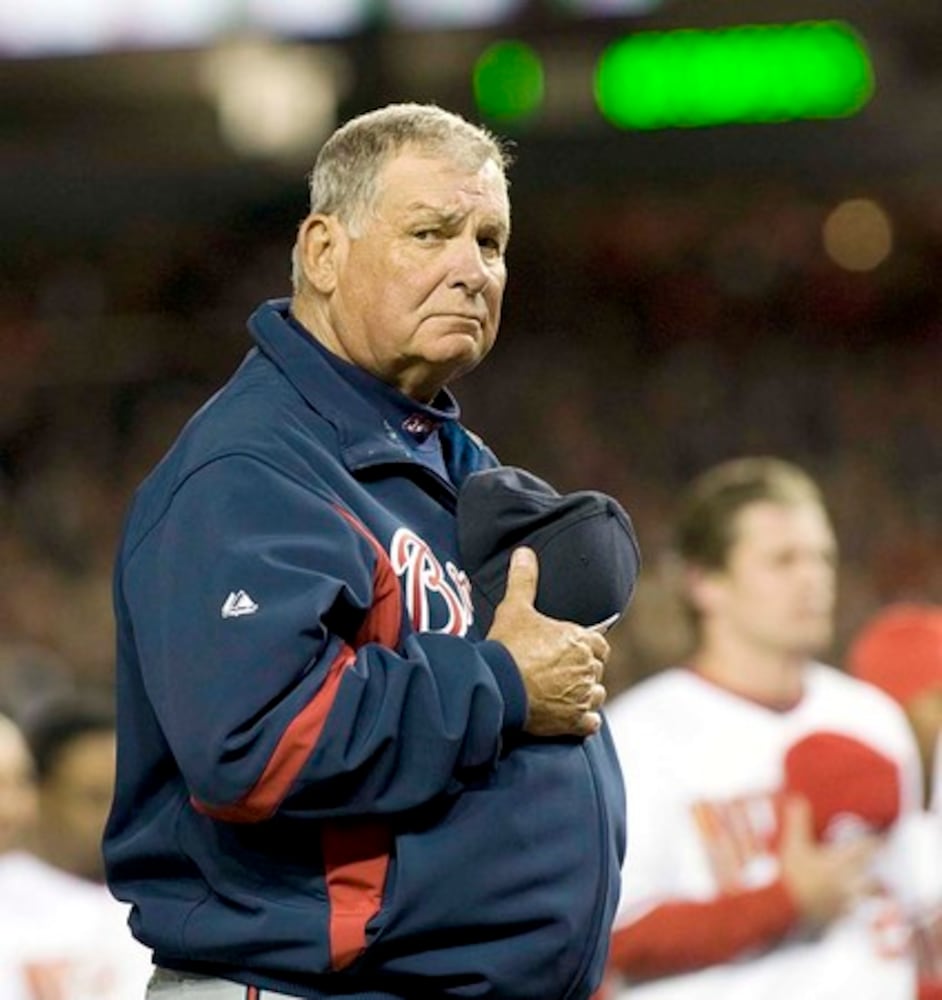
For his inspired stewardship, Cox, who died Saturday at the age of 84, several years after suffering a stroke, won widespread acclaim as one of the greatest managers the grand old game has ever known.
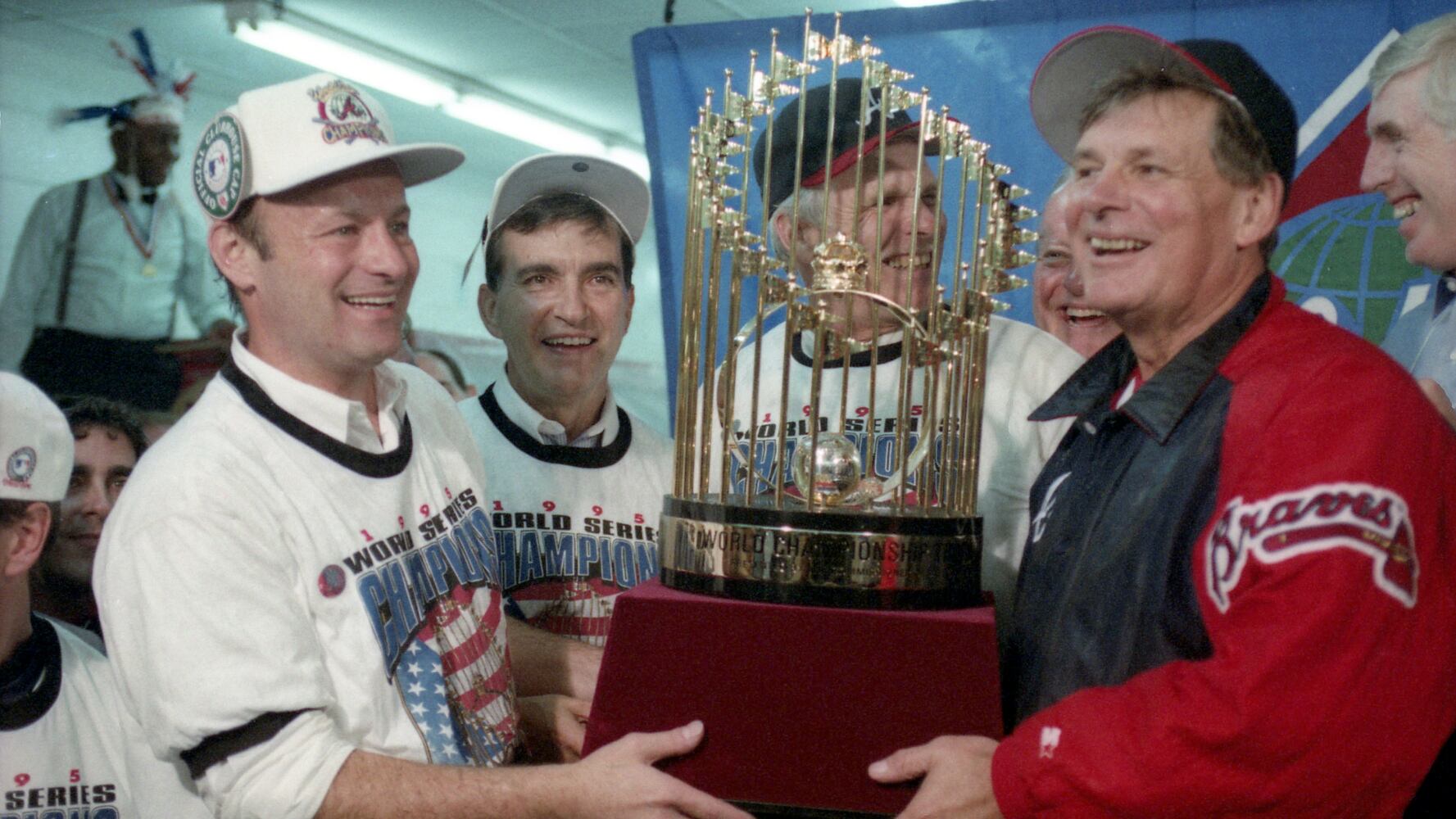
“We are overcome with emotion on the passing of Bobby Cox, our treasured skipper. Bobby was the best manager to ever wear a Braves uniform,” read a statement released by the Braves organization. “He led our team to 14 straight division titles, five National League pennants, and the unforgettable World Series title in 1995. His Braves managerial legacy will never be matched.
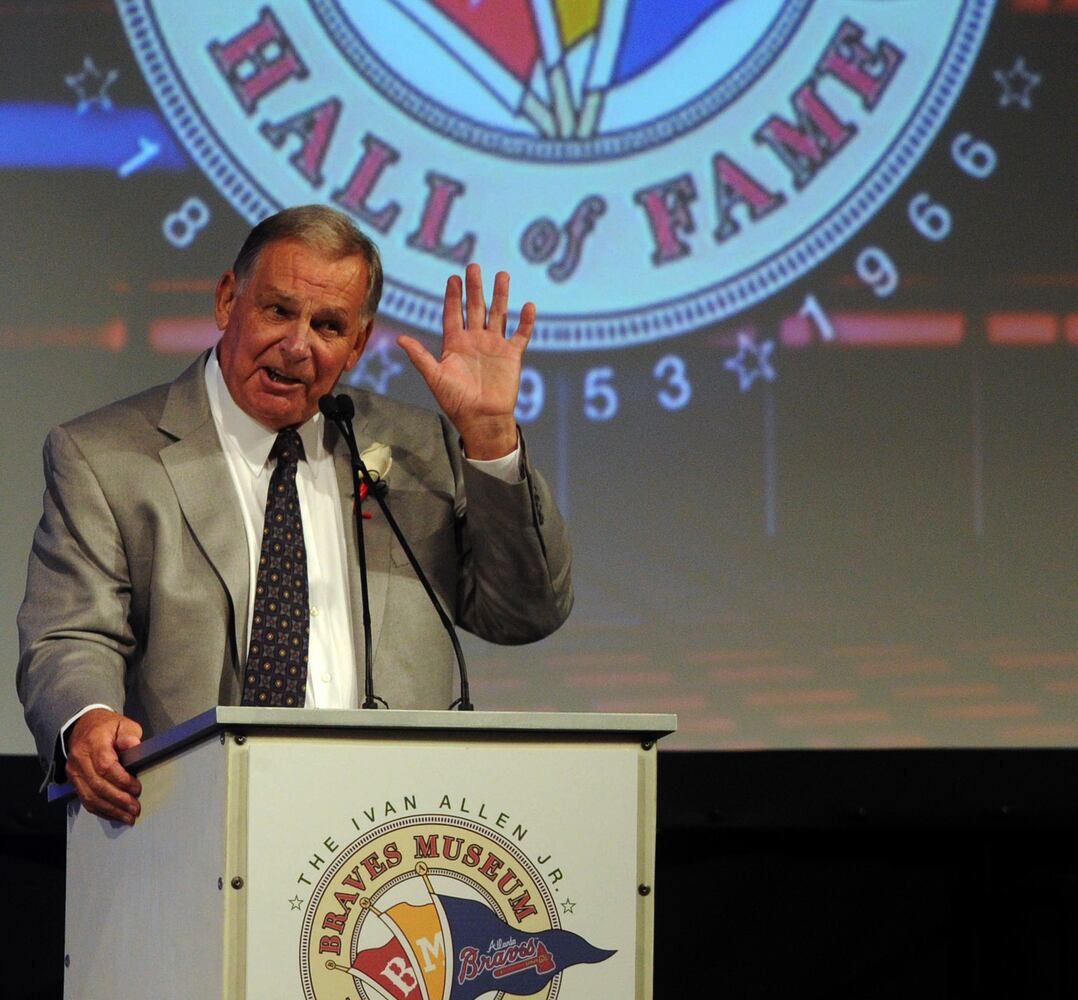
“Bobby was a favorite among all in the baseball community, especially those who played for him. His wealth of knowledge on player development and the intricacies of managing the game were rewarded with the sport’s ultimate prize in 2014 — enshrinement into the Baseball Hall of Fame.
“And while Bobby’s passion for the game was unparalleled, his love of baseball was exceeded only by his love for his family. It is with the heaviest of hearts that we send our sincerest condolences to his beloved wife, Pam, and their loving children and grandchildren.”
In October 1999, as the Braves were about to play in their fifth World Series in nine years, Kasten identified the linchpins of their success. “Central to our success in the whole big scheme of things, John (Schuerholz, the general manager) has probably been No. 2. Bobby has been No. 1.”
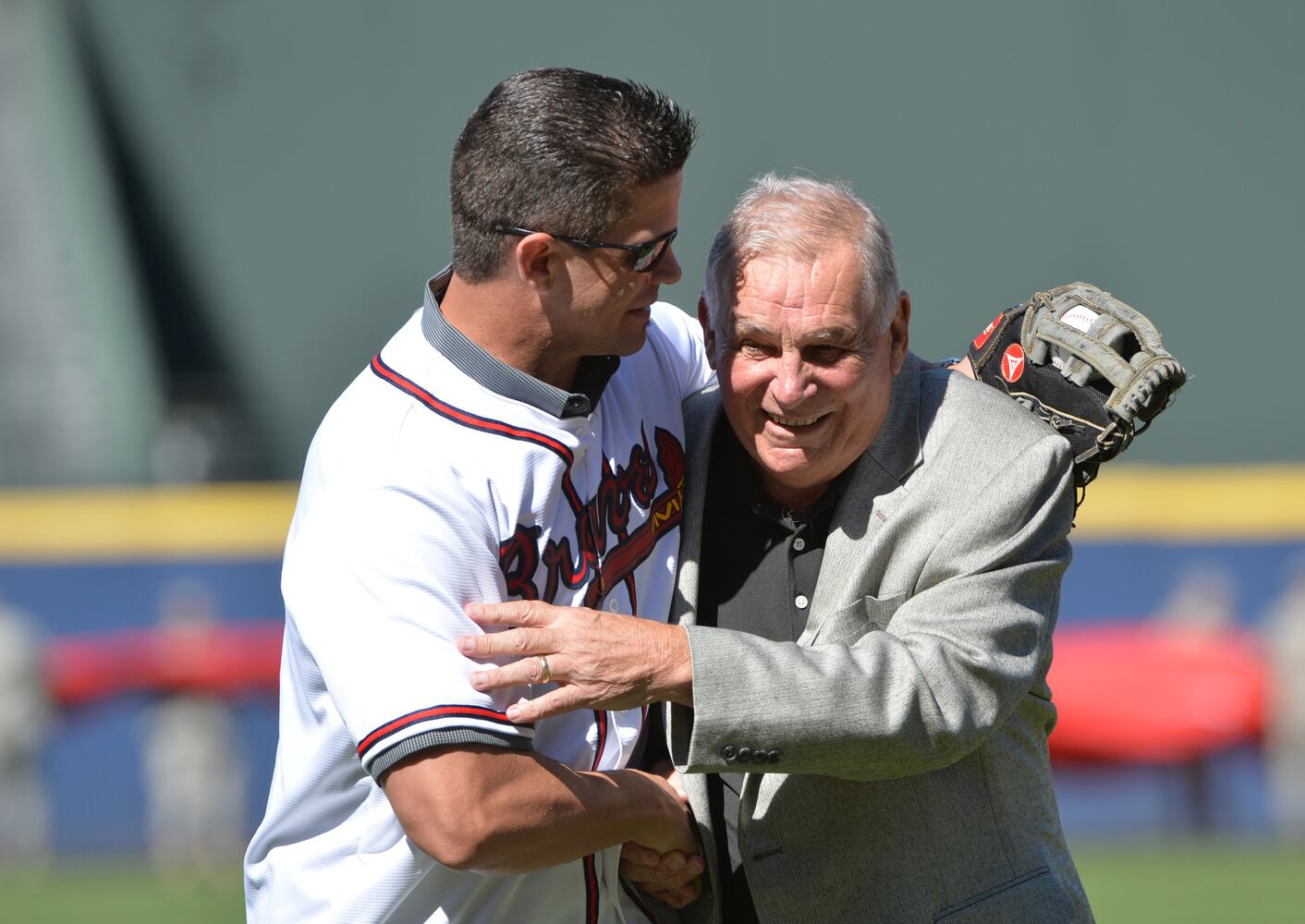
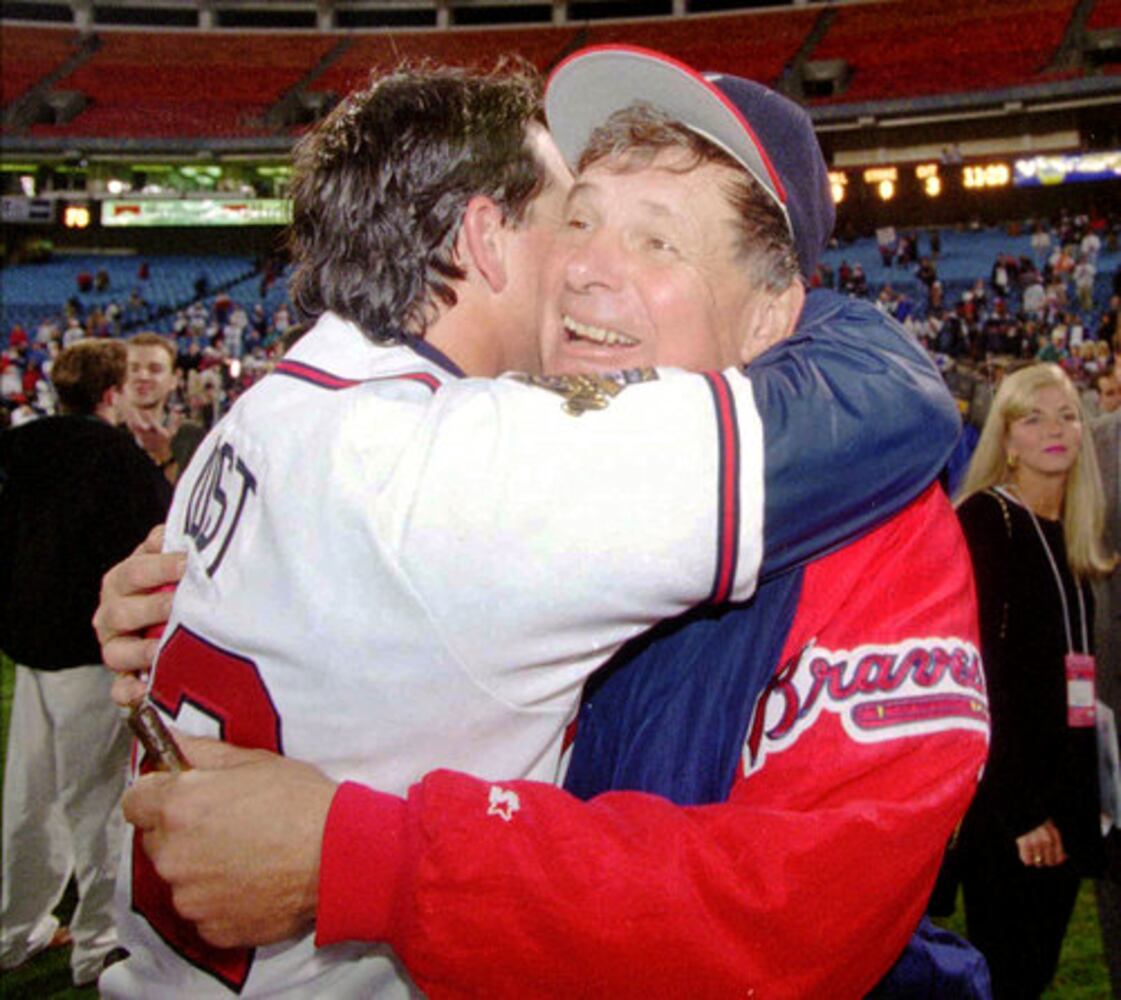
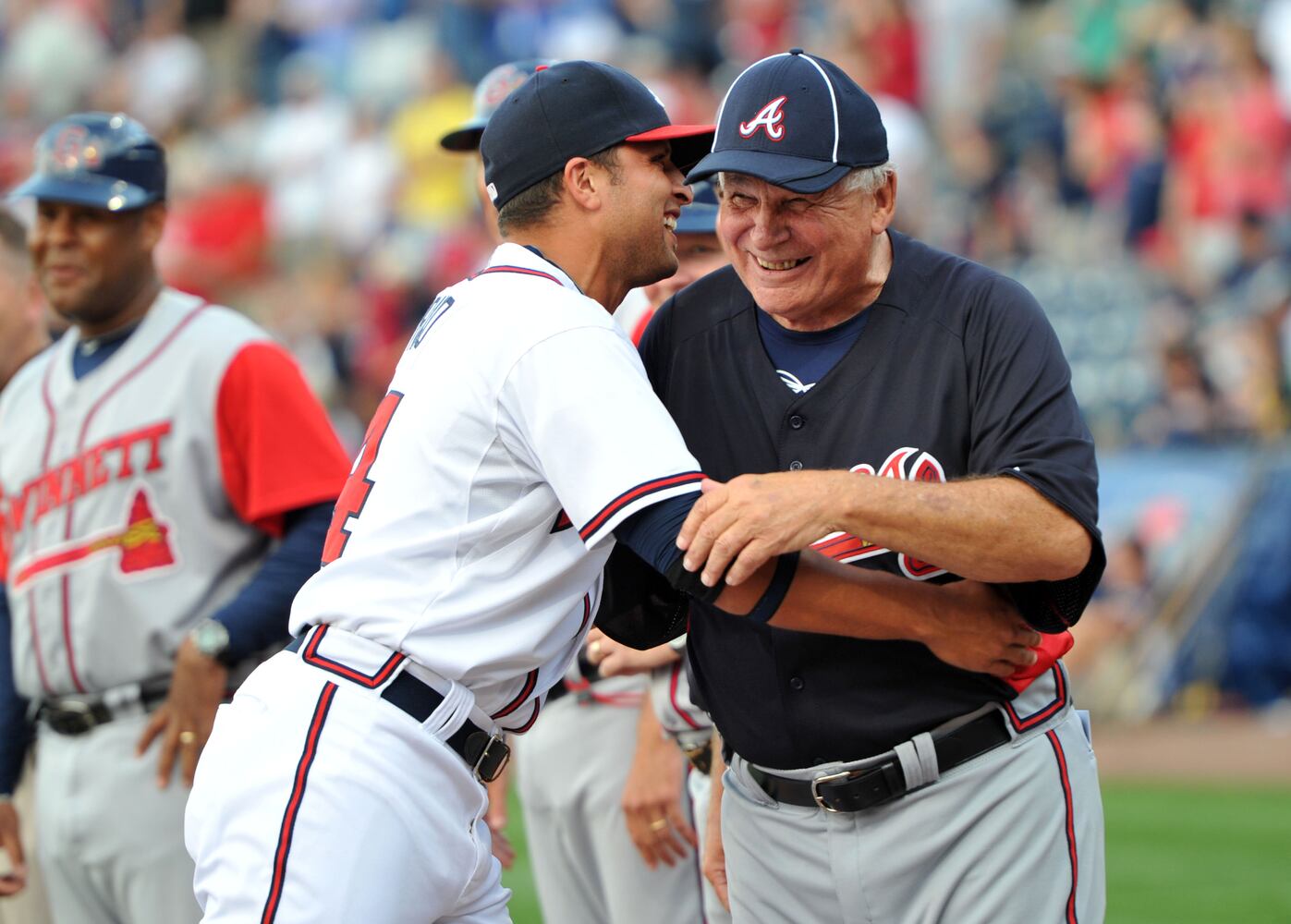
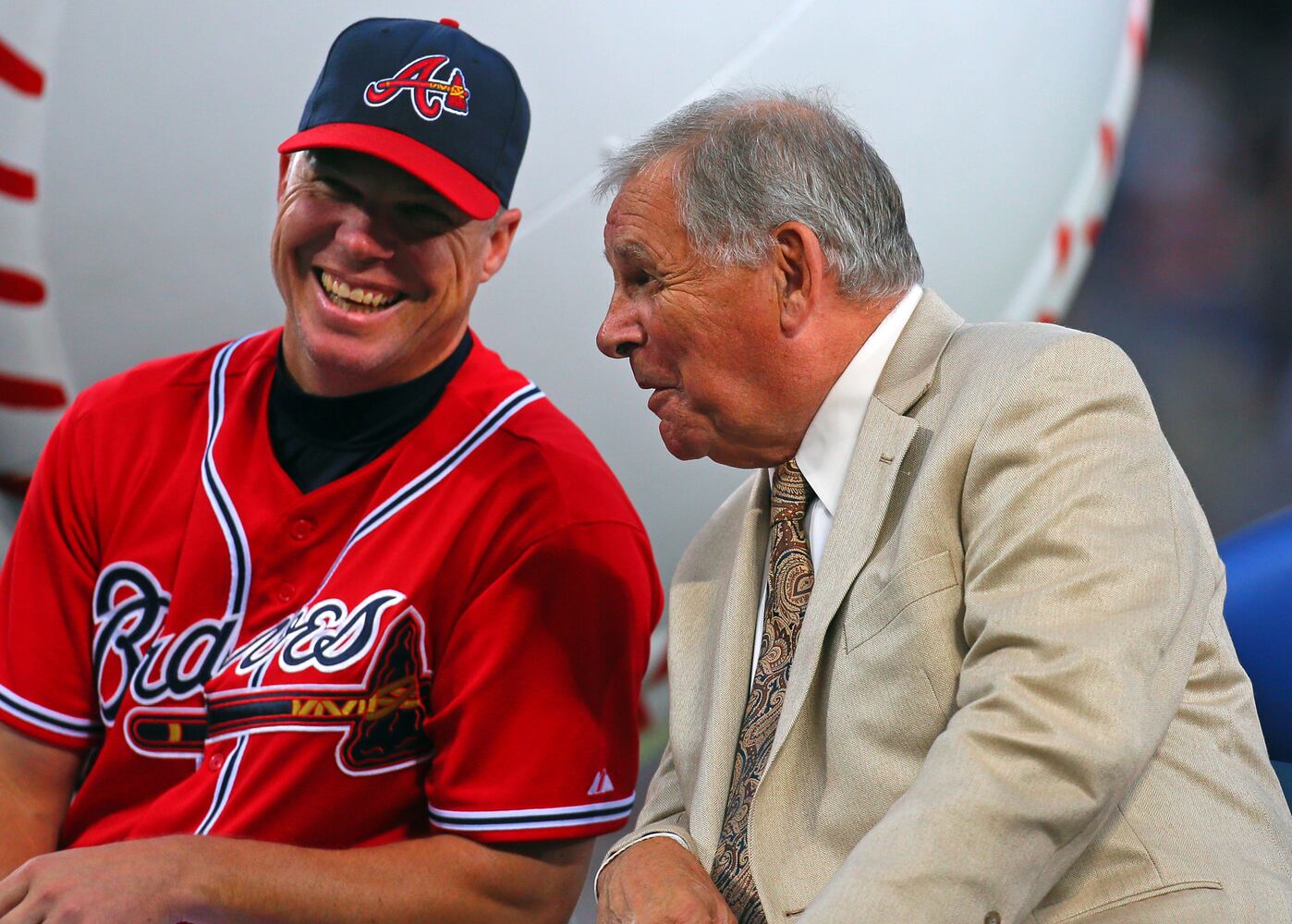
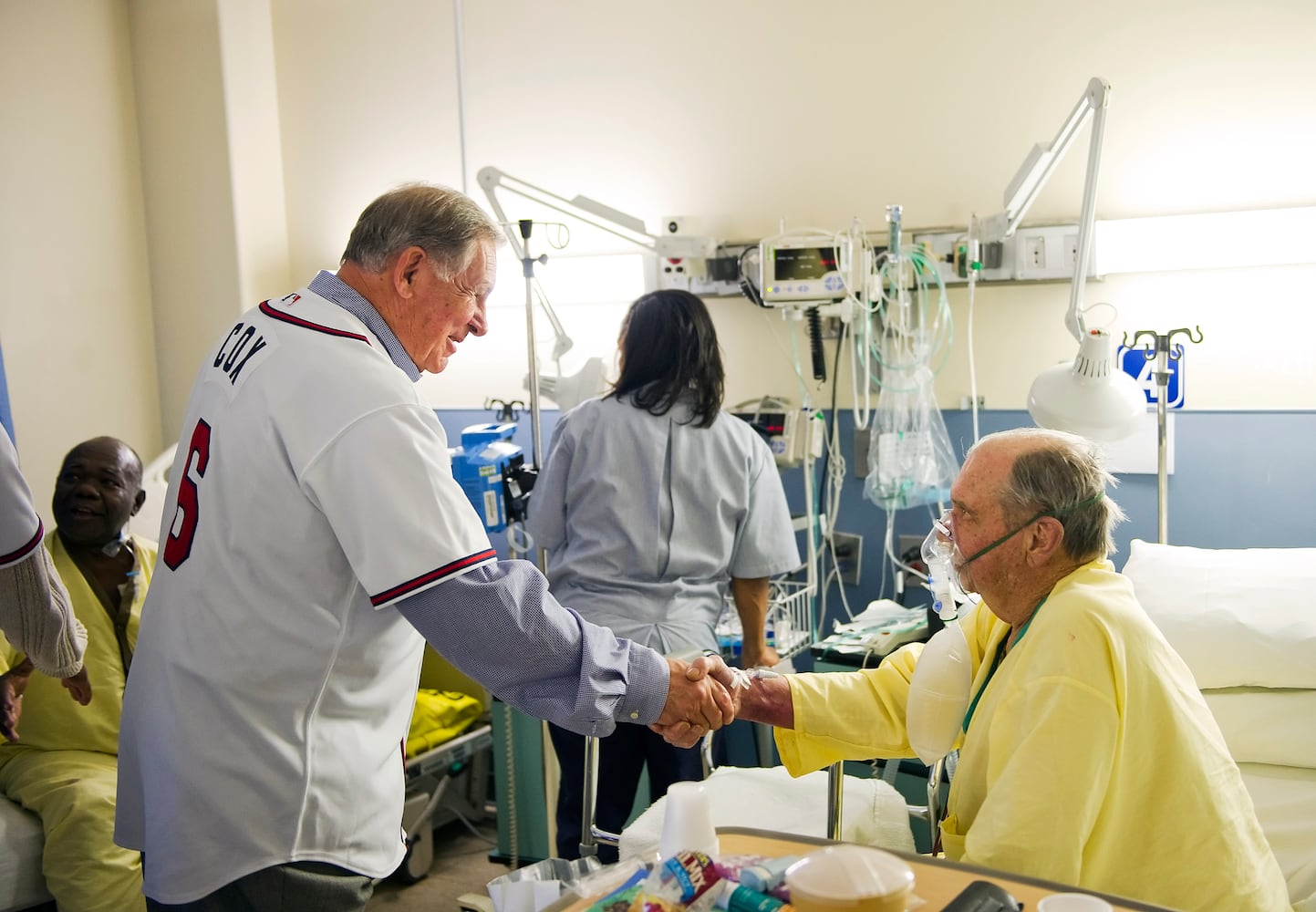
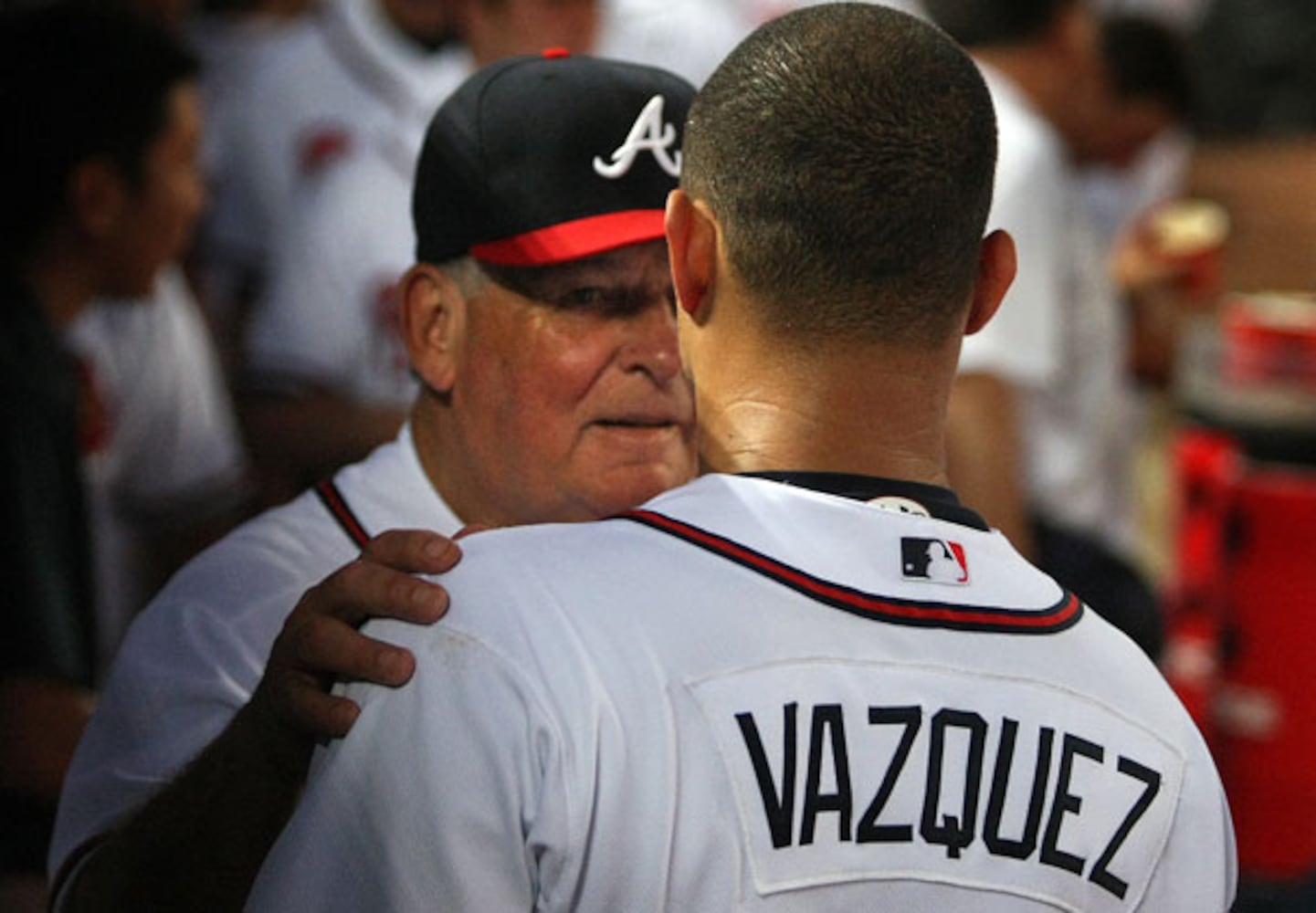
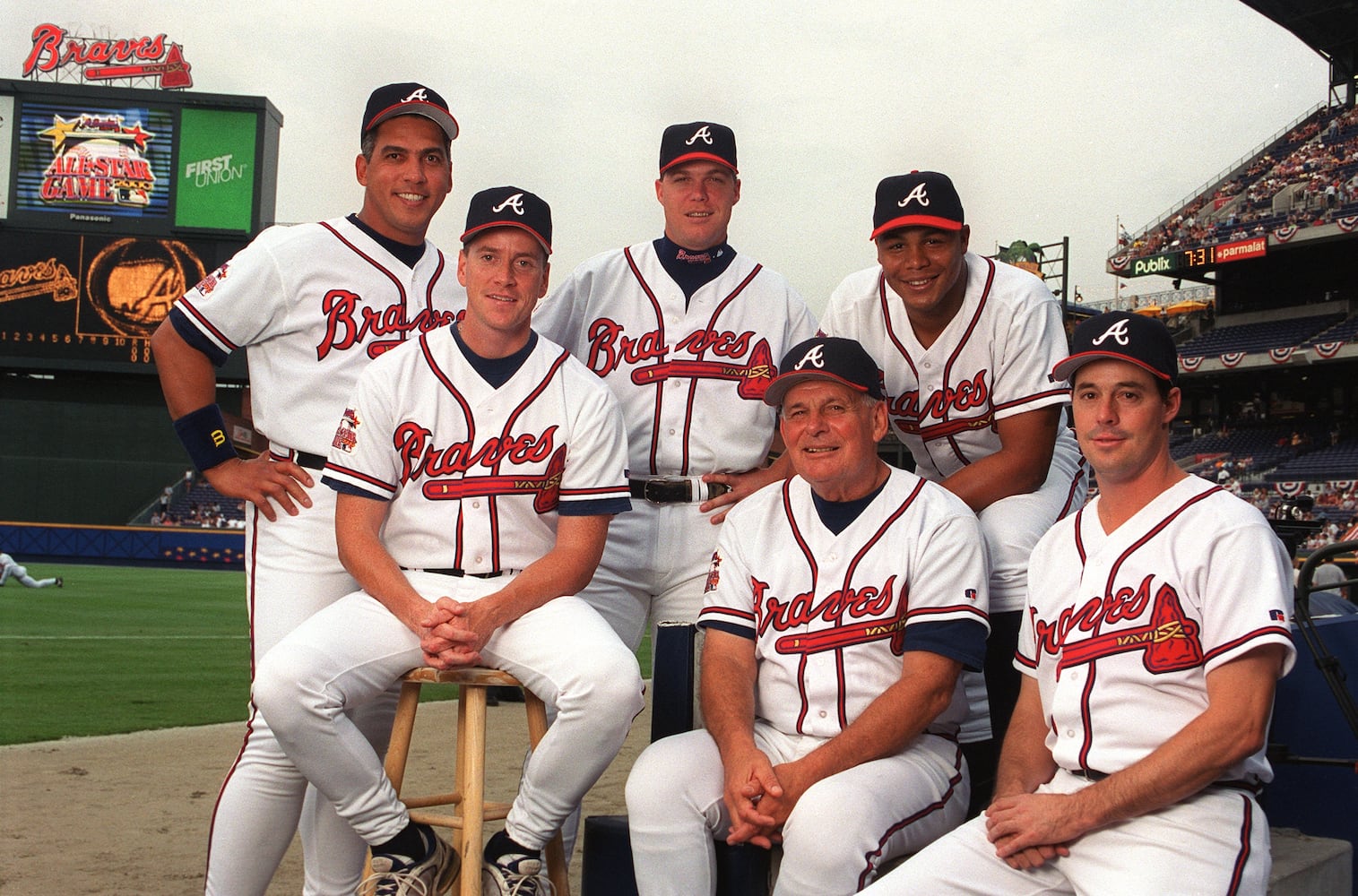
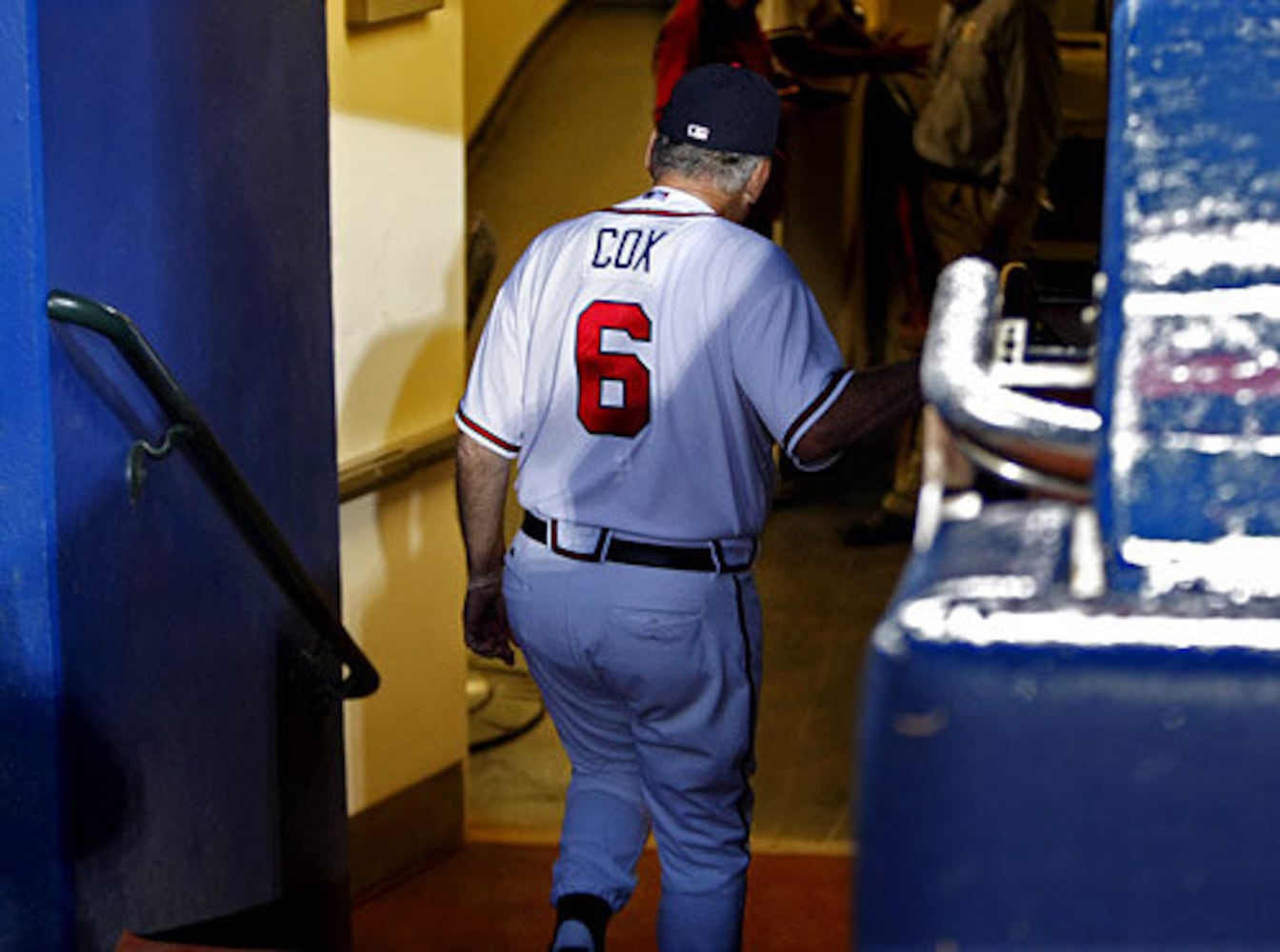
Cox, who was inducted into the Baseball Hall of Fame in 2014, was considered the ultimate players’ manager. He rooted hard for his men from the dugout, and they played hard for him on the field. In an era when many baseball players seemed more concerned with personal statistics and massive free-agent contracts, the Braves actually functioned as a team because of their respect for the man who wore No. 6 on his back.
Said Greg Maddux, the illustrious pitcher who was a Brave for 11 years: “There are a lot of reasons you want to pitch and play well. You want to do well for your family, your contract, your pride. Here, one of the reasons you want to do well is for the manager. You won’t hear many players say that, but when somebody treats you as fairly as he does, you want to win for him.”
Unlike many successful managers, Cox worked hard to keep himself from being the center of attention. He was always uncomfortable in postseason news-conference settings, and his postgame briefings were famous for their brevity. After two or three questions, Cox would simply rise from his desk, say, “Thanks, guys” to the assembled media and begin unbuttoning his uniform pants. That invariably served to clear the room.
That was a habit Cox fell into when he was managing the Toronto Blue Jays from 1982-85. Because the Canadian city was still learning about baseball, reporters seemed to act as if the manager should offer tutorials. Cox, who loved talking baseball but hated answering questions about it, started telling writers, “Go talk to the players — they’re the ones who played the game.”
Said Cox: “I understand how to work a team,” he says. “I don’t give writers a whole lot — I know that. But I’ll go down to my last out if it means sacrificing some quotes.”
Toward his players, Cox was unfailingly loyal. If you were an Atlanta Brave, he loved you. He had no figurative doghouse for guys who weren’t performing up to specification. On the contrary, he’d give them every opportunity to fail. And often when they did, he’d make excuses for them.
Said Tom Glavine, another of the superb pitchers around whom the Braves’ run of success was fashioned: “Sometimes I’ll give up a bunch of hits and read the next day where Bobby said I threw really well, and I’ll think, ‘What game was he watching?’ … (But) there’s nothing worse than being ripped and reading about it in the newspaper.”
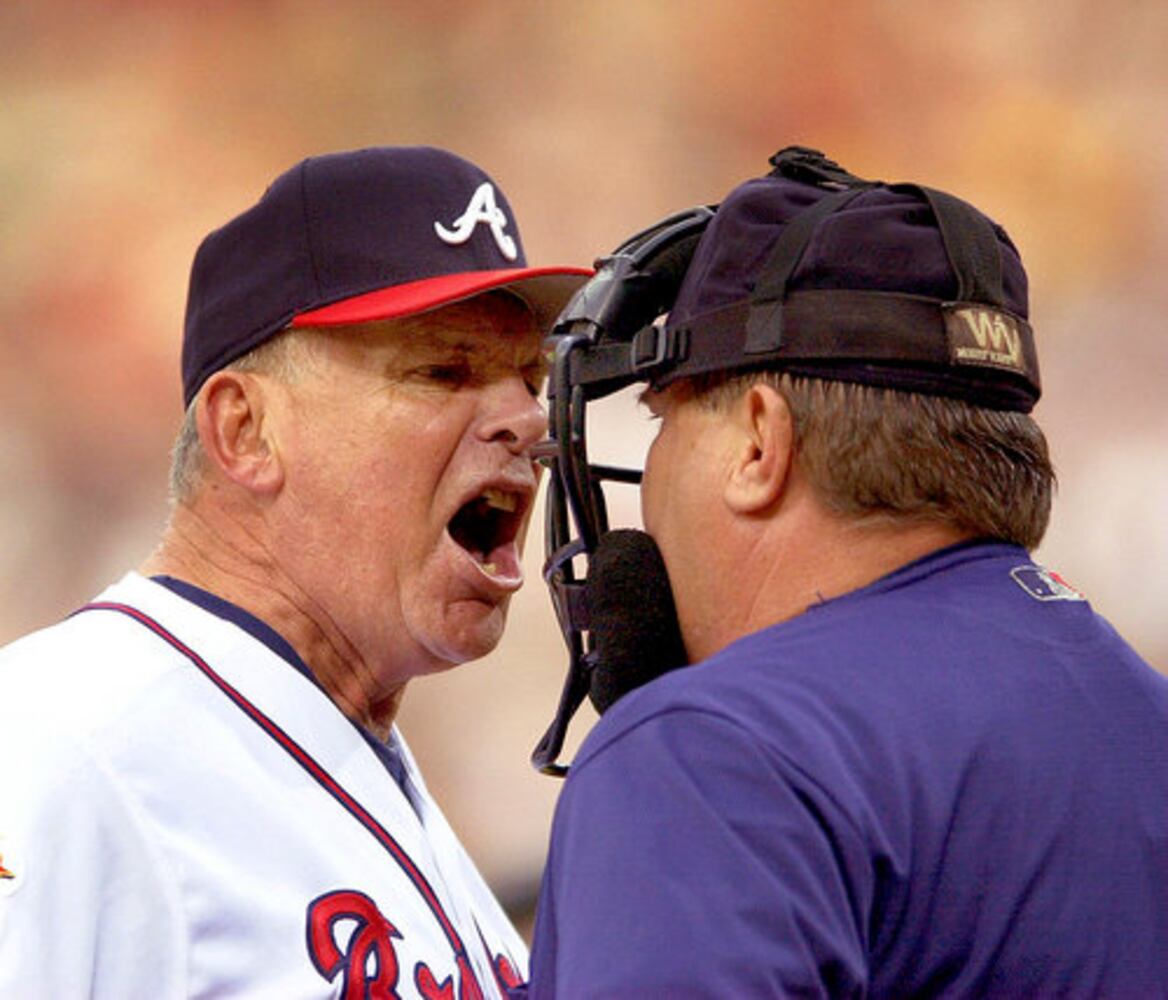
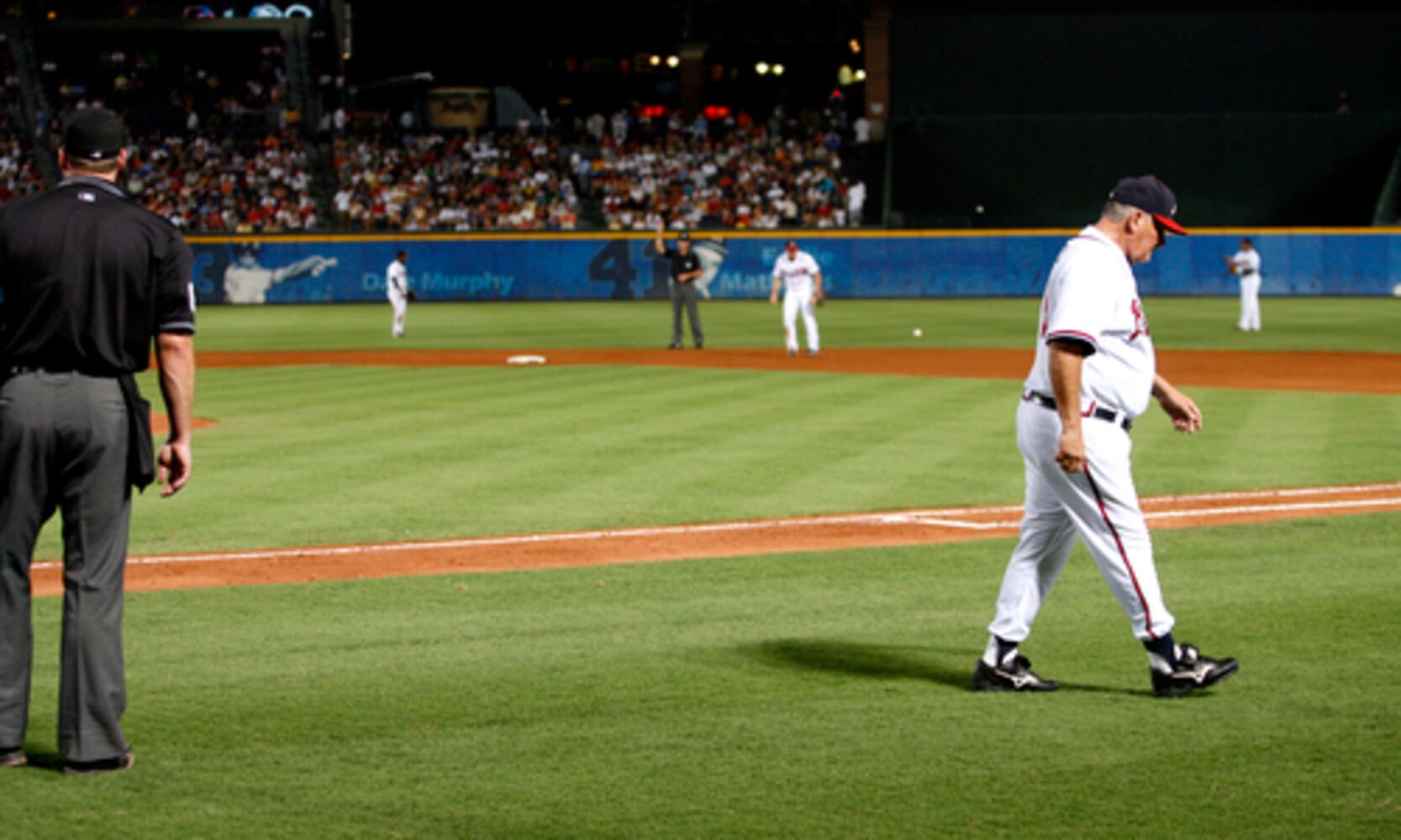
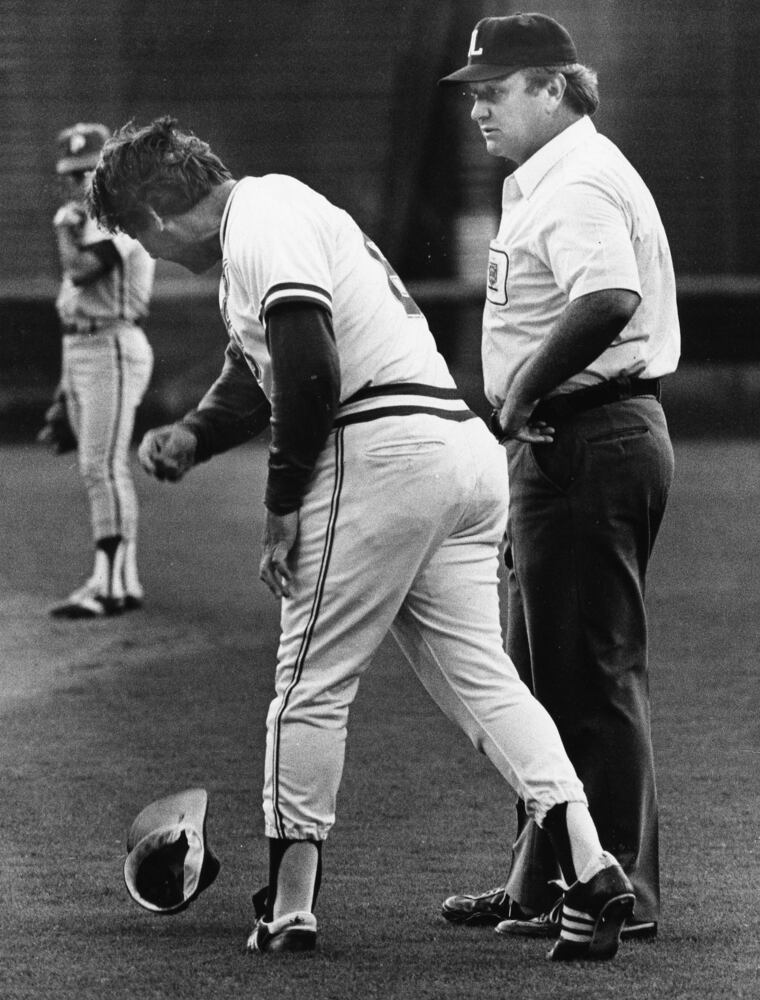
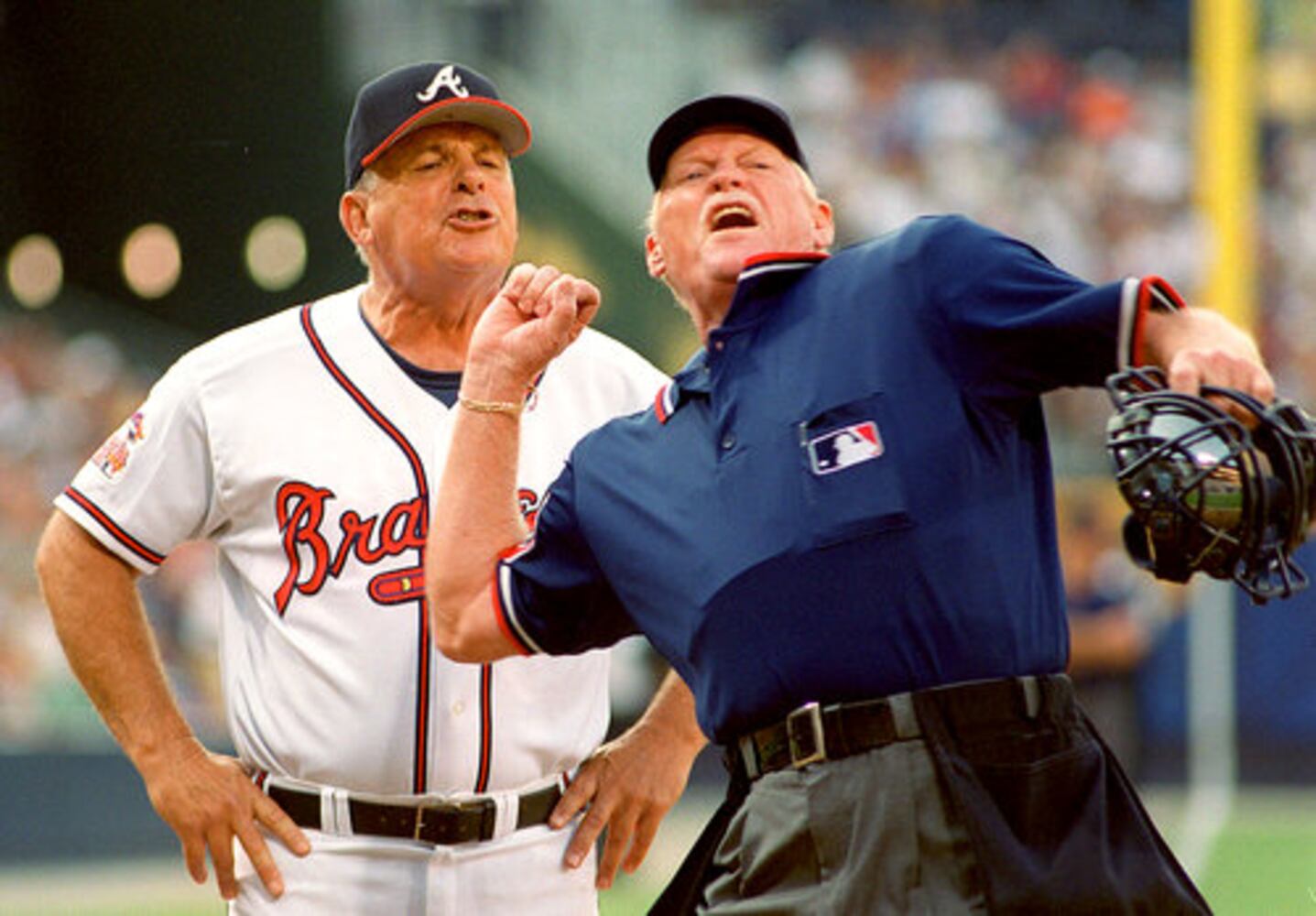
He fought hard for his men during games, disputing balls and strikes with a frequency that became almost comic. Though he professed to love umpires, Cox nonetheless ranked first on the all-time ejection list and became the first manager to be tossed from two different World Series games.

Credit: AJC
Credit: AJC
Only once did Cox embarrass a player in public. In 1998, he pulled Andruw Jones in the middle of an inning because Cox felt he hadn’t hustled after a fly ball. Beyond that, everything was handled behind clubhouse doors.
“We have our confrontations, but they never become public,” Cox said. “They haven’t been printed because nobody knows about it.”
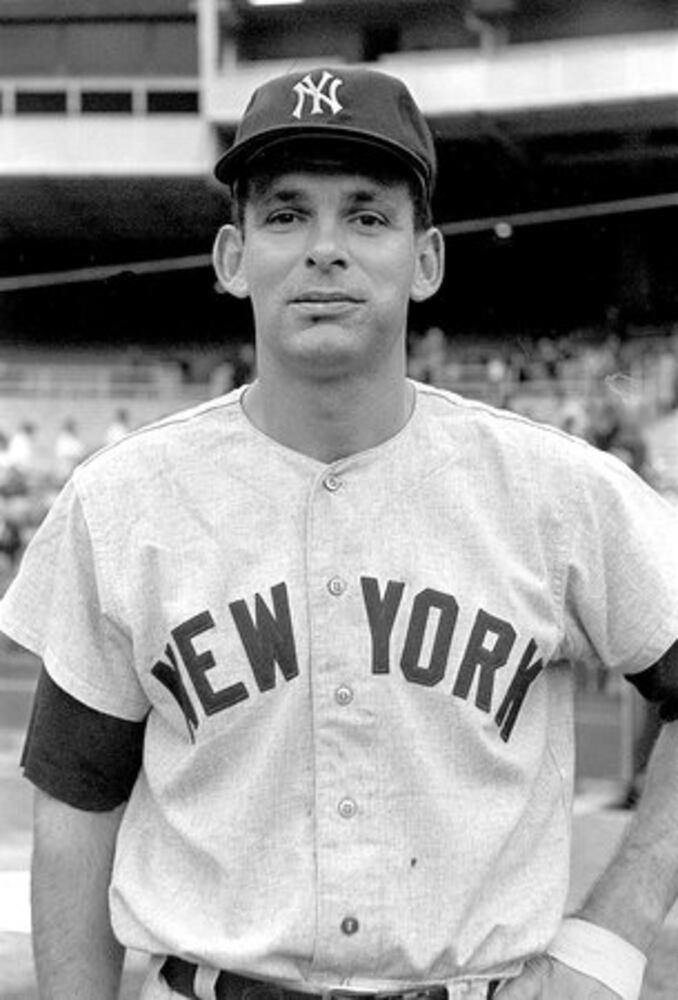
Cox formulated his players-first approach by studying his elders. “I came up under (New York Yankees manager) Ralph Houk, and he could be as tough as they come,” Cox said. “But he was also supportive. He was good at communicating with the guys who weren’t playing; the superstars took care of themselves. I liked that style.”
Humble beginnings
Bad knees effectively ended Cox’s playing career. (He was a third baseman.) He’d made the Topps All-Rookie team as a Yankee in 1968, but by 1970, he was back in the minors. Near the end of that season, Yankees GM Lee MacPhail asked if he’d ever considered managing.
Said Cox: “If he hadn’t showed up, I’d probably have never worn a uniform again.” What would he have done instead? “Go to school. I wanted to be a high school football coach.”
Born in Tulsa, Oklahoma, Cox grew up in Selma, California, a town of 5,000 in the San Joaquin Valley. His father installed wells. His mom worked at a bakery. Cox made A’s and B’s and played all the usual sports.
He was Selma High’s quarterback when it beat rival Clovis his senior year. The Clovis quarterback was Daryle Lamonica, who would become an All-Pro with the Oakland Raiders. One of the touchdown passes Cox threw that night was caught by Gerry Lund, who met Cox when they were in the first grade and remained a close friend.
“Here’s what set Bobby apart,” Lund said. “We’d be headed down to the drive-in for a Coke, and if it ever seemed we might get ourselves into a little mischief, Bobby would say, ‘Let me out.’ The town wasn’t that big, so we’d let him out and he’d walk the three or four blocks home. And everyone respected him for that. He was not going to get in any trouble. He was not going to jeopardize his future.”
Signed by the Los Angeles Dodgers out of high school for a modest $40,000 bonus, Cox needed seven minor-league seasons and stints in three different organizations — the Dodgers, Braves and Yankees — to reach the majors. He needed only seven seasons of apprenticeship — six were spent managing in the Yankees’ farm system, the seventh as the Yankees’ first-base coach under Billy Martin — to become a big-league manager.
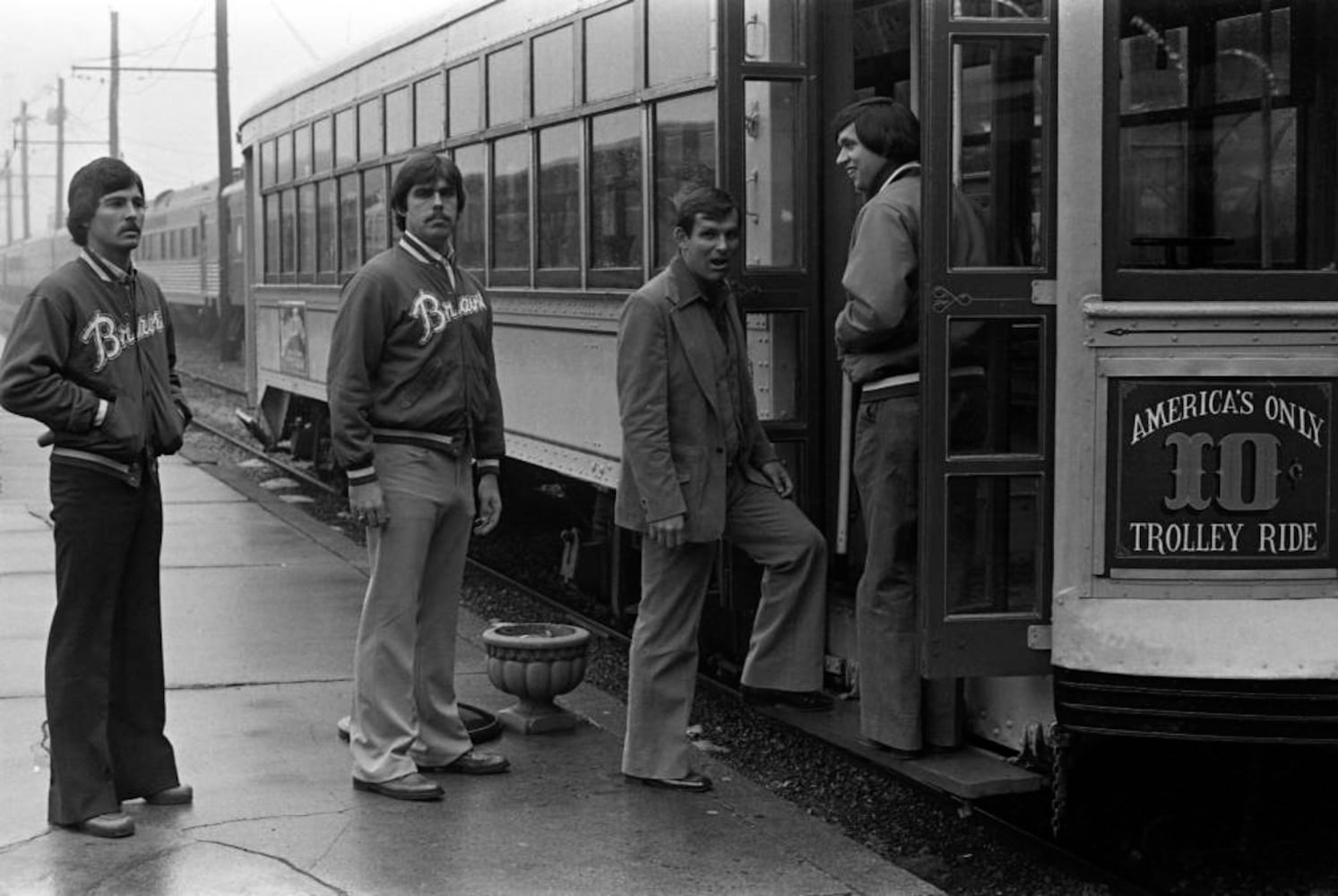
The late Ted Turner hired Cox to manage the long-suffering Braves in 1977, and the suffering didn’t exactly end overnight. The Braves did go 81-80 in 1980, but after a disappointing 1981 season — that was the year baseball players staged a midsummer strike — Turner fired Cox. Asked who might be a suitable replacement, Turner famously said that, if he hadn’t just fired the guy, he’d be looking for someone like Bobby Cox.

Credit: ccompton@ajc.com
Credit: ccompton@ajc.com
Cox managed the Blue Jays the next four seasons, finishing second in the American League East behind the World Series-winning Detroit Tigers in 1984 and winning the division the next season. That would mark the first of Cox’s 15 first-place finishes.
In October 1985, Turner rehired Cox — but not as manager. In what was billed an organizational coup, the Braves pried Chuck Tanner from the Pittsburgh Pirates and Cox from the Jays. Though neither had ever been a general manager, Turner wanted one to run the front office. That wound up being Cox, who set about propping up the Braves’ rickety farm system and acquiring as much young pitching as he could find.
The major-league product suffered under Cox the GM: The Braves never finished above fifth place in a six-team division those five seasons, and one Cox trade — reliever Steve Bedrosian, who would subsequently win the Cy Young Award, was sent to Philadelphia for journeyman catcher Ozzie Virgil — was widely lampooned. But another Cox trade — sending pitcher Doyle Alexander to Detroit for a minor-leaguer named John Smoltz in 1987 — is considered one of the shrewdest in baseball history.
Cox fired Tanner in May 1988 for his mishandling of the Braves’ young pitchers, replacing him with Nixon. In June 1990, with the Braves still losing, Kasten asked Cox to move downstairs. The Braves wound up in last place that season, and Schuerholz arrived in October as the Braves’ new GM, rendering Cox a full-time manager again. Over the next 14 completed seasons, his teams wouldn’t finish anywhere other than first.
Managing success
The 1991 worst-to-first rise of the Braves stands as the most memorable team-sports saga in Atlanta history. Cox’s young team was below .500 at the All-Star break but nosed ahead of the Dodgers after the season’s 160th game and clinched the National League West the next day. The Braves then beat Pittsburgh in seven games in the National League Championship Series and were part of perhaps the greatest World Series ever, finally losing to the Minnesota Twins in a 1-0 Game 7 that lasted 10 excruciating innings.
Having taken so long to get good, the Braves improbably stayed good for more than a decade. Schuerholz was one constant, Cox the other. Schuerholz would reshuffle the roster every winter, and Cox would somehow make a division-winning team out of it. Naysayers groused that the Braves should have won more than one World Series, that finally coming in 1995, but Cox never seemed to fixate on any missed opportunities.
“To be perfectly honest,” he said, “we played better in three of the ones we lost (in 1991, ’92 and ’96) than in the one (’95) we won.”
Cox had five children from a first marriage that ended in the early ’70s. He was a bachelor when he became the Braves’ manager for the first time, and he met his second wife on a winter promotional tour in Rome. Pam Cox was running the men’s department at Belk’s department store. They were married in 1979. Cox adopted Pam’s two children from her first marriage, and the two had one daughter together, Skyla.
In 1995, Cox was arrested and charged with simple battery after a domestic disturbance at their home in Marietta. Pam Cox called 911 during an argument, claiming her husband had pulled her hair. The two underwent counseling. The charge was subsequently dropped.
Cox would never discuss the incident. In 2004 Pam Cox said: “We have one argument in 25 years of marriage, and it gets in the paper. I’m not proud of it, but we’ve worked hard to put our marriage back together. I tell the children, ‘It’s not a mistake if you make it a learning experience.’”
‘The most down-to-earth person’
In 1991, the worst-to-first season, Bobby and Pam Cox bought a farm in Adairsville, a 40-acre spread just down the road from the Baptist church in which Pam Cox was baptized. Intended as a refuge, the farm soon became the family’s primary residence. Even after night games at Turner Field, Cox would make the 70-mile drive up I-75, listening to out-of-town baseball games on his truck’s radio.
They moved into a house that was essentially a cabin on stilts. Over the next dozen years, it became a rustic retreat, complete with guest quarters and outbuildings of all sorts and every imaginable wheeled vehicle. The children and the grandchildren would gather in various combinations, and Bobby and Pam would have friends stay over for long weekends.
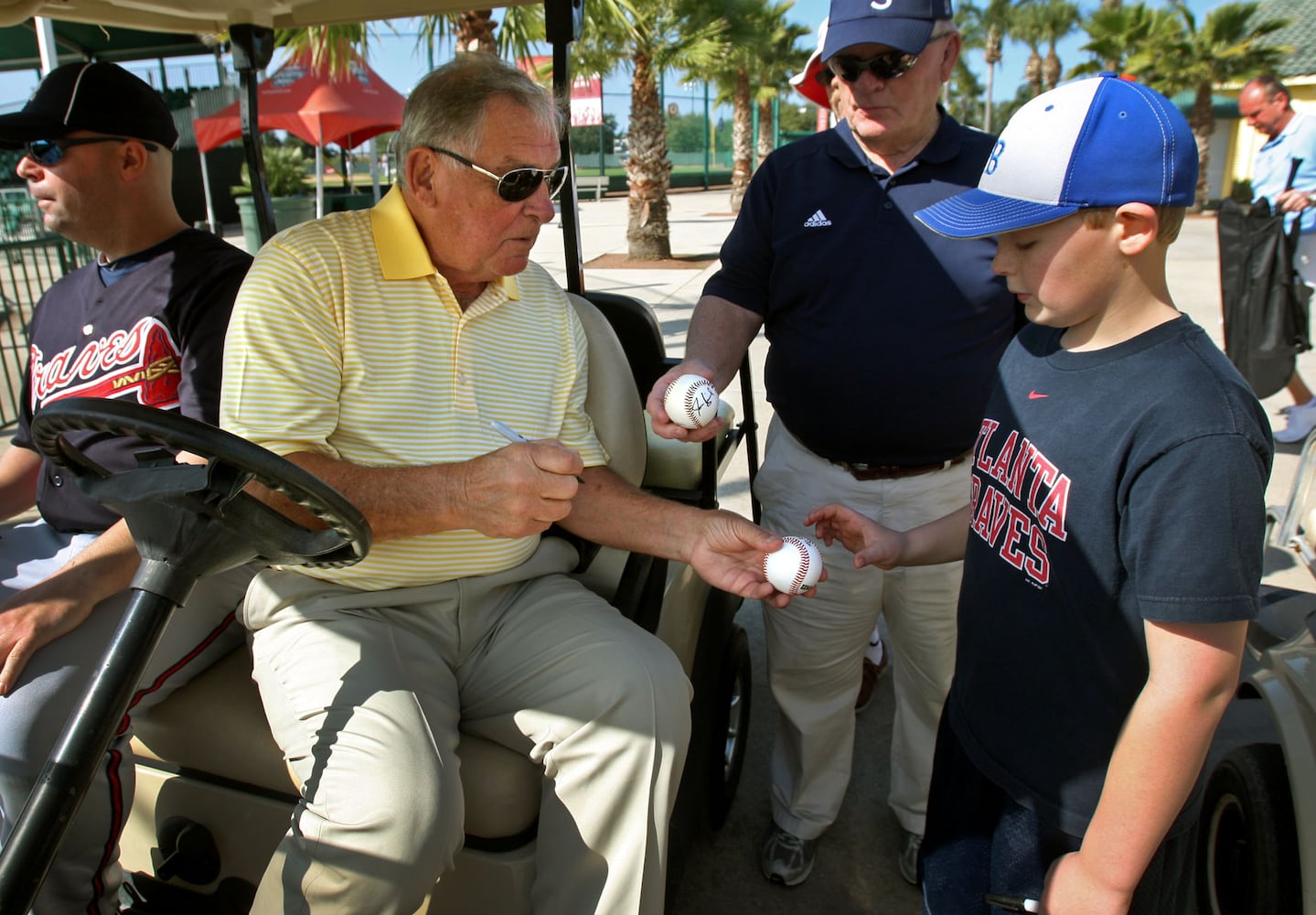
The Cox clan would eat dinner at Adairsville’s posh Barnsley Gardens and breakfast at Patty’s, a famous truck stop. Cox would have his morning coffee at the Texaco off U.S. 41. Everyone in Adairsville knew him, and mostly they left the famous resident alone. “It’s a different lifestyle up here,” Cox said.
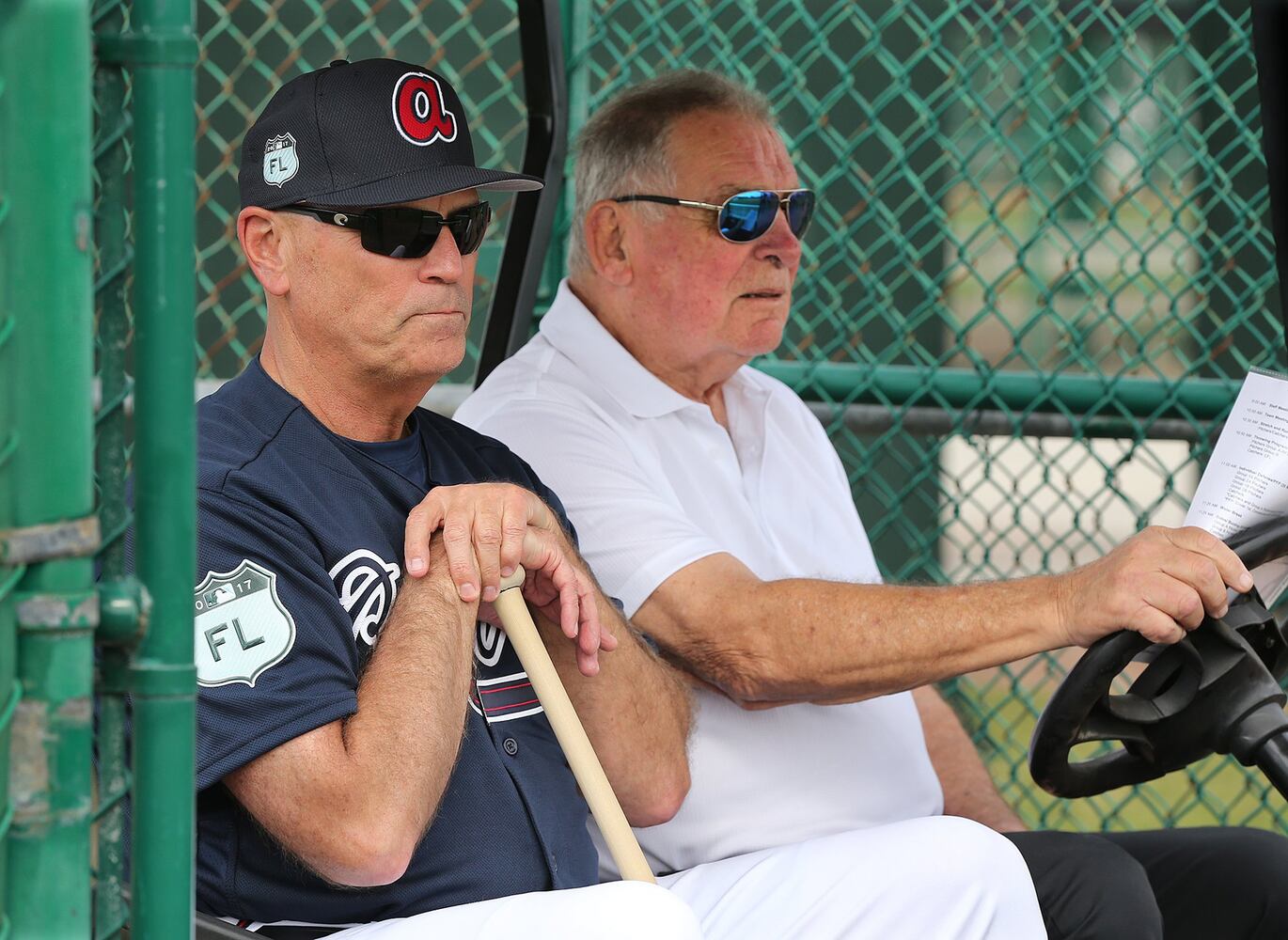
He and his wife loved animals, acquiring a menagerie of dogs and cats. Pam often referred to Rosa the Shih Tzu as “Bobby’s real wife.” Originally scared of cats, Cox fell in love with a pair of Scottish Folds his wife bought. Rosa would make the annual trip to Florida for spring training, but the cats — Wylie and Mr. Moonie — had to stay at the farm because they got carsick.

Credit: ccompton@ajc.com
Credit: ccompton@ajc.com
In October 2005, Cox raised $86,000 by hosting a celebrity-studded dinner for his Paws Cause, a charity to help fight the euthanizing of stray dogs and cats. Said former Braves outfielder Jeff Francouer: “He’s very competitive, and to see him with his dogs he’s so gentle and calm and grandfatherly. It’s nice to see the softer side of him.”
Never one to make himself the center of attention, Cox loved the anonymity Adairsville afforded him. Said Lund: “I am so shocked by his ability to stay the same. … Bobby is the most down-to-earth person in the world. There’s not a pretentious bone in his body.”
Cox was named manager of the year by the Baseball Writers of America four times. He won a similar award from The Sporting News seven times. He finished with 2,504 career victories, putting him fourth on the all-time list. Invariably he would place first whenever big-league players were asked to identify the manager for whom they’d most like to play.
At Cox’s 65th birthday party in 2006, Bill Acree — the Braves’ longtime traveling secretary and one of Cox’s close friends — offered this toast: “To work for him is to love him.”
When Cox won his 2,000th game on Sept. 29, 2004, he typically tried to deflect the spotlight. “We’ve had a lot of luck,” he said. “A lot of balls have bounced our way.” But the longer he managed, the more the belief around baseball grew that he was the one manager capable of taking almost any sort of team and winning a division title with it.
Not that he would ever speak that way himself. Robert Joseph Cox was a humble man in a high-profile job who managed to control the universal impulse for self-promotion, a cleats guy who took great pride in being able to wear those cleats to work every day. “Everybody has an ego,” he said in 2004. “(Mine’s) just not the biggest in the world.”
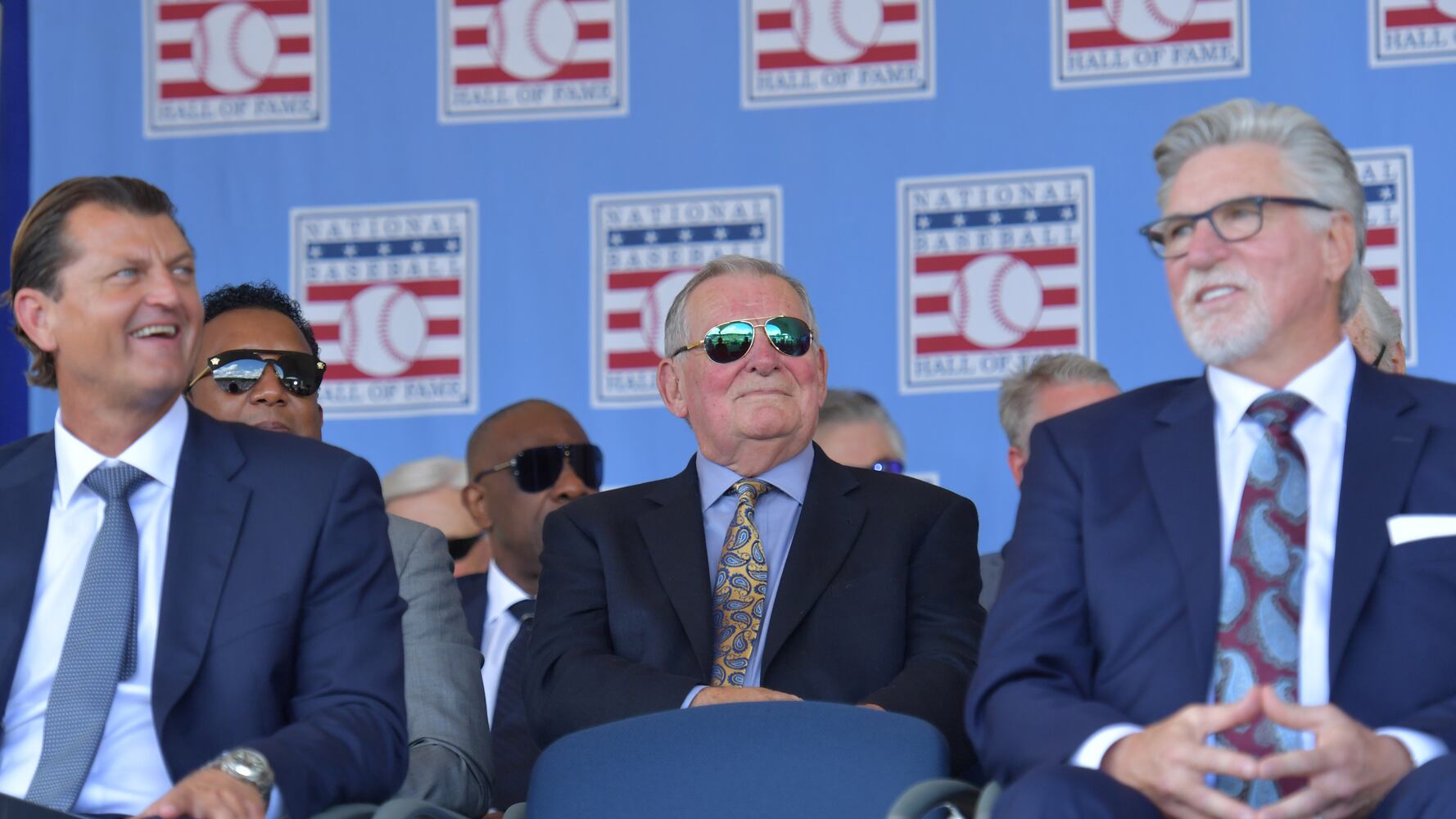
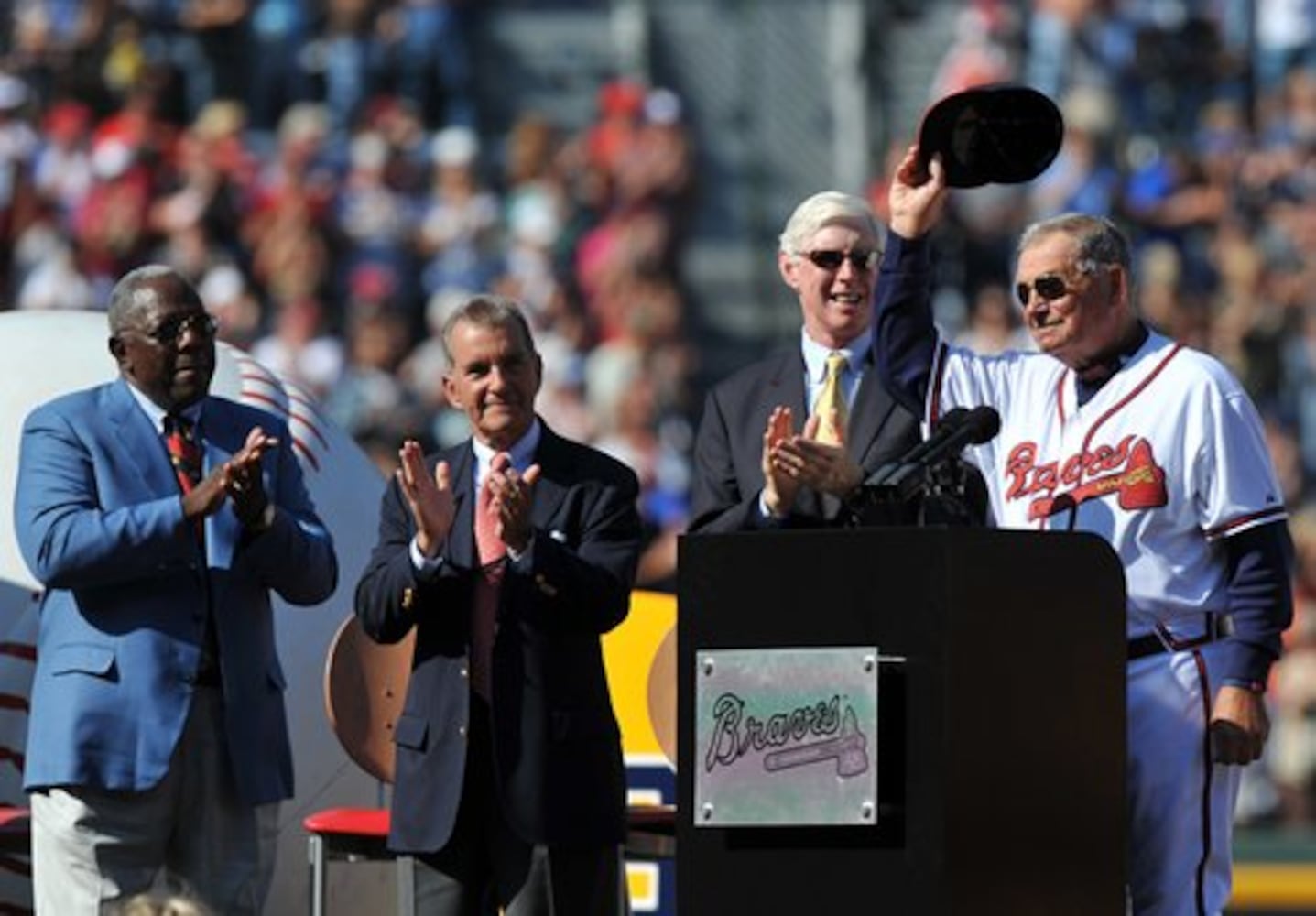
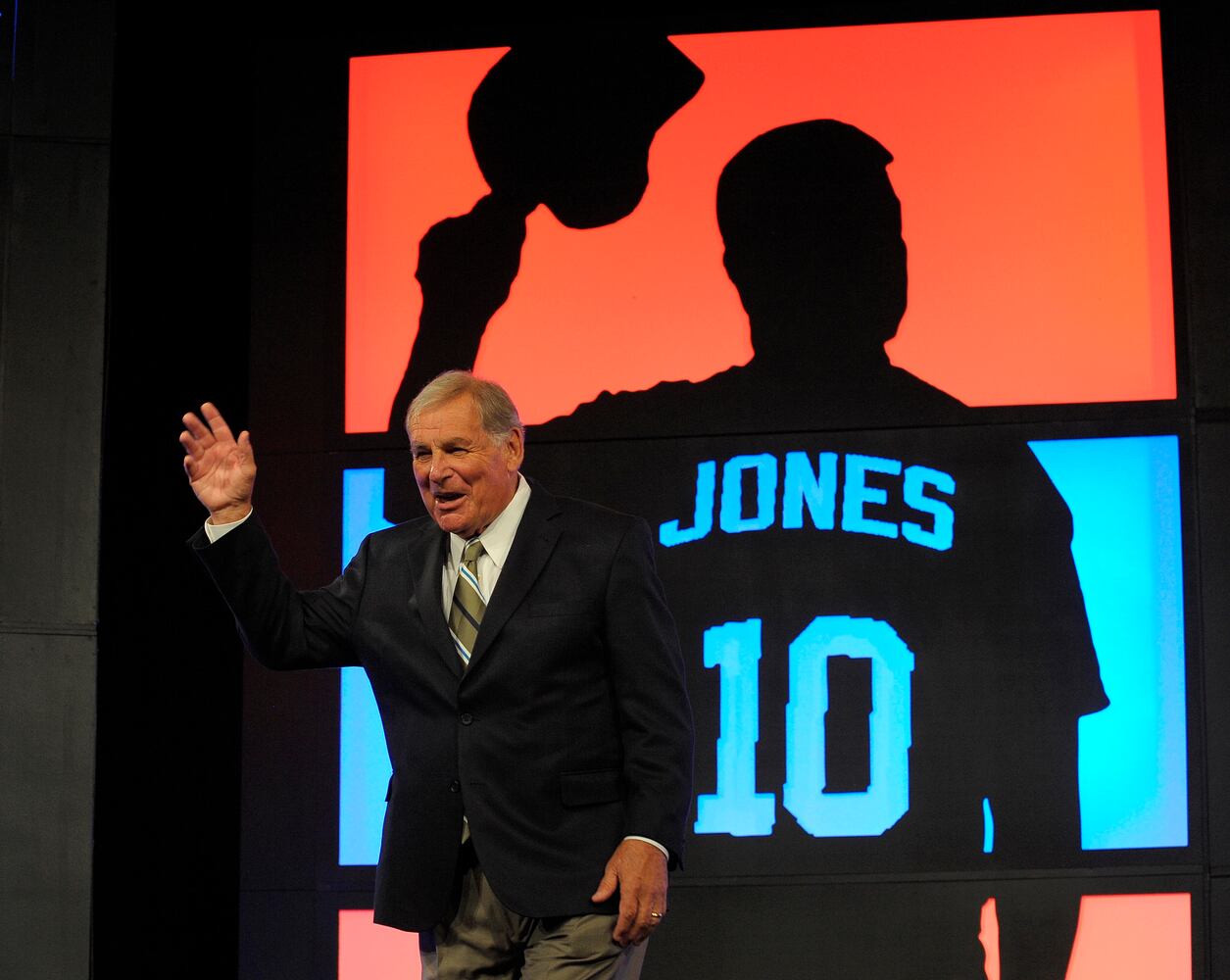
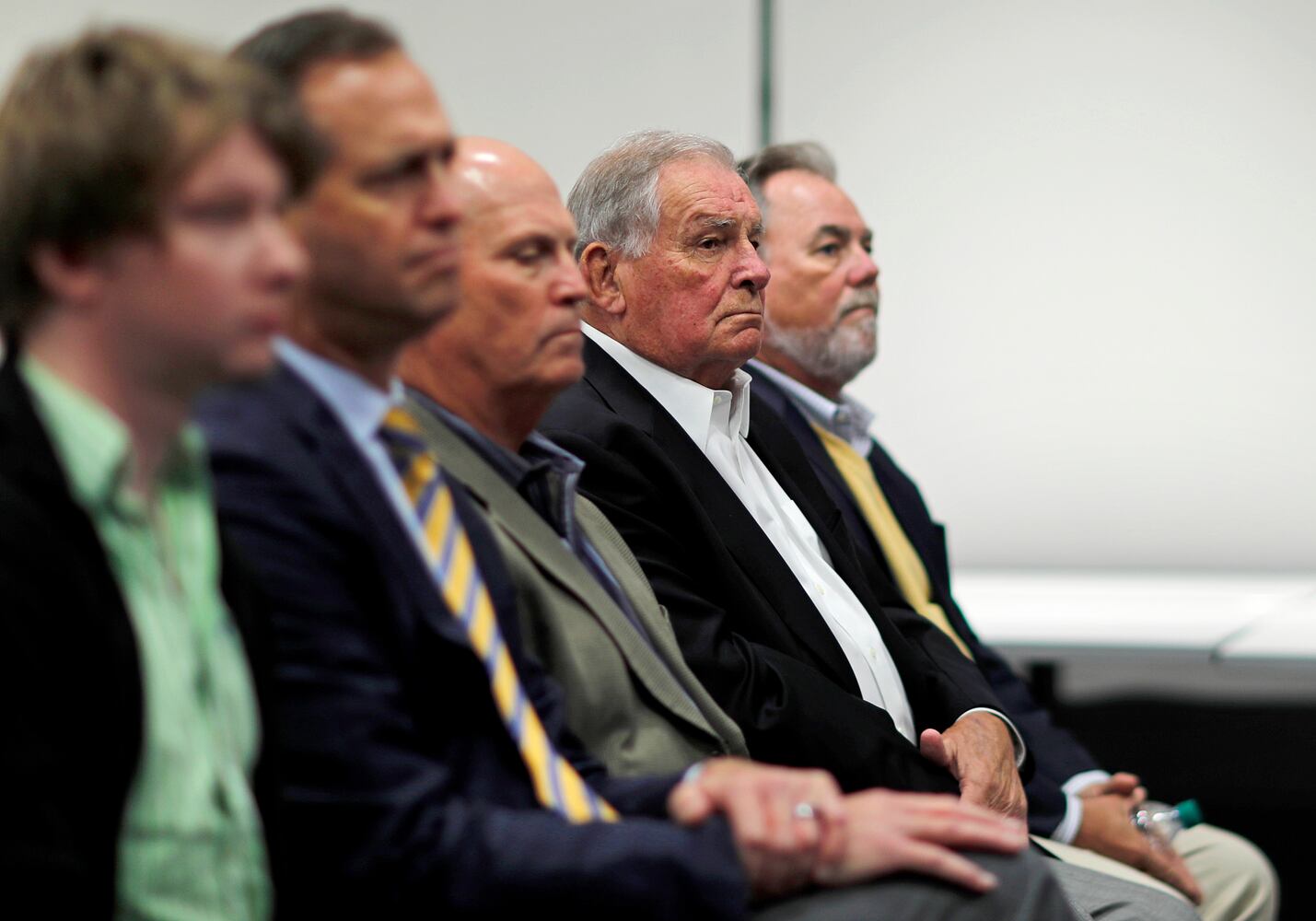
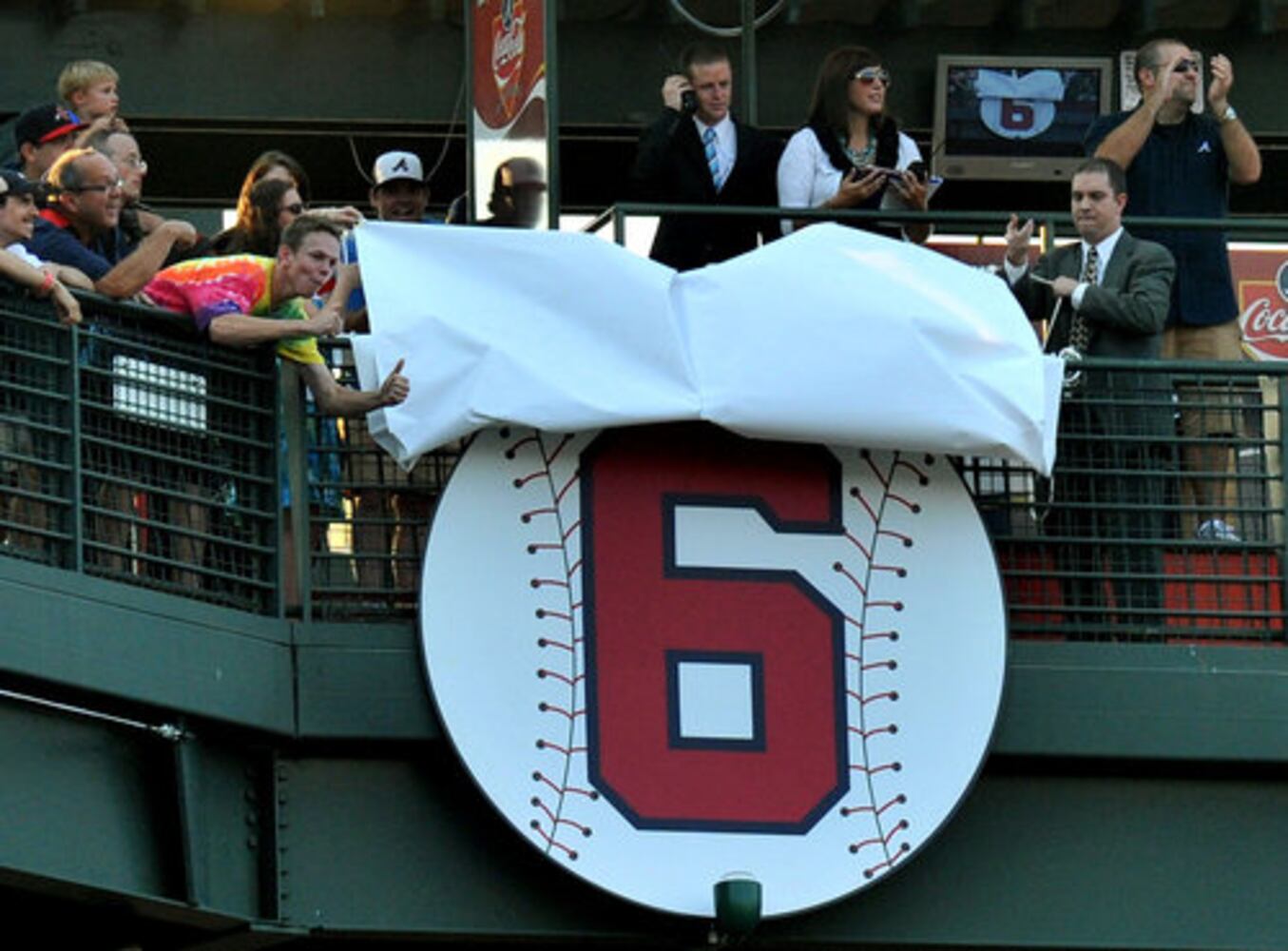
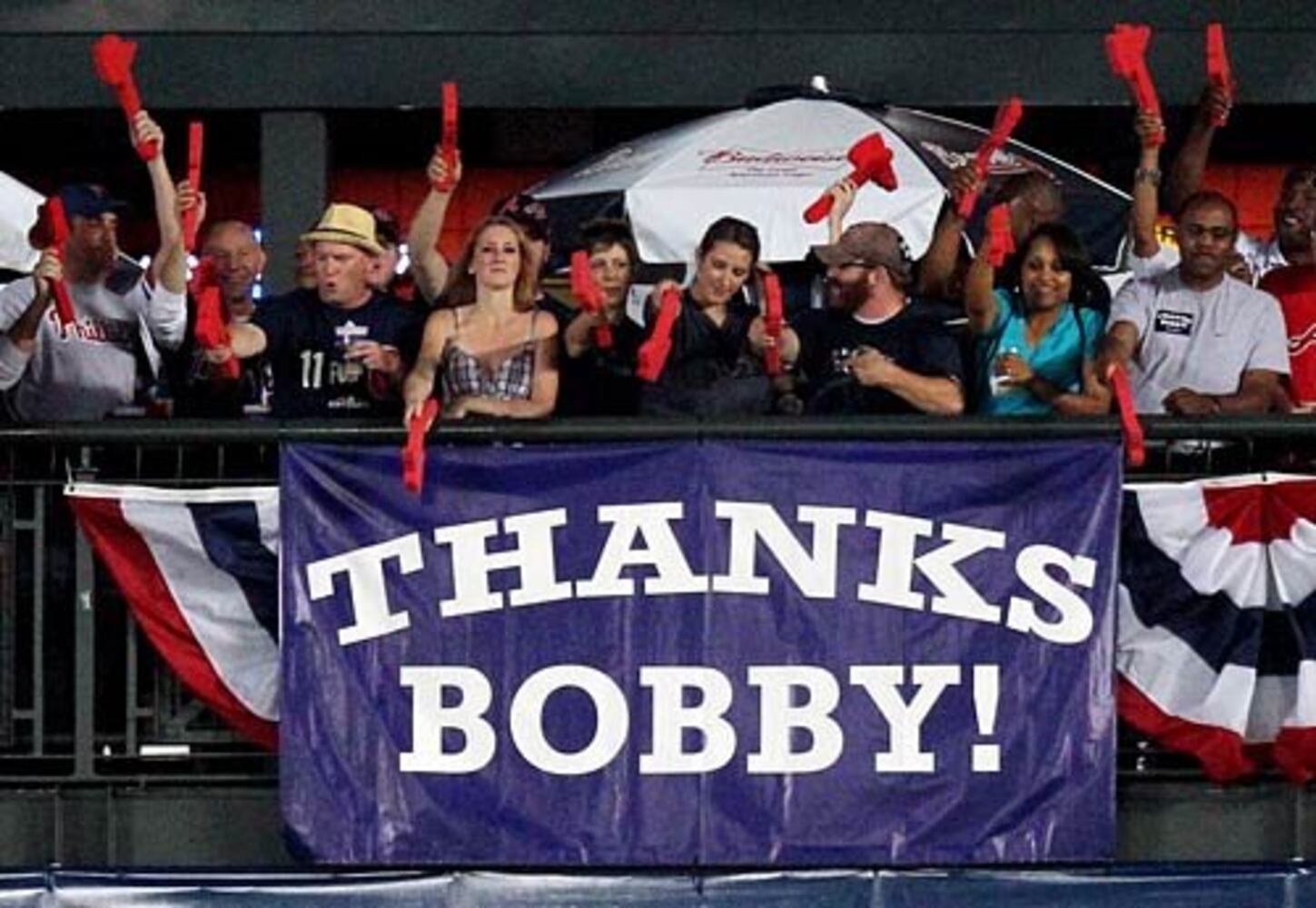
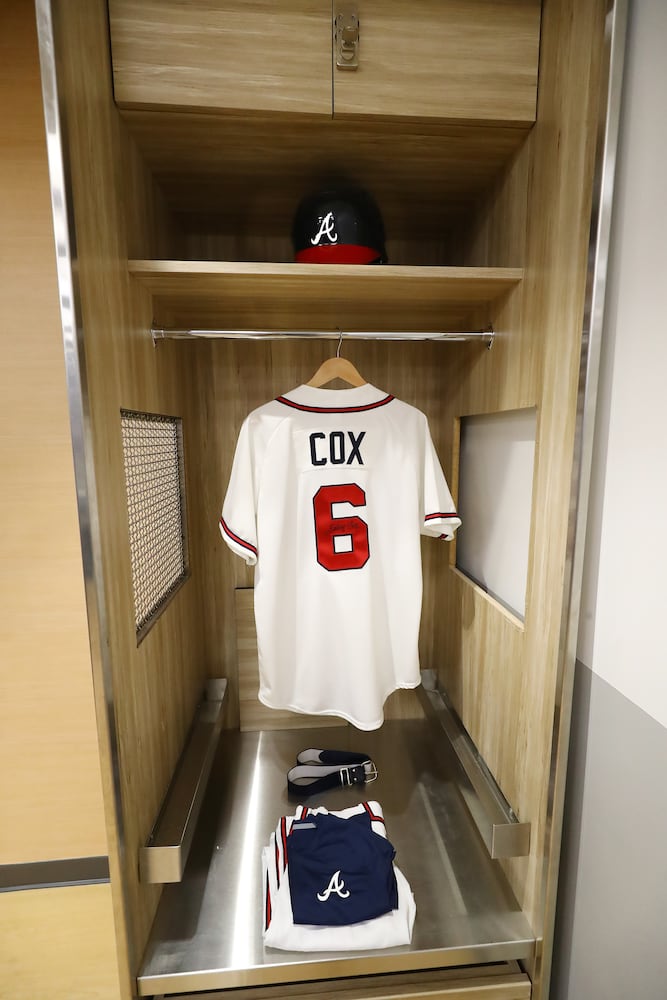
The Braves retired Cox’s No. 6 in a ceremony in 2011. Cox’s career reached the pinnacle when he was inducted into the Baseball Hall of Fame in 2014. He entered alongside two of the pitchers that helped the Braves have so much success in Maddux and Glavine.
Cox suffered a stroke in April 2019 that limited his time around the team.
Cox is survived by his wife, Pam, and eight children.

Credit: Curtis Compton / Curtis.Compton@
Credit: Curtis Compton / Curtis.Compton@

About the Author
Keep Reading

The Latest

Featured
