


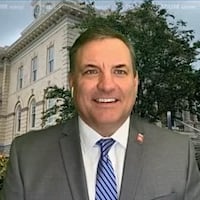
MIRAMAR BEACH, Fla. — University of Georgia president Jere Morehead is tired of talk and ready for action, and Kirby Smart has his back.
Morehead has floated the notion of the SEC making and enforcing its own rules on such issues as eligibility and tampering amid a landscape he says “craves” rules.
“What have we got done in the last year? Things are exactly as they were a year ago but worse,” Morehead told The Atlanta Journal-Constitution after an appearance on the SEC Network, where he shared much of the same sentiment.
Morehead, like most all other college leaders, was disappointed when the SCORE Act — which would have provided antitrust protection for the NCAA to act on eligibility and transfer issues — was pulled from a scheduled vote on the House floor last week.
Morehead told the AJC it’s time for the SEC “to be working on what we would do in the event that Congress ends up doing nothing — we can’t just keep putting it off.
“What I hope will happen is that we will take definitive steps and not just talk about it again. We’ve been talking long enough.”
Smart’s talk on the SEC’s need to lead the way with rules and enforcement was just as tough — and direct.
“I’ve been a huge advocate that if we can’t find the rules that everybody plays by, then we should play by our own,” said Smart, whose words carry arguably the heaviest weight in the SEC, if not the nation, as he enters his 11th season as the Bulldogs’ head coach and one of only two active coaches with two national championships.
“I’m not afraid of that; I’m not afraid to break away ….” Smart said. “I’ve been to this (SEC Spring Meeting) now 10, 11 times, and it’s frustrating at times to say, ‘Well, we can’t do this because of litigation, we can’t do this because we’ll get sued, we can’t do that,’ and we’re just trying to do things for the betterment of the sport and the betterment of the student-athletes, and that’s not curtailing what money they make.”
Morehead said he’s still hopeful legislation could come out of the Senate this week, but he notes that even if a bill gets introduced, it takes time to get through hearings and get passed by the House.
Morehead said discussion is taking place this week for potential SEC bylaws that would put the league in a position to take action to stabilize the landscape.
The key, as Texas A&M athletic director Trev Alberts points out, is to get all of the league teams — and, eventually, all of the Power 4 conferences — on the same page.
“I still believe that if there was confidence in enforcement — and not enforcement over two, three or four years, but immediate enforcement — I think you could get people there,” Alberts said. “There has to be transparency, and we have failed in this iteration to do it in a way with the P4 holistically.
“We can’t get a participation agreement by all four conferences; it’s a culture issue with college athletics. The question is, are we able to fix that?”
Indeed, and UGA athletic director Josh Brooks said last week it’s a question within the SEC, as well, as some schools have turned to their state attorneys general for legislation to protect them from rules enforcement.
Morehead said one of the key issues for the SEC at hand in developing new bylaws would come in the enforcement arena.
“How we will create an enforcement mechanism is a key part of it,” Morehead said. “We’ve got to have somebody figure out how we’re going to require schools to report all of their (NIL) deals, because that’s not being done, and the College Sports Commission (which oversees and regulates NIL dealings) doesn’t seem focused on making sure these deals are reported.”
SEC commissioner Greg Sankey said Monday the league has a “three-week notice” process for rules changes and bylaws.
“We still believe we need national standards,” Sankey said. “If those can’t be achieved, we’ll have to look at more conference-led regulation, that’s the reality we’re facing.”
About the Author


Keep Reading

The Latest

Featured
