Vertical construction doesn’t just mean buildings rising above Georgia’s clay-stained dirt.
It also includes subterranean work, and there’s plenty of that taking place an hour east of Atlanta at the site of Rivian’s future $5 billion electric vehicle factory, according to the company’s leaders.
Rivian CEO and founder RJ Scaringe told investors last week that the Georgia construction project is “progressing well” and will provide a needed manufacturing boost at a critical time for the startup. Multiple executives went into more detail Tuesday with The Atlanta Journal-Constitution at Rivian’s new East Coast headquarters off the Beltline.
Excavation is underway to build the foundations for two massive metal stamping presses. Rivian Vice President of Production Facilities Tony Sanger said that will be the “most complex building” on the nearly 2,000-acre campus in southern Walton and Morgan counties. Utility and road work is also taking place, laying the groundwork for the dramatic uptick in noticeable construction to come.
“All those buildings are going to be coming out of the ground simultaneously,” Sanger said.
“We’ll have the buildings up in 2027,” he continued. “And then our manufacturing engineering team are working closely with us to dovetail the equipment landing in each of those” so EV production can begin in 2028.

Credit: Miguel Martinez/AJC
Credit: Miguel Martinez/AJC
The project by California-based Rivian is one of Georgia’s largest, with the company pledging to employ 7,500 workers. State and local leaders offered Rivian an incentive package worth an estimated $1.5 billion for the factory project.
It joins Hyundai’s $7.6 billion plant near Savannah as a cornerstone of the state’s auto and clean tech industries. Rivian’s effort has also faced multiple setbacks and delays since it was announced in December 2021.
Rivian paused the Georgia factory in March 2024 as a temporary cost-cutting measure and shifted initial production of a new midsize SUV model called R2 to its existing plant in Illinois. Despite the pause, Rivian said it remained committed to opening its Georgia factory, holding a groundbreaking ceremony with state officials in September.

Credit: Miguel Martinez-Jimenez
Credit: Miguel Martinez-Jimenez
Once complete, Rivian has said the factory’s first phase will have an annual capacity of 300,000 vehicles. It plans to use that production space to pump out R2s and planned sister models called R3 and R3X.
Earlier this year, the company announced a partnership with Uber to build robotaxis, which are also slated for the Georgia plant’s assembly lines.
Rivian leaders said the R2 and its iterative models, which boast lower price points than the company’s flagship R1 fleet of electric pickup trucks and large SUVs, are crucial to attracting a sizable customer base and becoming profitable.
“We expect R2 to be a game changer for our customers and a driver of Rivian’s long-term growth and profitability,” Scaringe said on a second-quarter earnings call.
Rivian has yet to turn a profit and is relying on multibillion-dollar partnerships and deep-pocketed investors while it aims to scale to profitability.
The company reported nearly $1.7 billion in revenue during the second quarter, a 27% increase from the same time last year. The automaker also posted a loss of $837 million, a 25% decrease from last year’s second quarter. Rivian has more than $5.3 billion in cash reserves.
The R2 launch model starts at $57,990, with two lower price versions set to join in mid-2027. The new model has earned praise in the automotive press.

Credit: Miguel Martinez/AJC
Credit: Miguel Martinez/AJC
Claire McDonough, Rivian’s chief financial officer, said the R2’s price point is critical to finding a mass market. She told the AJC it’s “roughly half the cost of an R1 but certainly not half of the performance capability and utility of an R1.”
The company has not released data on R2 reservations, but Scaringe said the conversion rate from reservations to orders “has been meaningfully higher than what we expected, which is a great signal.” That’s a key metric to justifying the massive production expansion brought by the Georgia plant.
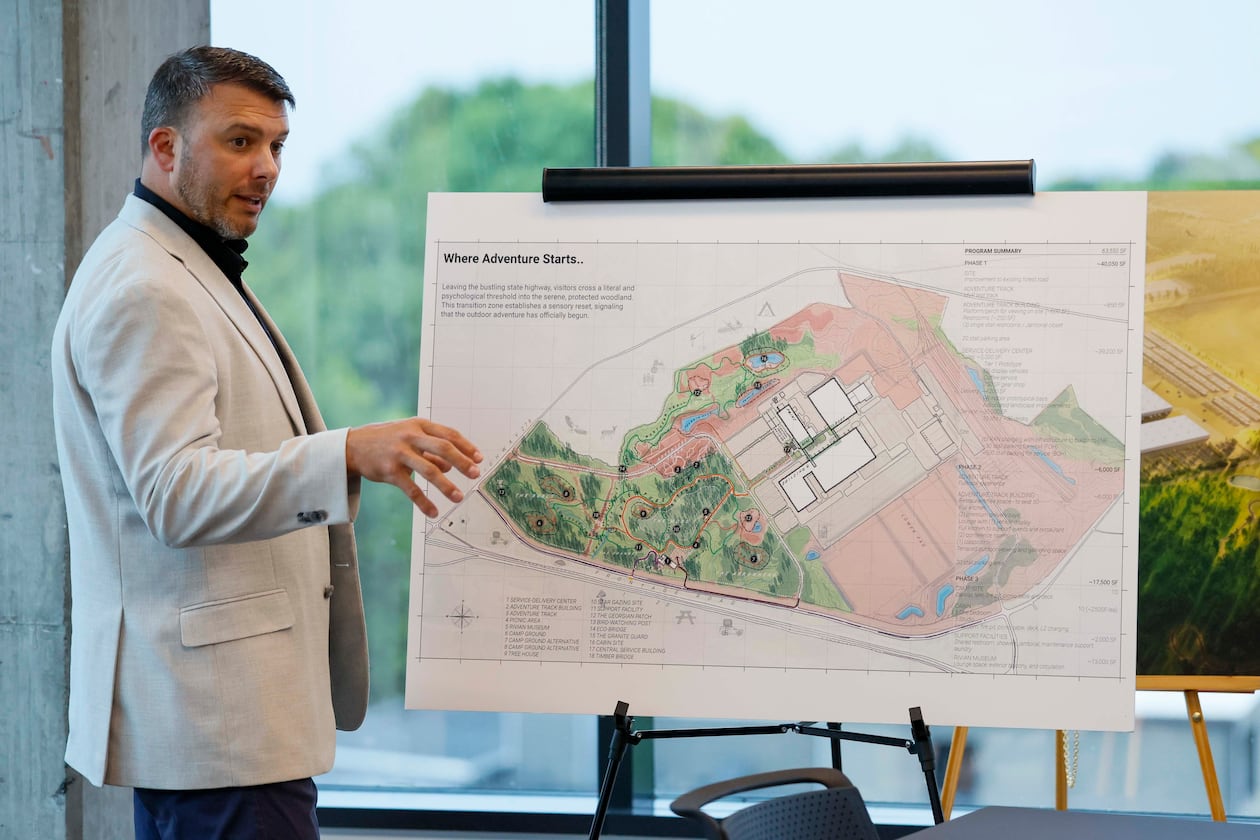
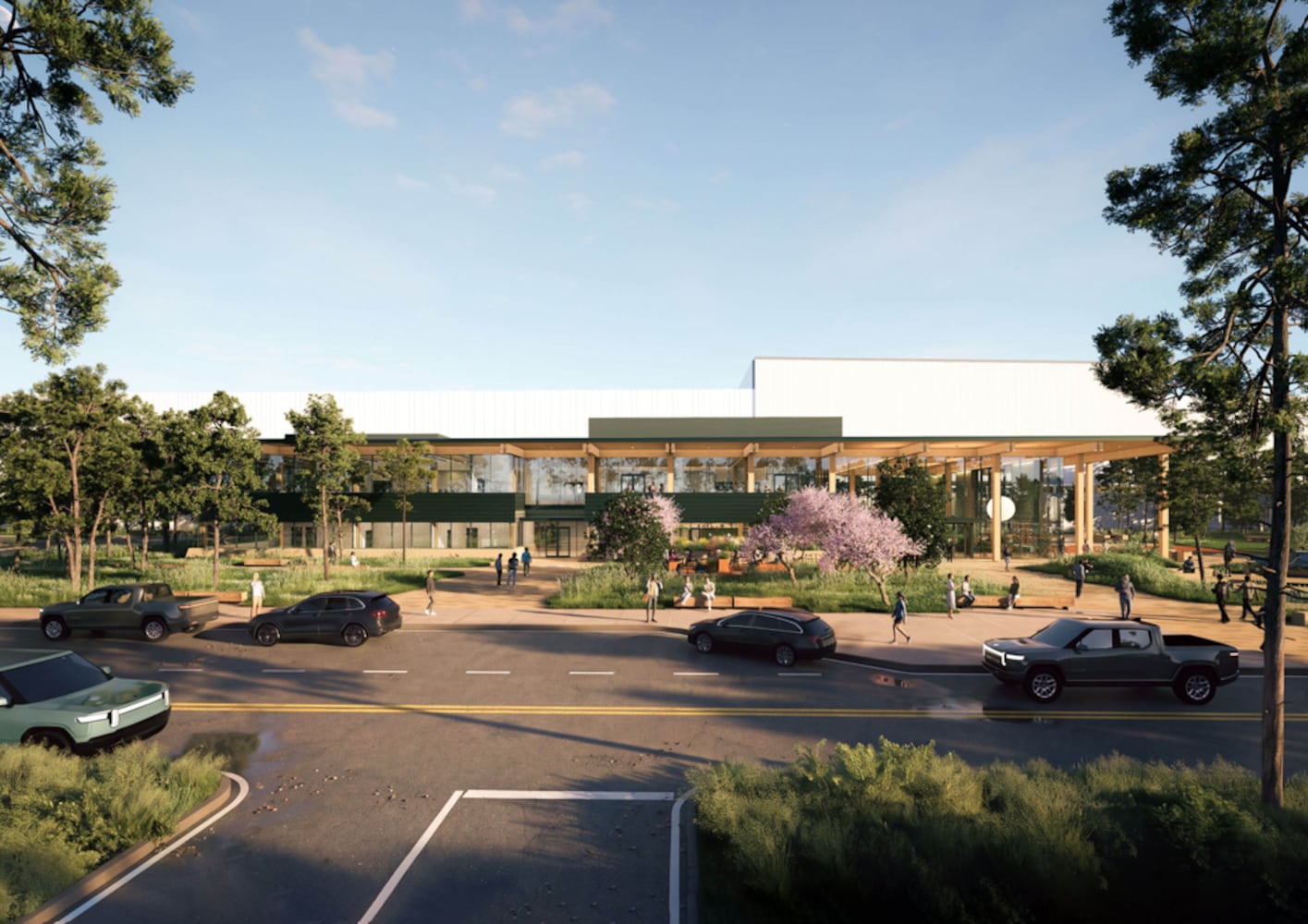
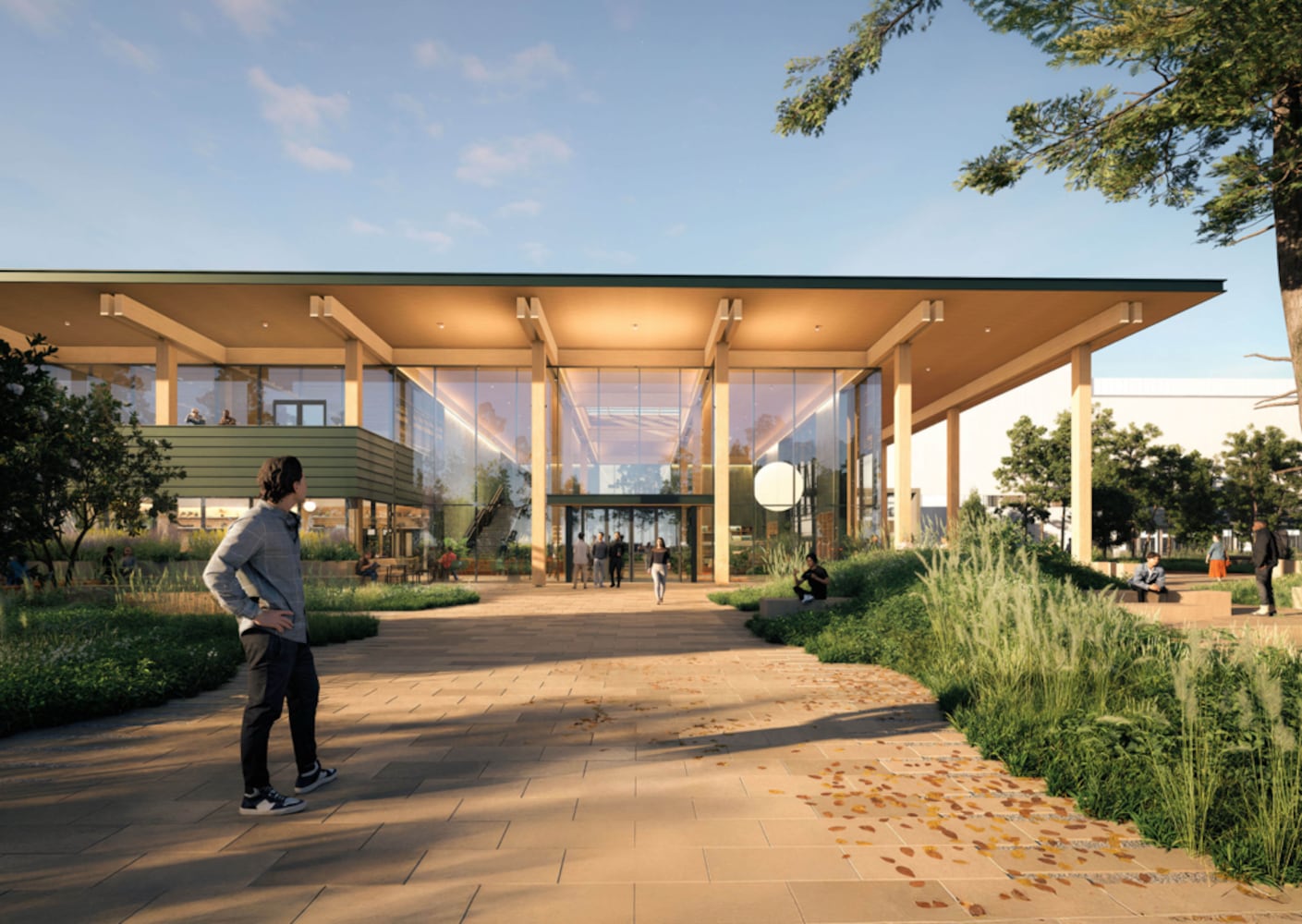
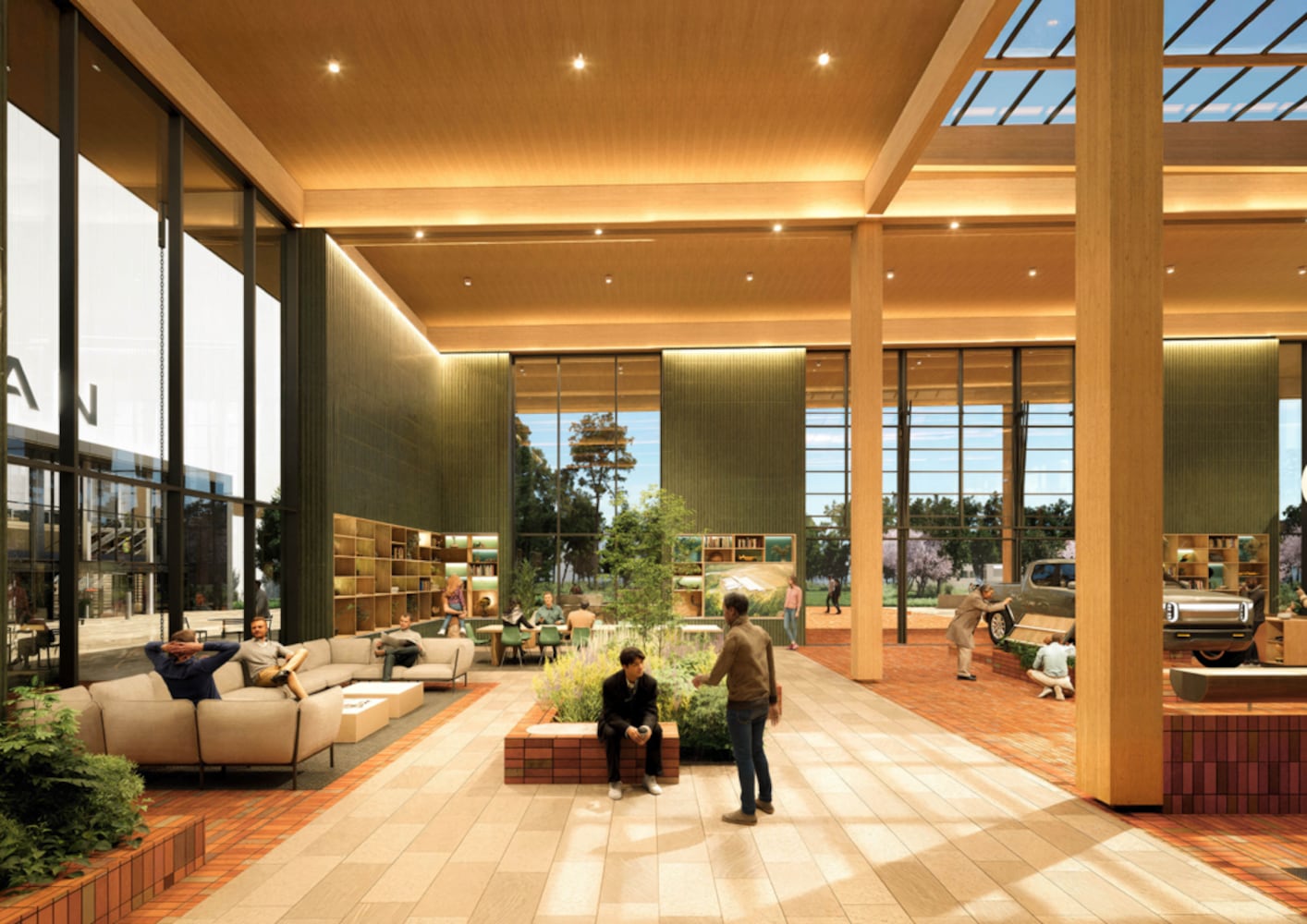
New renderings and site maps show that a building focused on vehicle sales will join the gigantic factory along with facilities for charging and EV service. Jimmy Knauf, executive vice president of facilities at Rivian, said roughly half the site, about 1,000 acres of forested land, “will be preserved” for driving tracks, campsites and walking trails.
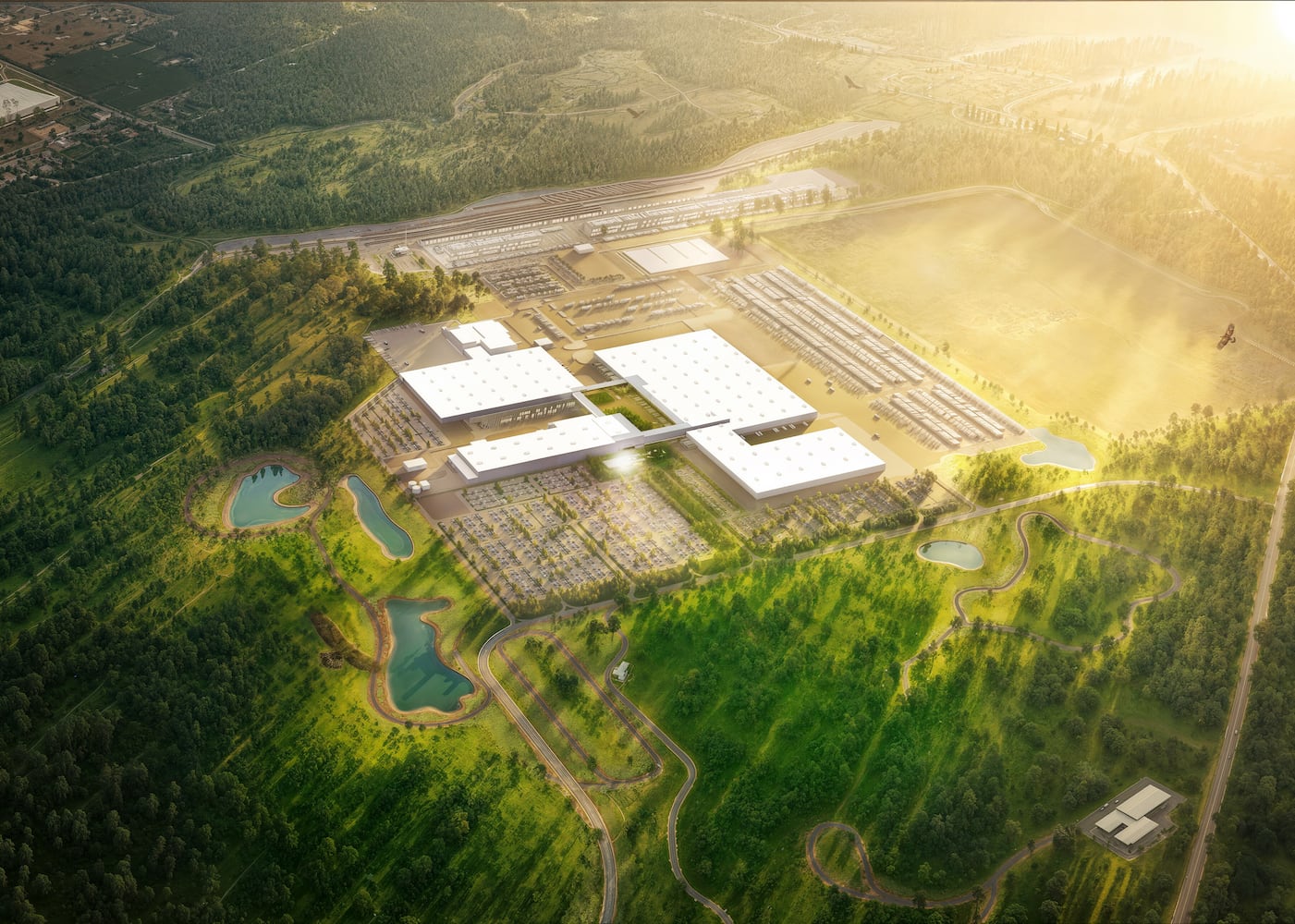
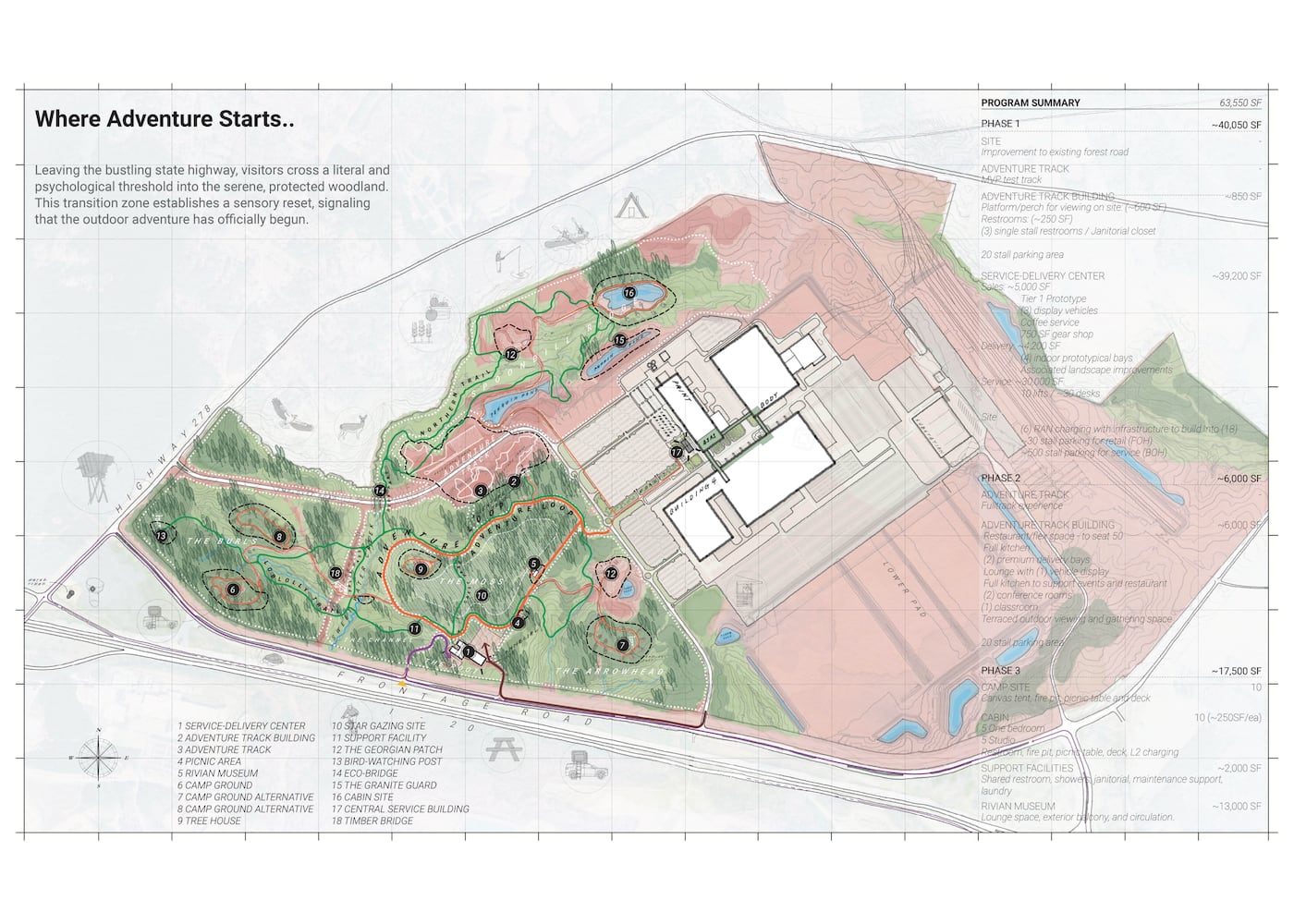
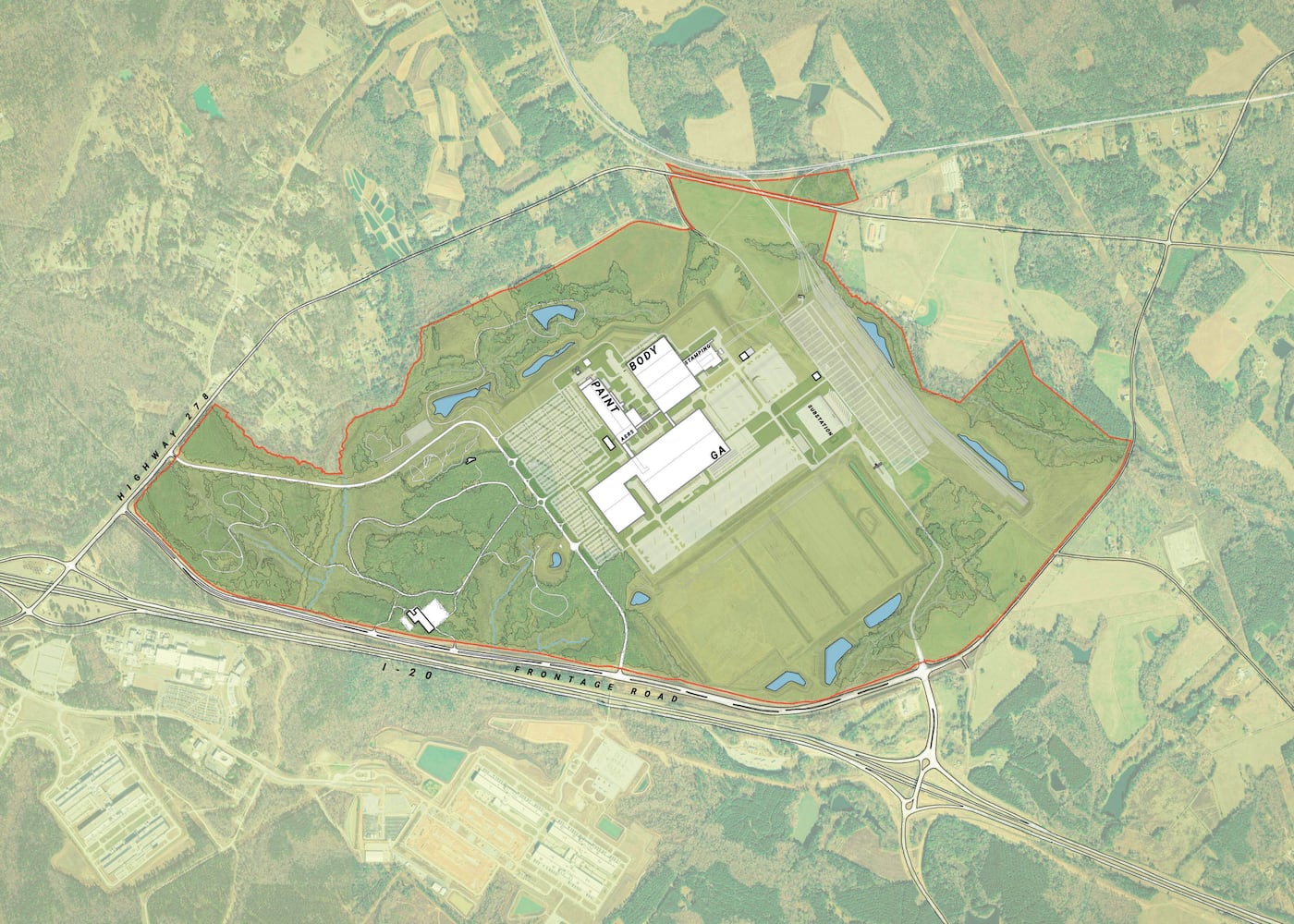
Knauf said an on-site CSX rail spur will provide a direction connection to Atlanta and Georgia’s ports. A new interchange on I-20 near Social Circle will bring truck traffic directly to the factory.
“We basically tried to pull all our traffic into the site as quick as possible as soon as they get off the interstate,” Sanger added. “And then we deal with them on-site rather than on the public roads.”
In July, Rivian raised more than $1.3 billion through a public stock offering, selling more than 86 million shares. McDonough said it was for general corporate purposes, including funding equity commitments tied to Rivian’s $4.5 billion loan with the Department of Energy to help build the Georgia plant. Rivian expects to be able to first draw on the loan by early 2027.
Cox Enterprises, which owns the AJC, also owns about a 3% stake in Rivian.
About the Author




Keep Reading

The Latest

Featured